Always nice to find company in the deep.
Pentagon Doubts Grow on McChrystal War Plan
by Gareth Porter:
"Although Gen. Stanley A. McChrystal's plan for wresting the Afghan provinces of Helmand and Kandahar from the Taliban is still in its early stages of implementation, there are already signs that setbacks and obstacles it has encountered have raised serious doubts among top military officials in Washington about whether the plan is going to work.
Skepticism about McChrystal's ambitious aims was implicit in the way the Pentagon report on the war issued Apr. 26 assessed the progress of the campaign in Marja. Now, as Afghan President Hamid Karzai begins a four-day round of consultations with President Barack Obama and other senior U.S. officials here this week, the new report has been given even more pointed expression by an unnamed "senior military official" quoted in a column in the Washington Post Sunday by David Ignatius.
The senior military officer criticized McChrystal's announcement in February that he had "a government in a box, ready to roll in" for the Marja campaign, for having created "an expectation of rapidity and efficiency that doesn't exist now", according to Ignatius.
The same military official is also quoted as pointing out that parts of Helmand that were supposed to have been cleared by the offensive in February and March are in fact still under Taliban control and that Afghan government performance in the wake of the offensive had been disappointing, according to Ignatius.
The outlook at the Pentagon and the White House on the nascent Kandahar offensive is also pessimistic, judging from the comment to Ignatius by an unnamed "senior administration official". The official told Ignatius the operation is "still a work in progress", observing that McChrystal's command was still trying to decide how much of the local government the military could "salvage" and how much "you have to rebuild".
That is an obvious reference to the dilemma faced by the U.S. military in Kandahar: the entire government structure is controlled by Ahmed Wali Karzai, the much-despised brother of President Hamid Karzai. The U.S.-supported provincial governor now being counted on to introduce governance reforms, on the other hand, is generally regarded by Kandaharis as powerless, as Jonathan Partlow reported in the Washington Post Apr. 29.
These negative comments on the campaign in Helmand and Kandahar by senior Washington officials pointing to problems with McChrystal's plan suggest that even more serious concerns are being expressed behind the scenes.
The Pentagon report on the war betrays similar doubts about the strategy being carried out by McChrystal, both by what it highlights and what it fails to say. Damning with faint praise, the report says the offensive waged in the Marja region and elsewhere in Helmand achieved only "some success in clearing insurgents from their strongholds".
Paralleling the quote from the "senior military official", the report says progress in "governance and development" in has been "slow". Demonstrating that the Afghan government could provide "governance and development" had been announced as the central aim of the offensive in Marja.
The section of the Pentagon report on the state of the insurgency goes even further toward declaring that the McChrystal plan had failed to achieve a central objective, concluding that the Taliban strategy for countering the offensive "has proven effective in slowing the spread of governance and development".
The key finding is that the Taliban have "reinfiltrated the cleared areas" of Helmand and "dissuaded locals from meeting with the Afghan government" by executing some who had initially collaborated.
The overall negative tone of the analysis of what happened in Helmand appears to reflect a decision by Pentagon officials to withhold its vote of confidence in the McChrystal war plan.
The only feature of McChrystal's strategy which the Pentagon report treats as having proven effective against the insurgents is its most controversial element: the program of Special Operations Forces (SOF) night raids against suspected Taliban in their homes, which has stirred anger among Afghans everywhere the SOF have operated.
In an indirect expression of doubt about the impact of the McChrystal strategy, the report suggests that the willingness of Taliban insurgent leaders to negotiate will be influenced not by the offensives aimed at separating the population from the Taliban but by the "combined effects" of the high-level arrests of Taliban leaders in Pakistan and targeted raids by special operations forces against "lower level commanders".
In fact, Taliban leaders have already indicated a readiness to negotiate, although not on terms the Barack Obama administration is yet prepared to accept.
McChrystal appears to have responded to the setbacks he has encountered in Helmand and Kandahar by setting aside his most ambitious counterinsurgency aim: the creation of a large zone of control covering both provinces. In late January, an official working for McChrystal at the ISAF told IPS, "The first thing you'll see is an effort to establish a contiguous security zone in Helmand and Kandahar accounting for 85 percent of the economic resources."
McChrystal referred to that same aim in his interview with the Financial Times published Jan. 25. "If we can protect 85 percent of the people and deny access to them from the insurgents, it's pretty hard for them to have a significant effect," he said.
But since the end of the Marja operation, neither McChrystal nor any other ISAF official has said anything about a plan to establish a "contiguous security zone".
McChrystal has to provide a one-year assessment of the progress of his strategy in December 2010, and senior administration officials told the Washington Post in late March that he will have to show that the "overall transition to stability and vastly improved governance" has been completed by that time.
McChrystal was confident in a talk in Kabul in late January excerpted in a NATO video that, by December, he would be able to "show with hard numbers and things, real progress".
But the failure to clear Taliban guerrillas from areas where they have been strongest, along with the inability to break the power of Karzai's brother in Kandahar and the absence of support from the population and tribal elders for military occupation in the province, is likely to make administration officials highly skeptical of such a case.
McChrystal's staff has made no secret of their hope to convince the U.S. public that his strategy is making such progress in Helmand and Kandahar that it should be extended past mid-2011, when President Obama has said he would begin a U.S. military withdrawal and transition to Afghan responsibility for security.
After interviewing members of McChrystal's team in Kabul, pro-war journalist Robert Kaplan wrote in the April issue of Atlantic magazine, "The very prospect of some success by July 2011 increases the likelihood that U.S. forces will be in Afghanistan in substantial numbers for years."
*Gareth Porter is an investigative historian and journalist specializing in U.S. national security policy. The paperback edition of his latest book, "Perils of Dominance: Imbalance of Power and the Road to War in Vietnam", was published in 2006.
Related Reading: NATO has only seven months to take Kandahar

May 10, 2010

Sycophants of the Day
"There was a period where the waters got roiled. What I will say categorically... that period ended."
- US envoy Richard Holbrooke, falling into line
"Afghanistan is a close friend and ally and of course I highly respect President Karzai in that capacity.”
- Karl Eikenberry, US ambassador to Kabul, author of “a scathing memo that questioned Karzai's reliability as a partner,” falling into line
- US envoy Richard Holbrooke, falling into line
"Afghanistan is a close friend and ally and of course I highly respect President Karzai in that capacity.”
- Karl Eikenberry, US ambassador to Kabul, author of “a scathing memo that questioned Karzai's reliability as a partner,” falling into line
Obama Orders Silence For Karzai
 More than a month ago President Obama landed in Afghanistan for the first personal inspection of his surge, a 24 hour stopover to motivate US troops and President Hamid Karzai.
“Here in Afghanistan you’ve gone on the offensive,” he told troops gathered at Bagram Airbase. “And the American people back home are noticing. We have seen a huge increase in support in - stateside, because people understand the kinds of sacrifices that you guys are making, and the clarity of mission that you’re bringing to bear.”
We analyzed that this “huge increase” primarily stemmed from a boost in GOP support, which had dropped to the teens out of fear that Obama would withdraw. Now it doesn’t matter so much.
“A new Washington Post-ABC News poll found is once again opposed by a majority of Americans,” the Washington Post reported. “Fifty-two percent of respondents said the war is not worth fighting, which means the bump in support for the war that followed Obama's announcing his new Afghanistan strategy in December has disappeared.”
He’s watched Karzai batted around in public, a stumbling Marjah campaign, a crumbling Kandahar campaign, a stubborn Pakistan, all factors in driving down domestic support. Obama could no longer afford to remain inactive: “During a White House meeting last month, Obama made clear that Karzai is the chief U.S. partner in the war effort.”
And dissent won’t be tolerated in what could be his last chance to sell Karzai to the American people.
OK, so we exaggerated the second part, but how far is it from the truth? Clearly Obama is nervous about Afghanistan; no amount of “coolness” can hide his sweat. As the White House provided the sole cover for Karzai to re-assume the presidency, naturally Obama will tell his national security team Karzai is, "someone we're going to have to work with for the next 4 1/2 years."
He needs to issue a gag order on Karzai, yet Obama still believes the war will be over in under five years. One thing is certain - he sure can hope. Though he's sticking by Karzai, Obama also said he must be held accountable to high standards.
These two statements will have a hard time coexisting if Karzai continues to act in his own interests.
The real question is how deep Obama’s order goes. Being polite and diplomatic is one thing; we agree that a superficial spat serves no purpose. But if he’s telling his cabinet to keep silent their concerns or voice them in private, out of range of the American people - that is a very disturbing development.
Then we must consider the source of the gag. Is this really Obama's doing, or could it be Karzai's good friend Hillary Clinton? Perhaps Secretary of Defense Robert Gates?
The Washington Post reports, “much of Karzai's handling has fallen to McChrystal, who often takes the Afghan leader on his travels inside the country. According to diplomats in Afghanistan and analysts who travel there often, Karzai does not think he can trust Eikenberry or Richard Holbrooke.”
The Pentagon is still running the show in Afghanistan, a violation of counterinsurgency, and could be running the show in Washington too.
Worse still,“Karzai's visit has been designed to be ‘a manifest demonstration of the relationship and the issues we are working on,’ the senior administration official said.”
Translation, the White House wishes to portray the relationship it wants to have, not the relationship it does have. Admirable to aim high. Covering up present problems, not so much.
“President Obama certainly has the touch, there's no doubt about it,” said Ryan Crocker, former ambassador to Iraq and current dean of Texas A&M University's Bush School of Government and Public Service. "And now is the time for him to apply that touch."
Of course, would a gag order on Karzai be necessary if Obama had “the touch?” Fair or foul, many US officials harbor sincere doubts about Karzai and confidence among the American people runs even lower. We’ve been sold failed strategies for too long, and, as during Obama’s prolonged review last year, lived in far too much silence.
We have a right to know who doubts the war in Afghanistan - and why. Judging by the polls Obama isn’t fooling his voters anyway.
May 9, 2010
US-Israeli-Palestinian Mindgames
"Both parties are taking some steps to help create an atmosphere that is conducive to successful talks, including president (Mahmud) Abbas' statement that he will work against incitement of any sort and Prime Minister Benjamin Netanyahu's statement that there will be no construction at the Ramat Shlomo project for two years."
- State Department spokesman Philip Crowley
"The prime minister has clarified, over the whole process, that building and planning in Jerusalem will continue as usual, exactly as it has under all governments of Israel in the last 43 years, and no Israeli commitments have been given on this issue."
- anonymous Israeli official
"The Israeli statement is an attempt to embarrass or challenge the US administration."
- Nimr Hammad, aide to Palestinian President Mahmoud Abbas
"The Israeli government must choose between peace and settlements.
- Chief Palestinian negotiator Saeb Erakat
- State Department spokesman Philip Crowley
"The prime minister has clarified, over the whole process, that building and planning in Jerusalem will continue as usual, exactly as it has under all governments of Israel in the last 43 years, and no Israeli commitments have been given on this issue."
- anonymous Israeli official
"The Israeli statement is an attempt to embarrass or challenge the US administration."
- Nimr Hammad, aide to Palestinian President Mahmoud Abbas
"The Israeli government must choose between peace and settlements.
- Chief Palestinian negotiator Saeb Erakat
Another Marjah Myth Bites the Dust
No single reason or interest drives America’s domestic propaganda campaign for Afghanistan. Some causes are more immediate than others though: the smeared image of Marjah, lingering doubts of president Hamid Karzai, and the congressional vote for new funding.
This cocktail is unforgiving to those in search of reality.
The Associated Press kicked off Karzai’s fanfare two days ago with the headline, Afghan president to remake image in Washington. Afghan Defense Minister Gen. Abdul Rahim Wardak’s pitch to Americans will be, “the situation in Afghanistan is not as gloomy as is depicted in the news.”
Is Afghanistan still depicted as gloomy though?
Before 2009 yes, but what about now? We spent all week shadowing the Pentagon’s sunny view, and the White House, Congress, and the US media generally followed the military’s lead. Public debate remains low partly because of the economy, partly because Obama rarely speaks of Afghanistan to the American people.
So unless the war is truly headed towards a condition where US and NATO forces can begin safely withdrawing by July 2011, the last thing we need is another whitewashing.
While the war has “improved,” relatively speaking, distortions and contradictions continue to plague US strategy and the presentation of it. We’ve witnessed a fraudulent election vouchsafed by the White House, a Kandahar campaign - dubbed the tipping point of the war - neutralized by local opposition.
And observed Marjah’s fabric warp under Washington’s claim of the Taliban’s opium hub and last “stronghold” in Helmand province.
Senator John Kerry’s outlandish contradiction of the ICOS report, which he uses for his own evidence, was the latest exposure of the first propaganda. The British know all too well that Marjah isn’t the Taliban’s last stronghold in Helmand either, not even in the central river valley.
In fact, Sangin may be the next “last stronghold” in the campaign to secure Helmand.
Like most Afghan villages Sangin is subject to intense propaganda from US and Afghan officials, the Taliban, and the international media. But unlike Marjah, which America was able to spring from anonymity, Sangin is notorious to the British press and thus difficult to conceal.
Still foreign in the US media, Sangin is known in England as the most dangerous place in Afghanistan.
A microcosm of Afghanistan, Sangin has shown relative improvement over the last year as US and NATO forces shift their focus towards the population. Three times as many shops now trade in the bazaar, while 41 primary schools and one high school have opened. The BBC reported in March, “People who know Sangin agree that things have got much better in the past year.”
But how much better is up for debate.
The situation has seen an upgrade since 2006, when Sangin had no garrison of US or NATO forces. A FOB was finally established in 2007 after the year-long Siege of Sangin and tentatively held by British and ANA troops since. Together they’ve managed to slowly expand the “ink spot of security.”
“People who served with the last battlegroup have told me that IEDs used to be laid as close as 10 meters (yards) from their camp gates,” said Newsnight's Mark Urban, “and gun battles often started as soon as they left them.”
“By establishing a denser network of security posts around the bazaar and government offices,” the BBC reports, “the 3 Rifles battle-group has brought relative calm to an area around those central landmarks. However, the growth of this ‘safer’ area can be measured in the hundreds of meters rather than kilometers, and it cannot be said that soldiers are completely safe from attack in these areas even now.”
The BBC also reports that the Taliban Civil Commission, its shadow government in Sangin, agreed that the bazaar and schools should stay open. We interpret this as a sign that the Taliban's secure enough to let the population be, believing it can use these services to its own advantage.
Taliban soldiers are often ordinary Afghans.
The persistent danger of Sangin was enough to prompt outgoing UK Prime Minister Gordon Brown to request another 500 Afghan soldiers in early April. Though Brown was suffocating under political pressure, why he thought green ANA forces are the answer in Sangin remains uncertain. Residents say the local security forces are a big part of the problem.
Desperation has strange effects on humans though. See Marjah, “last stronghold" in Helmand and Kandahar model.
Sangin, about 70 miles upriver from Marjah and roughly the same size, is both fertile poppy fields and a trafficking hub. Maybe US officials are thinking Sangin will dry up once Marjah is “secured,” but production could very well shift its weight into Sangin instead.
Or the trade could already be diversified to the point of irrelevance.
Fast forward to April’s end, two months past the beginning of Operation Moshtarak. “Today fighting is still intense,” The Guardian reports, “and in army spokesman Gordon Messenger's words, Sangin is ‘the most challenging area in which British troops operate.’”
The Guardian observes, “As with so many of the Helmand towns where the British are present the bazaar in Sangin is officially ‘thriving.’ Indeed, recent visitors have to admit that there are signs of commerce in the long thin strip of shops. But the rest, says David Gill, a photographer who visited Sangin three times last year, is like ‘a ghost town in Death Valley where you drive through and all you see is a sign flapping in the wind.’”
Warlords and the Taliban remain in control the countryside, while British forces continue to take casualties. Another soldier recently lost his life in a fire-fight.
"The picture that emerges is one where a minority tribe controls the government and the majority, which is not in government, control the heroin,” said one Kabul diplomat with knowledge of Helmand. “Everyone else gets angry and joins the Taliban.”
And taken with a grain of salt, Gill claims the atmosphere towards British troops is, "intense hatred of a people who hate everything you stand for.”
These accounts, mixed with the positive versions, generate a working reality to proceed to the final question: what future awaits Sangin?
The BBC reported back in March that Helmand’s boundaries are being redrawn within ISAF command, with several options on tap. A piece of President Obama’s surge will relieve other British positions in Helmand, freeing up troops for redeployment to Sangin. Or else a US brigade will replace the British battalion currently stationed in the district.
“One thing is clear,” says the BBC, “those running NATO’s operation think that what they are doing is working in Sangin and that they want more of the same.” As 1,500 British soldiers can barely contain two square kilometers, something else becomes apparent - a clear and hold operation will require a similar amount of force as Marjah.
Prepare for the next operation to secure the Taliban’s “last stronghold” in Helmand province.
This cocktail is unforgiving to those in search of reality.
The Associated Press kicked off Karzai’s fanfare two days ago with the headline, Afghan president to remake image in Washington. Afghan Defense Minister Gen. Abdul Rahim Wardak’s pitch to Americans will be, “the situation in Afghanistan is not as gloomy as is depicted in the news.”
Is Afghanistan still depicted as gloomy though?
Before 2009 yes, but what about now? We spent all week shadowing the Pentagon’s sunny view, and the White House, Congress, and the US media generally followed the military’s lead. Public debate remains low partly because of the economy, partly because Obama rarely speaks of Afghanistan to the American people.
So unless the war is truly headed towards a condition where US and NATO forces can begin safely withdrawing by July 2011, the last thing we need is another whitewashing.
While the war has “improved,” relatively speaking, distortions and contradictions continue to plague US strategy and the presentation of it. We’ve witnessed a fraudulent election vouchsafed by the White House, a Kandahar campaign - dubbed the tipping point of the war - neutralized by local opposition.
And observed Marjah’s fabric warp under Washington’s claim of the Taliban’s opium hub and last “stronghold” in Helmand province.
Senator John Kerry’s outlandish contradiction of the ICOS report, which he uses for his own evidence, was the latest exposure of the first propaganda. The British know all too well that Marjah isn’t the Taliban’s last stronghold in Helmand either, not even in the central river valley.
In fact, Sangin may be the next “last stronghold” in the campaign to secure Helmand.
Like most Afghan villages Sangin is subject to intense propaganda from US and Afghan officials, the Taliban, and the international media. But unlike Marjah, which America was able to spring from anonymity, Sangin is notorious to the British press and thus difficult to conceal.
Still foreign in the US media, Sangin is known in England as the most dangerous place in Afghanistan.
A microcosm of Afghanistan, Sangin has shown relative improvement over the last year as US and NATO forces shift their focus towards the population. Three times as many shops now trade in the bazaar, while 41 primary schools and one high school have opened. The BBC reported in March, “People who know Sangin agree that things have got much better in the past year.”
But how much better is up for debate.
The situation has seen an upgrade since 2006, when Sangin had no garrison of US or NATO forces. A FOB was finally established in 2007 after the year-long Siege of Sangin and tentatively held by British and ANA troops since. Together they’ve managed to slowly expand the “ink spot of security.”
“People who served with the last battlegroup have told me that IEDs used to be laid as close as 10 meters (yards) from their camp gates,” said Newsnight's Mark Urban, “and gun battles often started as soon as they left them.”
“By establishing a denser network of security posts around the bazaar and government offices,” the BBC reports, “the 3 Rifles battle-group has brought relative calm to an area around those central landmarks. However, the growth of this ‘safer’ area can be measured in the hundreds of meters rather than kilometers, and it cannot be said that soldiers are completely safe from attack in these areas even now.”
The BBC also reports that the Taliban Civil Commission, its shadow government in Sangin, agreed that the bazaar and schools should stay open. We interpret this as a sign that the Taliban's secure enough to let the population be, believing it can use these services to its own advantage.
Taliban soldiers are often ordinary Afghans.
The persistent danger of Sangin was enough to prompt outgoing UK Prime Minister Gordon Brown to request another 500 Afghan soldiers in early April. Though Brown was suffocating under political pressure, why he thought green ANA forces are the answer in Sangin remains uncertain. Residents say the local security forces are a big part of the problem.
Desperation has strange effects on humans though. See Marjah, “last stronghold" in Helmand and Kandahar model.
Sangin, about 70 miles upriver from Marjah and roughly the same size, is both fertile poppy fields and a trafficking hub. Maybe US officials are thinking Sangin will dry up once Marjah is “secured,” but production could very well shift its weight into Sangin instead.
Or the trade could already be diversified to the point of irrelevance.
Fast forward to April’s end, two months past the beginning of Operation Moshtarak. “Today fighting is still intense,” The Guardian reports, “and in army spokesman Gordon Messenger's words, Sangin is ‘the most challenging area in which British troops operate.’”
The Guardian observes, “As with so many of the Helmand towns where the British are present the bazaar in Sangin is officially ‘thriving.’ Indeed, recent visitors have to admit that there are signs of commerce in the long thin strip of shops. But the rest, says David Gill, a photographer who visited Sangin three times last year, is like ‘a ghost town in Death Valley where you drive through and all you see is a sign flapping in the wind.’”
Warlords and the Taliban remain in control the countryside, while British forces continue to take casualties. Another soldier recently lost his life in a fire-fight.
"The picture that emerges is one where a minority tribe controls the government and the majority, which is not in government, control the heroin,” said one Kabul diplomat with knowledge of Helmand. “Everyone else gets angry and joins the Taliban.”
And taken with a grain of salt, Gill claims the atmosphere towards British troops is, "intense hatred of a people who hate everything you stand for.”
These accounts, mixed with the positive versions, generate a working reality to proceed to the final question: what future awaits Sangin?
The BBC reported back in March that Helmand’s boundaries are being redrawn within ISAF command, with several options on tap. A piece of President Obama’s surge will relieve other British positions in Helmand, freeing up troops for redeployment to Sangin. Or else a US brigade will replace the British battalion currently stationed in the district.
“One thing is clear,” says the BBC, “those running NATO’s operation think that what they are doing is working in Sangin and that they want more of the same.” As 1,500 British soldiers can barely contain two square kilometers, something else becomes apparent - a clear and hold operation will require a similar amount of force as Marjah.
Prepare for the next operation to secure the Taliban’s “last stronghold” in Helmand province.
Rough Takeoff for US Proxy Talks
Looks like the White House's second attempt at "indirect negotiations" is also in for a rocky takeoff. While the Palestinians wish to be cautious, only today officially approving the talks, Israeli Prime Minister Benjamin Netanyahu told his cabinet...
"I’d like to stress two points in this context: the talks are taking place without preconditions, as we insisted all along. The proximity talks must lead to direct talks as soon as possible."
"Peace cannot be brought from a distance or by remote-control, especially as we are such close neighbors. These agreements, crucial to Israel’s future and the Palestinians’ will not be reached without us sitting and negotiating in the same room. We must achieve peace and security so that we will be able to live side by side with the Palestinians for generations."
Meanwhile Israeli Defense Minister Ehud Barak
"I’d like to stress two points in this context: the talks are taking place without preconditions, as we insisted all along. The proximity talks must lead to direct talks as soon as possible."
"Peace cannot be brought from a distance or by remote-control, especially as we are such close neighbors. These agreements, crucial to Israel’s future and the Palestinians’ will not be reached without us sitting and negotiating in the same room. We must achieve peace and security so that we will be able to live side by side with the Palestinians for generations."
Meanwhile Israeli Defense Minister Ehud Barak
"A comprehensive peace plan is needed, one that Israel stands behind. I'm not sure that that is possible with the current government. Without an agreement, we will be subject to international isolation, and we will suffer a fate similar to that of Belfast or Bosnia, or a gradual transition from a paradigm of two states for two peoples to one of one state for two peoples, and some people will try to label us as similar to South Africa. That's why we must act.
"If both sides are willing to make brave decisions, it will be possible to get to direct negotiations and a breakthrough toward an agreement."
May 8, 2010
US Already Outspending TTP
Economic warfare has always been al-Qaeda's ultimate strategy. US intelligence officials believe Faisal Shahzad's Time Square bomb cost around $7,000. With two Hellfire missiles into North Waziristan, America just blew $100,000.
Who knows, maybe a big fish will end up fried, but the CIA did just warned it was going after low-level fighters.
Who knows, maybe a big fish will end up fried, but the CIA did just warned it was going after low-level fighters.
Quote of the Day
“The local residents don’t trust we will provide security. They are taking a wait-and-see attitude to the government. The people are worried that the Taliban will return and punish them for supporting the government.”
- Naimatullah, acting district governor of Marjah, in a late-night interview
The London Times continues,
- Naimatullah, acting district governor of Marjah, in a late-night interview
The London Times continues,
“Until recently Marjah was seen as a success story that could serve as a template for an expected operation against the Taliban in Kandahar, the birthplace of the Taliban.
‘In many ways [the Marjah operation] is a model for the future: an Afghan-led operation supported by the coalition, deeply engaged with the people,’ General Stanley McChrystal, leader of Nato and American forces, said.
Yet worries are growing in the Pentagon that if thousands of marines and Afghan security forces cannot entirely defeat the Taliban in Marjah, a town of only 50,000, securing the far larger prize of Kandahar may be an even greater struggle than has been foreseen...”
Pentagon's Afghan Script Needs Outside Editing
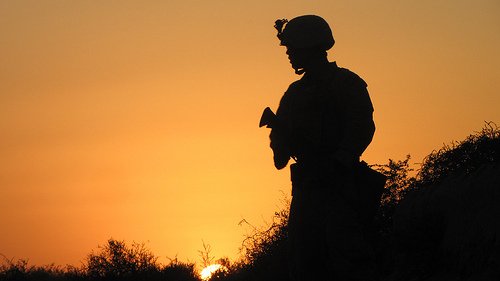 For the record we understand why the Pentagon uses a standardized report to brief various congressional committees, but this doesn’t dispel the creepy feeling of group-speak. Maybe we’re wrong to expect more than one report, though multiple reports aren’t exactly uncommon.
Case in point: when General Brig. Gen. John Nicholson went before the Senate Foreign Relations Committee, his partner Frank Ruggiero offered a specific account of Marjah to accompany Nicholson’s general account of the war.
Of course Ruggiero might find himself giving the same speech in the future. Other mouths too.
As we troll through congressional and outside accounts of Afghanistan, some of the information can’t help but blend together. Already watered down for civilians a handful of statistics are repeated to us: three times the US civilian presence and 59% of Afghans thinking the country is headed in right direction.
The first stat is especially misleading given how low the civilian presence was before 2009.
But US officials sounded like they were literally reading from the same script - because they in fact were. Nicholson’s “prepared remarks" also found themselves coming out of Michèle Flournoy (pdf of testimony), Under Secretary of Defense for Policy U.S. Department of Defense.
They wrap up their briefing, Nicholson to the Senate and Flournoy to the House Armed Services Committee:
"Let me conclude by underscoring our assessment that the insurgency is losing momentum and we are heading in the right direction. That said, the outcome is far from determined. While over 505 of the additional forces are in place, those still to come are critical to achieving success. None of what we are doing in Afghanistan involves quick fixes. These are long-term problems, and their solutions will require both patience and flexibility. At this point, though, we are cautiously optimistic. As said earlier, we believe we have the right mission, the right, strategy, the right leadership, and the right resources. As we move forward, we will continue to adjust - and we believe that we will continue to make progress."And finally they ask for $110.3 billion to fund Operation ENDURING FREEDOM (OEF) within “Overseas Contingency Operations” for the DoD’s FY11, as well as an FY10 Supplemental request for $28.8 billion for OEF.
Feels like a pitch rather than objective analysis.
While we recognize the Pentagon’s system of informing Congress, that system may be part of the problem. It’s worrying in general that the Pentagon’s standard update on Afghanistan is all roses, over-correcting the ground for the American people. Such a complex and confusing war cannot be so neat as the Pentagon presents it.
The report only mentions Afghanistan’s presidential election once, sandwiched between two smiles.
"We've seen other positive indicators in the last year, as well. Of the 121 key terrain districts identified by ISAF in December 2009, 60 were assessed as sympathetic or neutral to the Afghan government. By March 2010, that number had climbed to 73 districts. Although Afghanistan's August elections were marred by allegations of fraud, these allegations were addressed through constitutional means. Ultimately, a new government was formed. Despite the serious issues that remain to be addressed, a national survey completed in March 2010 indicates that 59% of Afghans believe their government is headed in the right direction, an increase of 0.5% over December 2009 and 8% over September."Notice the emphasis on allegations.
Karzai has “taken the lead” according to the report, which also highlights the London Conference as progress. You know, the one that descended into an argument over whether to negotiate with the Taliban.
But the last quote truly reflects the Pentagon’s insular, monopolistic military thinking so dangerous to counterinsurgency: “we believe we finally have the right mission, the right strategy, the right leadership, and the right resources.”
Really? The mission went from al-Qaeda to the Taliban and back to the TTP in a hurry; promoting democracy fluctuates according to the White House’s needs.
And who is "we?" The Pentagon? President Obama, US ambassador Karl Eikenberry and US envoy Richard Holbrooke? Karzai? Afghan governors and mayors? Local Afghan police? Pakistan’s civilian government and military establishment? Disturbingly ambiguous, as many of these players’ abilities remain suspect.
As for resources, Obama gave McChrystal less troops than requested and NATO failed to fill the gap in combat troops and trainers. So we know that isn’t true.
We can’t shake the shady image of the Pentagon, through its various officials, echoing to Congress that they’re the right leadership. Congress needs to hear more outside opinions on Afghanistan. Lots of them. Soon.
This is the smallest start.
May 7, 2010
Supplemental Evidence of Protracting Afghanistan
In addition to the battle of perceptions over Marjah, General Nicholson and Frank Ruggiero testified that the Taliban’s momentum had been “blunted” and “stopped.” We felt it more appropriate to annex a series of reports on the broader insurgency that found otherwise, but everything in Afghanistan is intricately connected.
Understanding the need for the Pentagon's propaganda campaign is easy.
RAND began by concluding, despite President Obama’s surge, that the Taliban have retained nearly every advantage an insurgent can possess. US efforts to reform the Afghan government and seal off Pakistan’s sanctuary remain sluggish. RAND even labels Afghanistan an anocracy - a false democracy - which it considers a death-kiss to counterinsurgents.
The Pentagon then released dual reports, conflicting in many ways but casting an general pall on the war. Later the Pentagon was accused of fudging the maps on insurgency territory.
The ICOS released its own report on Marjah, dealing a devastating propaganda blow to the Pentagon by claiming 67% of respondents want NATO to leave the area.
Two days later the Government Accountability Office, “found that the Taliban remain a resilient fighting force, despite the boost in U.S. troops, and suggested that many factors remain in place that will allow the Taliban to survive U.S. efforts to eradicate them.”
And yesterday The Center for a New American Security (CNAS), former incubator to many of President Obama's civilian and military advisers, found that, "Politics is the blind spot in America’s counterinsurgency strategy in Afghanistan."
"This report notes that America's counterinsurgency strategy in Afghanistan has focused more on waging war at the operational and tactical levels at the expense of the strategic and political levels," writes the author, Andrew Exum.
Exum is already calling for a new review rather than wait until December, which we've argued for months.
The CNAS marks the latest report in a matter of weeks to conclude what we've been predicting since Obama came to office: the political spectrum of COIN still takes a backseat to US military operations, and the Taliban is likely to survive Obama’s surge relatively intact.
He will be forced into yet another decision around July 2011 whether to deploy more forces or begin withdrawing for good, a decision he's likely to base more off his own political candidacy.
These reports are only a slice of the wicked information war surrounding Afghanistan, both inside the US government and vis-à-vis its people.
“A counterinsurgent can seldom cover bad or nonexistent policy with propaganda.”
- David Galula
Understanding the need for the Pentagon's propaganda campaign is easy.
RAND began by concluding, despite President Obama’s surge, that the Taliban have retained nearly every advantage an insurgent can possess. US efforts to reform the Afghan government and seal off Pakistan’s sanctuary remain sluggish. RAND even labels Afghanistan an anocracy - a false democracy - which it considers a death-kiss to counterinsurgents.
The Pentagon then released dual reports, conflicting in many ways but casting an general pall on the war. Later the Pentagon was accused of fudging the maps on insurgency territory.
The ICOS released its own report on Marjah, dealing a devastating propaganda blow to the Pentagon by claiming 67% of respondents want NATO to leave the area.
Two days later the Government Accountability Office, “found that the Taliban remain a resilient fighting force, despite the boost in U.S. troops, and suggested that many factors remain in place that will allow the Taliban to survive U.S. efforts to eradicate them.”
And yesterday The Center for a New American Security (CNAS), former incubator to many of President Obama's civilian and military advisers, found that, "Politics is the blind spot in America’s counterinsurgency strategy in Afghanistan."
"This report notes that America's counterinsurgency strategy in Afghanistan has focused more on waging war at the operational and tactical levels at the expense of the strategic and political levels," writes the author, Andrew Exum.
Exum is already calling for a new review rather than wait until December, which we've argued for months.
The CNAS marks the latest report in a matter of weeks to conclude what we've been predicting since Obama came to office: the political spectrum of COIN still takes a backseat to US military operations, and the Taliban is likely to survive Obama’s surge relatively intact.
He will be forced into yet another decision around July 2011 whether to deploy more forces or begin withdrawing for good, a decision he's likely to base more off his own political candidacy.
These reports are only a slice of the wicked information war surrounding Afghanistan, both inside the US government and vis-à-vis its people.
“A counterinsurgent can seldom cover bad or nonexistent policy with propaganda.”
- David Galula
Doublespeak of the Day
"We've gotten more cooperation and it's been a real sea change in the commitment we've seen from the Pakistan government. (But) we want more. We expect more.”
- Secretary of State Hillary Clinton on CBS' "60 Minutes,” excerpts of which were released on Friday.
“The Pakistanis have been doing so much more than 18 months or two years ago any of us would have expected. It's their country. They remain in the driver's seat, and they have their foot on the accelerator.”
“We're willing to do as much ... as they are willing to accept. We are prepared to do training, and exercise with them. How big that operation becomes is really up to them.”
- Defense Secretary Robert Gates
Naturally Pakistan noticed...
- Secretary of State Hillary Clinton on CBS' "60 Minutes,” excerpts of which were released on Friday.
“The Pakistanis have been doing so much more than 18 months or two years ago any of us would have expected. It's their country. They remain in the driver's seat, and they have their foot on the accelerator.”
“We're willing to do as much ... as they are willing to accept. We are prepared to do training, and exercise with them. How big that operation becomes is really up to them.”
- Defense Secretary Robert Gates
Naturally Pakistan noticed...
Late Reaction of the Day
"That is not our policy in Kyrgyzstan or in any other country. The moment we have now creates an opportunity for us to be more clear and more direct in articulating President Obama's vision."
- White House official Michael McFaul, promising greater transparency and defending America’s commitment to a democratic Kyrgyzstan
"We are falling down dramatically, and the United States doesn't care.”
- Acting Prime Minister Roza Otunbayeva, in a February AP interview as opposition leader
- White House official Michael McFaul, promising greater transparency and defending America’s commitment to a democratic Kyrgyzstan
"We are falling down dramatically, and the United States doesn't care.”
- Acting Prime Minister Roza Otunbayeva, in a February AP interview as opposition leader
The Art of Marjah
 War is often labeled an art, but rarely does this metaphor extend beyond the military realm. War is all too similar to art in that everyone has a different opinion and interpretation. But while art is usually meant to be subjective, in war only one reality exists.
That never stops people from seeing different versions though.
Right now Marjah might as well be two different villages. In one world US says too few Afghans to take control in Marjah. In the Pentagon’s world, Marjah Success Proves New Afghan Strategy.
With Hamid Karzai coming to Washington it’s no surprise that the Pentagon is bombarding Americans with a propaganda campaign, but we still need to know the causes of such a large gap in reality. Are both perspectives accurate in their own ways? Is there a middle ground? Or is one truer than the other?
To enter Marjah is to step into a psychological warzone.
We’ve already reported on McChrystal’s empty “government in a box,” discontent among locals, difficulty in securing the area, and a lack of handover to local government and security officials. The latest distortion stems from the Senate Foreign Relations Committee.
Yesterday Army Brig. Gen. John W. Nicholson Jr., director of the Joint Staff’s Pakistan-Afghanistan coordination cell, briefed Senators along with Frank Ruggiero, the State Department’s senior civilian representative to the military’s Regional Command South, and David Samuel Sedney, deputy assistant secretary of defense for Afghanistan, Pakistan and Central Asia.
“This is the first congressional hearing on our mission in Marjah,” opened Senator John Kerry, chairman of the Committee.
Unfortunately for outsiders there’s no way of knowing for certain what occurred in the proceeding hours. We analyzed the testimony of Nicholson and Ruggiero but they didn’t say much. Both gave short, glowing accounts of Marjah sprinkled with rare dashes of caution.
Nicholson finishes, “Let me conclude by underscoring our assessment that the insurgency is losing momentum and we are heading in the right direction. That said, the outcome is far from determined.”
As for Mr. Ruggiero, “The governance outlook for Marjah is generally positive.”
How truthful are they? Nicholson and Ruggiero constantly played off how poorly Afghanistan in previous years, and US strategy was so geared towards military operations that a civilian counteraction was inevitable. Three times the civilians have landed in Afghanistan, the “largest civilian surge of the war,” but that may still be far short of the requirement.
Relatively is temporarily working in the Pentagon’s favor. To them everything is looking up - even when it may not be.
We felt the overriding sensation that Nicholson and Ruggiero told the Senators what they wanted to hear: more civilians and cooperation than ever before, with increasing security. They advise Marjah was just a test, that everything doesn’t go right the first time, that they’ll get it right next time in Kandahar.
To us the situation simply isn’t as Pentagon officials are painting it.
No shock, but disturbing nonetheless and contrary to US military demi-God David Galula. Calling propaganda a one-sided weapon, Galula warns early on in his classic, Counterinsurgency Warfare, “A counterinsurgent can seldom cover bad or nonexistent policy with propaganda.”
Where one contradiction hides more can be found lying in the brush. For starters, the present source of controversy’s testimony is unavailable on the Senate Foreign Relations Committee’s website, the only testimony omitted.
In the Pentagon’s reality David Sedney emphasized, “The Marja operations have been exemplary for its level of cooperation. This is the biggest civilian-military operation ever.”
But the AP recounted of the briefing, “The assessment didn't sit well with lawmakers, who have grown tired of committing limited U.S. resources and lives to a war with an uncertain outcome.”
"The number of those local civilians who are trained, capable, willing to go into (Taliban-controlled areas) does not match at all demand," Sedney reportedly told the Senators.
The AP continues, “A week into the battle, Marjah's civilian chief was brought in to raise the Afghan flag over the town center and Marjah residents who had fled began to return. Since then, progress has been slower than U.S. officials had planned. NATO forces still run much of the area.”
This accords to reports in the US media, the ICOS, and US officials themselves. Ruggiero admitted that the area's local police force is corrupted by warlords and drug traffickers and still needs replacing.
Stranger though does reality break down in the Senate and Pentagon. The committee hearing itself appeared to be reactionary to the bad press surrounding Marjah, especially the ICOS report. Senator Kerry references the negativity of the report in his opening statement, finally pushing the three-day-old study into national news.
Nicholson and Ruggiero were also asked directly about the ICOS report and had prepared an answer. Nicholson said the interviews had been conducted early on in the Marjah operation, insisting, "It is a work in progress but treading in the right direction.”
Apparently that’s that.
Though Nicholson is partially correct in saying the interviews were held in March, his response can’t be what the ICOS wanted to hear. They aren’t against the war, which they make clear in their support. The report was meant to assist US forces in altering their strategy before the same mistakes are committed in Kandahar. Blowing it off is a bad sign in itself.
The refugee situation in Marjah provides also provides a relevant contradiction. Not only do Nicholson and Ruggiero spend little time on the refugee crisis deplored by the ICOS, Ghulam Farooq Noorzai, provincial director of the refugee affairs department, claims only 900 out of an estimated 4,000 families have returned.
Over 2,800 families have yet to return out of security fears. That was five days ago.
But we can even add direct evidence of intentional falsity on top of the Pentagon’s propaganda. Kerry supposedly, “lamented the fact that Marjah has become such a hotbed of dangerous activity despite being a fairly insignificant area.”
He then says, “Marjah is not a great Afghan city like Kabul, Herat or Kandahar. Marjah was the last Taliban stronghold in the central Helmand River Valley and it was the poppy production hub of Afghanistan and the world.”
The world...
“Marjah was thus not only one of the last Taliban strongholds in central Helmand but through illicit crop taxation, a productive financial source for insurgents,” added Ruggiero.
Maybe Ruggiero and Nicholson have no regard for the ICOS report, but Kerry certainly wanted to portray an impression of concern. Yet the ICOS is especially critical of the US anti-narcotic policy in Marjah and fully exposes a lie being fed to all those affected by the war.
“In the run-up to Operation Moshtarak, Marjah was dubbed the thriving ‘opium capital’ of Helmand province. It is true that opium stockpiles, packaging workshops and makeshift processing plants were found in this area. The United Nations Office on Drugs and Crime (UNODC) identifies the district of Nad Ali as one of the major opium poppy cultivation centers, but at the same time includes it among twelve districts of Helmand where cultivation is high. As such, in Helmand, which currently cultivates 57% of all poppies in Afghanistan and produces 59% of all its opium, the district of Nad Ali cannot be singled out as the main opium district.”Many made the same claim, most outside the beltway.
Though the reality of Marjah remains unclear we do have numerous clues. While the operation appears different from past years, many mistakes are still being made and concealed, both with propaganda and outright fiction.
We understand the need for the Pentagon to sell Marjah, but we’re not buying unless Washington's version begins to come in line with the outside world.
May 6, 2010
TTP Conspiracy Theories Galore
“This is a noble job and we pray that all the Muslim youths should follow Faisal Shahzad. But he is not part of our network.”
TTP spokesman Azam Tariq, denying credit for the would-be Time Square bomber after both TTP leader Hakimullah Mehsud and chief bomb-maker Qari Hussain released celebratory videos.
Tariq also warned, "We will be attacking in a new style against the United States and its allies. Our people have reached the US and other European countries and soon will be attacking.”
Meanwhile US intelligence officials are now claiming Shahzad had contact with TTP leader Beitullah Mehsud, Yemeni cleric Anwar al-Awlaki, and various militants in Lashkar al-Taiba (LeT) and Jaish-e-Mohammed (JeM).
Elsewhere Pakistani Army spokesman Major General Abbas told reporters, "Anybody can claim anything.” A Pakistani security official added, "As far as I know, this young man was angry because of the drones and he decided to vent his anger.”
It should also be noted that three seperate parties, or seemingly seperate parties, are alleging conspiracy - the TTP, Shahzad’s cousin, and Fouzia Siddiqui, sister of Aafia Siddiqui.
"This was a plot hatched by the US and its allies to trap Muslim and [ethnic] Pukhtun youth in terrorist activities," said Tariq, defending Shahzad for his role in the failed Time Square car bomb attack. "This is a conspiracy of the US and its allies against Muslims and the Pukhtuns to defame them."
Kifyat Ali, the cousin of Shazad’s father Baharul Haq also told reporters at an upscale house in Peshawar, "This is a conspiracy so the [Americans] can bomb more Pashtuns.”
Perhaps the only confusion that could top the TTP is the case of Aafia Siddiqui. A wide schism already exists between America and Pakistan over her circumstances and treatment, and now her sister alleges, “This letter [from Hakimullah] was issued by international intelligence agencies as part of an international conspiracy against my efforts to get Aafia released from America."
Aafia’s sentencing was postponed from today until August without explanation. It seems certain at this point, letter or not, that the Time Square bomb somehow revolves around Aaifa Siddiqui.
Too many anomalies exist for this situation to be so simple as revenge for Baitullah’s death, like the US media would have us believe. We know the TTP and al-Qaeda want to incite America into further military aggression, hoping for an erroneous overreaction. But it’s also evident that someone wanted to call attention to Siddiqui’s sentencing, having tried to bomb Time Square three days beforehand.
Foreign Policy reports, “Hussain and Mehsud use similar arguments to justify attacks on the United States. They both condemn the U.S. war in Afghanistan and Iraq and specifically mention Aafia Siddiqui, the Pakistani neuroscientist convicted of attempted murder by a U.S. court and suspected of working on an unconventional weapons program for al Qaeda. The reference is not boilerplate in jihadi condemnations of the United States, but it has become more popular among both violent and non violent Islamist groups in Pakistan eager to position themselves as the defenders of Muslim women's honor.”
And now her trial is postponed, amid the TTP threat and a host of candlelight vigils.
They call Aafia crazy because she alleges Israel is manipulating US foreign policy in the Middle East. Today Senator Joe Lieberman rolled out a proposal to strip US citizens of their rights for associating with foreign terrorist organizations. Next to him Rep. Charlie Dent (R-Pa.) said, “I suspect it would be easier to launch a hellfire missile at a non-citizen than a citizen.”
This is exactly how the TTP wants America to react. We already mentioned why they would use Shahzad - because he tampers with the US constitution. The impact spreads beyond the physical bomb and is predictably welcomed by the US government and media. In Lieberman’s case - and he speaks for more than himself - we seriously wonder if they want US wars to continue indefinitely.
And isn’t that what all the conspiracy theorists are alleging? Isn’t that what’s happening? Whatever the outcome, the TTP’s rabbit hole is going deeper before it ends.
TTP spokesman Azam Tariq, denying credit for the would-be Time Square bomber after both TTP leader Hakimullah Mehsud and chief bomb-maker Qari Hussain released celebratory videos.
Tariq also warned, "We will be attacking in a new style against the United States and its allies. Our people have reached the US and other European countries and soon will be attacking.”
Meanwhile US intelligence officials are now claiming Shahzad had contact with TTP leader Beitullah Mehsud, Yemeni cleric Anwar al-Awlaki, and various militants in Lashkar al-Taiba (LeT) and Jaish-e-Mohammed (JeM).
Elsewhere Pakistani Army spokesman Major General Abbas told reporters, "Anybody can claim anything.” A Pakistani security official added, "As far as I know, this young man was angry because of the drones and he decided to vent his anger.”
It should also be noted that three seperate parties, or seemingly seperate parties, are alleging conspiracy - the TTP, Shahzad’s cousin, and Fouzia Siddiqui, sister of Aafia Siddiqui.
"This was a plot hatched by the US and its allies to trap Muslim and [ethnic] Pukhtun youth in terrorist activities," said Tariq, defending Shahzad for his role in the failed Time Square car bomb attack. "This is a conspiracy of the US and its allies against Muslims and the Pukhtuns to defame them."
Kifyat Ali, the cousin of Shazad’s father Baharul Haq also told reporters at an upscale house in Peshawar, "This is a conspiracy so the [Americans] can bomb more Pashtuns.”
Perhaps the only confusion that could top the TTP is the case of Aafia Siddiqui. A wide schism already exists between America and Pakistan over her circumstances and treatment, and now her sister alleges, “This letter [from Hakimullah] was issued by international intelligence agencies as part of an international conspiracy against my efforts to get Aafia released from America."
Aafia’s sentencing was postponed from today until August without explanation. It seems certain at this point, letter or not, that the Time Square bomb somehow revolves around Aaifa Siddiqui.
Too many anomalies exist for this situation to be so simple as revenge for Baitullah’s death, like the US media would have us believe. We know the TTP and al-Qaeda want to incite America into further military aggression, hoping for an erroneous overreaction. But it’s also evident that someone wanted to call attention to Siddiqui’s sentencing, having tried to bomb Time Square three days beforehand.
Foreign Policy reports, “Hussain and Mehsud use similar arguments to justify attacks on the United States. They both condemn the U.S. war in Afghanistan and Iraq and specifically mention Aafia Siddiqui, the Pakistani neuroscientist convicted of attempted murder by a U.S. court and suspected of working on an unconventional weapons program for al Qaeda. The reference is not boilerplate in jihadi condemnations of the United States, but it has become more popular among both violent and non violent Islamist groups in Pakistan eager to position themselves as the defenders of Muslim women's honor.”
And now her trial is postponed, amid the TTP threat and a host of candlelight vigils.
They call Aafia crazy because she alleges Israel is manipulating US foreign policy in the Middle East. Today Senator Joe Lieberman rolled out a proposal to strip US citizens of their rights for associating with foreign terrorist organizations. Next to him Rep. Charlie Dent (R-Pa.) said, “I suspect it would be easier to launch a hellfire missile at a non-citizen than a citizen.”
This is exactly how the TTP wants America to react. We already mentioned why they would use Shahzad - because he tampers with the US constitution. The impact spreads beyond the physical bomb and is predictably welcomed by the US government and media. In Lieberman’s case - and he speaks for more than himself - we seriously wonder if they want US wars to continue indefinitely.
And isn’t that what all the conspiracy theorists are alleging? Isn’t that what’s happening? Whatever the outcome, the TTP’s rabbit hole is going deeper before it ends.
Real Counterinsurgency: Getting to the Bottom of Aafia Siddiqui
 It appears the White House is going in a different direction from what we suggested. US officials have reached out extensively to Pakistani officials, which is good but also mandatory. We admitted that our response would be un-American in lacking retaliatory strikes and it still is.
“Justice will be done,” President Obama promised on Tuesday.
Several US officials then disclosed, to little surprise, that the CIA widened its drone range in 2008, targeting low level fighters for assassination instead of converting or using them in some way. Obviously this news didn’t leak by coincidence - it’s psychological warfare against the TTP.
Sounds like the White House is about to make it rain.
A Time report questions: “How can the Pakistani groups be combatted? Bruce Riedel, a counter-terrorism expert at the Brookings Institution in Washington, says the Administration's best bet is to launch a 'global takedown' of Pakistani jihadi cells outside Pakistan, especially in Britain, the U.S. and the Middle East. 'These external bases are the most threatening to us, much more than their operations in Pakistan.'"
Riedel, intricately involved in the White House’s war planning, makes no mention of the conditions that breed those external bases. Time adds, “As British authorities — who have had more experience with this challenge than those in the U.S. — know very well, such a takedown involves long, hard work by a host of law-enforcement agencies.”
Again no political or economic factors are mentioned. All Riedel suggests is counter-terrorism, reasonable in that America lacks the resources for counterinsurgency and Obama lacks the time.
But we’re skeptical of Hellfire missiles, 50 grand a piece, being expended on petty guerrillas. After 117 strikes the TTP is still able to lash out against the US homeland. Keep in mind the TTP’s intention was never to do so until recently, and that it almost succeeded on the first attempt.
A new barrage of drones in the FATA - or a “global takedown” for that matter - may provide a short psychological shock and tactical boost, but how far this goes on countering global insurgencies remains in doubt. We still argue that no retaliation would create more “shock and awe,” for what would shock more than a restrained America?
The TTP isn’t out revenge, like the US media represented by the New York Times and Wall Street Journal repeatedly and erroneously emphasized. Revenge is a secondary objective, with provoking more US aggression as the primary goal. For America this isn’t about whether it can attack, but proving it’s above the revenge it condemns the TTP for.
A correct response wouldn’t play al-Qaeda’s game, but instead demonstrate the US military mindset has truly reformed. Lipstick on a counterinsurgency pig won’t work.
What may or may not work, but has far more potential impact, is fighting a legal battle. Aafia Siddiqui, a Pakistani women allegedly abducted in Afghanistan and tortured by US intelligence, is scheduled for sentencing today. In previous trials Siddiqui accused Israel of masterminding America.
All parties deny her claims and cover-up conspiracies run rampant; if Washington had true counterinsurgency on its mind it would start with her. Andy Worthington writes in Counter Currents, “The case of Aafia Siddiqui is one of the murkiest in the whole of the ‘War on Terror.’”
Worthington may not be exaggerating even when considering the wide selection to choose from. Hours ago reports surfaced that Hakimullah Mehsud sent a letter to Siddiqui’s sister, Fauzia, months ago vowing attacks in Aafia’s name. This alone provides a reason to open a new investigation into Aafia rather than sentence her to 30 years.
It doesn’t matter so much that Fauzia denied receiving the letter, the TTP may still relate to Aafia just like the majority of Pakistanis who view her case as typical US injustice. The water only gets murkier under Fauzia anyway.
Instead of the TTP, she claimed that Hakimullah’s letter is a conspiracy of “international agencies” to sentence Aafia - to connect her and the Time Square bombing.
Whether or not this is the case, the White House cannot allow it to be and must intervene if necessary. Drones attack the cause of the attack or threat, not the insurgent’s cause. Real COIN would clarify her case immediately. Treating Aafia to a fair investigation and allowing Pakistan to aid her is a missile that would do real damage to the TTP.
We can only make an educated guess that she’ll be found guilty, but America must redress the TTP’s cause.
Not legitimize it.
May 5, 2010
COIN 101: Disarming the TTP's Time Square Bomb
 Guerrillas being guerrillas would have been a reasonable initial reaction to the Tehrik-i-Taliban Pakistan (TTP)’s claim of ownership for the attempted Time Square bombing. The TTP has made similarly outlandish threats against the US homeland in the past, at times targeting the White House.
This could have been another cheap psychological trick to gain recruits.
But as a gush of information flows from Faisal Shahzad, would-be Time Square bomber, and US officials, the emerging profile of Shahzad does appear to lead into Waziristan. Here he claims to have been trained, though by whom hasn’t been released as of this moment.
"It's a leading line of inquiry," one federal law enforcement official said of the TTP. "There are only a few organizations in Pakistan that could provide training, and the Pakistani Taliban is one that has an ax to grind with us."
Much can change between the time of writing and the future, as this event moves by the hour and day, However, enough information has leaked to warrant the hypothetical examination of whether the TTP did in fact launch the Time Square bomb - and how America intends to react.
It won’t be long.
Two possibilities exist: either Shahzad acted as a lone wolf and sought out the TTP, or he participated in a plot. Both outcomes are equally perplexing for America to counter.
In the lone wolf theory, Shahzad the Bush-hating Pakistani loses his house and begins to lose his grip on reality. Or maybe he knew exactly what he was doing. Wanting to take action with the little means he had left, he links to a friend with militant connections or though family - possibly his father, retired Pakistani Air Vice Marshal Baharul Haq.
At this point ISI ties may come into play.
Then add in Kifyat Ali, Haq’s cousin, who denied Shahzad had any links to a religious group. He also told reporters at an upscale house in Peshawar, "This is a conspiracy so the [Americans] can bomb more Pashtuns.” This statement alone sounds iffy.
A TTP plot may not differ substantially from a lone wolf, save the motive. Shahzad would be recruited by someone within or through his family as a “homegrown” terrorist, rather than using someone out the FATA. This strategy steps behind the shield of US civil liberties, avoids many diplomatic and airport security procedures, and creates a greater psychological impact.
An enemy in the walls.
Multiple U.S. law enforcement officials said Shahzad had attracted no significant law enforcement attention before the attempted bombing. "He was not on the radar," said one official - the perfect man for a plot.
Both of these possibilities present counterinsurgency challenges America has yet to face in full; the Time Square bomb, sloppy as it was, remains ingenious if the TTP did in fact launch it. The TTP poses an unsolved riddle to the US military: how to combat an insurgency in a country you cannot enter militarily, where you have only external political clout and near-zero local support.
The Afghan Taliban, or al-Shabab in Somalia for instance, are content to wage a local insurgency. Conversely the TTP insurgency is copying Yemen’s insurgency, actively striking beyond its territory to provoke the counterinsurgent's home nation.
The TTP’s goal isn’t to “kill as many Americans as possible” in the words of US Attorney General Eric Holder and a multitude of White House officials.
Though the TTP and al-Qaeda’s ranks and territory have shrunk, their overall goal remains unchanged - make America spend as much money for as long as possible. They want America to militarily reinvest in Pakistan and stay in that mindset, similar to al-Qaeda in the Arabian Peninsula’s (AQAP) antagonism in Yemen.
Consider Hakimullah Mehsud, healing rather than dying, making his comeback in grand style. Known for how cowboy attitude, Hakimullah loves making a scene as evidenced by bombing a CIA base in Afghanistan, taunting the CIA, then facing the full wrath of the drones. Now he’s mocking America again.
Obviously the TTP and its al-Qaeda shadow seek an overreaction, hope to provoke more war, to force America into spending billions more in reaction to a bomb that cost thousands and didn't even explode. The New York time bomb could very well achieve its objective too. President Obama has already declared, “America will never be intimidated by terror.”
While a display of strength is necessary, “we will not be terrorized” is political speak for continuing the war in Afghanistan and striking wherever al-Qaeda hides. This is exactly what al-Qaeda and all of America’s enemies want.
The fundamental dilemma for America is how to attack and defeat groups like the TTP without giving it what it wants. Retaliatory strikes only have a temporary effect and do not qualify as COIN. As the enemy wants to war, an un-American reaction must prevail - don’t give it war.
The proper response to the TTP is limited military retaliation, ideally none. Security profiling must be avoided as political and diplomatic resources take precedent. Renew positive dialogue with Pakistan and push for civil operations in Waziristan, demonstrate progress over a Kashmir (and Palestine) resolution, and fix the countless errors of Marjah before it’s too late in Kandahar.
When the Oval Office phone rang for Shahzad, President Obama’s first calls hopefully went to his Afghan and Pakistani counterparts, Hamid Karzai and Asif Zardari.
They are the best and perhaps only means America has to combat the TTP.
May 4, 2010
Quotes of the Day
“We hope we will be able to start the proximity talks soon, and that the Palestinians will not use delay and avoidance tactics. Prime Minister Netanyahu has warned for a whole year against wasting time, and has repeatedly called on the Palestinian Authority leadership to renew the peace process without delay."
- anonymous Israeli official
Yes, the Palestinians are the ones preparing the ground for failure...
- anonymous Israeli official
“Abbas is preparing the ground for the talks to fail. He believes the failure will expose Israel’s true face. He is pessimistic about the outcome and believes the ball is in Israel’s court.”
Yes, the Palestinians are the ones preparing the ground for failure...
Visions of Muqtada al-Maliki
Al Jazeera is reporting that, after one failed attempt, Iraqi Prime Minister Nouri al-Maliki's State of Law Alliance has joined forces with the Iraqi National Alliance (INA), spearheaded by cleric Muqtada al-Sadr. In theory they would be four seats short of forming a government.
Ibrahim al-Jaafari, a former PM, Abdul Razzaq al-Kadhimi, an INA advisor, and State of Law officials made their announcement during a press conference on Tuesday.
"An agreement was reached to form a parliamentary bloc through the union of the two blocs, the State of Law Alliance and the Iraqi National Alliance," the officials said in a statement.
Their actions come right in the middle of al-Maliki’s recount. But while the situation is extremely fluid and may change tomorrow, the future seems to be trending towards a Maliki-Sadr alliance as US forces withdraw.
Do you think US officials saw that coming?
Ibrahim al-Jaafari, a former PM, Abdul Razzaq al-Kadhimi, an INA advisor, and State of Law officials made their announcement during a press conference on Tuesday.
"An agreement was reached to form a parliamentary bloc through the union of the two blocs, the State of Law Alliance and the Iraqi National Alliance," the officials said in a statement.
Their actions come right in the middle of al-Maliki’s recount. But while the situation is extremely fluid and may change tomorrow, the future seems to be trending towards a Maliki-Sadr alliance as US forces withdraw.
Do you think US officials saw that coming?
Will 67% of Kandahar Oppose US Operation?
 It’s no surprise that multiple versions of “reality” exist in Afghanistan. Each side projects its own image and competes for the outside observer’s attention, while external forces further amplify and distort these “realities.”
Outside observers are left to separate mass quantities of information and disinformation in the darkness these sides seek to create.
Agreed upon by every side is that a US military operation looms large over Kandahar - and there the sides diverge. The local and national Afghan governments don’t appear to share America and NATO’s public confidence, while the Taliban naturally believes an operation is futile.
The shadow governor in Kandahar, who goes by the name of Mubeen, already admitted his forces will retreat, vanish, and reappear if the operation cannot be withstood. Like Marjah, he said.
So what will become of Kandahar’s real fate and potentially the West’s mission in Afghanistan? The Taliban has it right in one way. Hints are scattered across Marjah, where the future itself may be hidden. Kandahar is the main phase of President Obama’s surge with Marjah as the pilot program, meaning prospects for Kandahar fall if Marjah didn’t take off.
Here another a perception battle rages over reality. Major General Richard Mills, the new Marine commander of Helmand, stopped by NRP last week for a brief interview, more Pentagon commercial than journalism.
“If you go to Marjah today, you will find a city that is free of the Taliban, that has schools that are open, a marketplace, a bazaar,” Mills starts right off. “I think the other thing that would strike you would be the relative security of the streets. It's certainly not a totally safe place now, but overall, security has improved. So far I think things have gone very well.”
“There is still a presence in the area. No question about it. And I think when you look at the importance of Marjah to the Taliban; it is the center of, really, their psychological homeland, if you will. They drew a lot of support from the narcotics trade that was there. So I think that some of what you see is a residual effects to the Taliban refusing to give it up. But, I think if you look at the results on the ground, you'd see a different story.”Let’s look at the ground since you insist - when was Marjah ever the psychological homeland of anything Taliban?
Mills adds, somewhat accurately, “The Taliban have been reduced, there, really, to a war of terror. They have really disappeared from the city other than when they come in at night to plant their IEDs and to try to strike fear into the hearts and try to turn the people away. And to date, everything has not worked.”
Certainly the Taliban is applying “terrorism” in the grander scheme of insurgency. It also has members on the tribal council, in mosques, as political agents and judges and farmers. Marjah sounds like it’s buzzing with Taliban activity, contrary to Mills’ assessment, which might not be so bad an omen if the political framework was coming online.
Such doesn’t appear the case. Is the reality Marines Stabilize Afghan Town of Marjah, or 67% of Afghans oppose Marjah operation?
That is the percentage of local residents who responded that the operation was “bad for the people of Marjah,” according to a new report by the International Council on Security and Development. Out of 500 interviewees, 61% said they feel more negatively after the operation, 67% oppose “a strong NATO force” in the area, and 68% think the Taliban will return.
The same percentage believes NATO won’t win the broader war against Taliban.
Disturbing supportive evidence: 96% of respondents said too many civilians were killed and 78% listed themselves as often or always angry, with 45% of those stated they were angry at the NATO occupation and only 9% towards the Taliban. 95% believed more young Afghans have joined the Taliban in the last year.
The silver lining, which the ICOS repeatedly highlights to avoid total damnation, is that US and NATO force had and still have the ability to influence these numbers. Done right and the majority of Afghans might swing the other way. 60% and 70% figures dominate the report, reflecting David Galula’s observation that the majority of an insurgent population is neutral.
The ICOS writes, “The underlying positive message is the desire of the Afghans to be rid of the Taliban’s presence and violence: what they do not want, however, is to bear the type of unmitigated impact of the fighting between the insurgents and NATO forces that they and their families are experiencing.”
Yet this bright spot is erased by why these numbers exist. US commanders like Mills are either lying or out of touch with the local population, equally troubling scenarios. Marjah was supposed to be different, but in spite of all the COIN talk America still failed to deploy a real counterinsurgency operation.
No wonder Kandahar residents are skeptical when unmitigated impact continues to repeat. The ICOS’s opening statement:
NATO‟s Operation Moshtarak, launched in February 2010 in Helmand province, was the first deployment after the beginning of the much-debated surge of 30,000 additional US troops. It was billed as the largest military operation since the invasion of 2001. The planning for the operation emphasized the needs of the Afghan people, and the importance of winning hearts and minds as part of a classic counter-insurgency operation. However, the reality on the ground did not match the rhetoric. Welcome improvements in the size and conduct of military operations were undermined by a lack of sufficient corresponding measures in the political and humanitarian campaigns.”Inexplicably, “Despite the extensive publicity which the operation received, aid agencies do not appear to have been briefed or consulted sufficiently in advance, or given appropriate resources to respond to the needs of the community.”
Respondents were nearly unanimous in citing insufficient care for the internally displaced as a root problem of Operation Moshtarak, and a brewing controversy is the latest smoke to this fire. “People are fleeing from Marjah out of fear and insecurity,” Ahmadullah Ahmadi, president of the Afghan Red Crescent Society (ARCS) office in Helmand, recently told IRIN.
Kabul launched a swift denial, calling the 100 families that supposedly left “opium farmers.” But the numbers don’t bode well for America or the Afghan government.
Ghulam Farooq Noorzai, provincial director of the refugee affairs department, recorded 974 families returning over the last two months out of an estimated 4,000. Over 2,800 families remain in Lashkargah, capital of Helmand province. According to Noorzai, “People are not returning to their home areas due to insecurity.”
“The Taliban are harassing people,” he warned. “Their war is not over but has just started.”
This doesn’t sound like a secured town by any definition, let alone a governed one. Yet any potential dagger in Marjah, along with Kandahar and Afghanistan as a whole, will form from the ICOS’s second warning - a failed political campaign.
Several weeks ago Joint Chief of Staff Michael Mullen rendezvoused with General Stanley McChrystal in the center of Marjah, where the latter promised by year’s end, “We'll be able to show progress in security and governance."
“Both said they are confident real progress has been made on the military side of the equation, highlighting the predictable Special Forces,” the Los Angeles Times reported, before noting the absence of political progress. “On that count, McChrystal's officers are often frustrated. There are far too few trained policemen, far too few honest civil servants and far too few examples of Afghan government programs that actually deliver on their promises.”
Unfortunately McChrystal’s record on promises isn’t inspiring, repeatedly stressing the need to limit civilian casualties only to witness new “accidents” the next day. He also made the infamous promise of the “government in a box” he'd prepared for Marjah. The ICOS tries to spin this to its best ability, proof that the report is unbiased towards the Taliban.
“The declaration in advance of the Marjah operation that there was a “government in a box, ready to roll in” shows that NATO and the international community have in principle learnt a lesson from previous years. They have acknowledged that there is a need to focus on perceptions.”
Obviously America and NATO have learned the importance of perceptions, as we’re suffering them now, but they remain relatively hopeless to control or forge reality in Afghanistan.
The LA Times reports, “When the Marines landed in Marja, they announced that they were bringing ‘a government in a box’ - a fully equipped local administration that would get services working and funnel aid from Kabul and Washington into the district's agricultural economy. But when the box was opened, there wasn't much inside. Of the half a dozen district ministers who were supposed to come and set up shop, only one - the minister of rural redevelopment - was brave enough to move to Marja; most of the rest stayed in the relative safety of the provincial capital, Lashkar Gah, about 18 miles to the northeast.”"It's been very slow," a U.S. official acknowledged. "It's very hard to recruit civil servants to come to a place like this. A government in a box? It probably wasn't a good idea to use that phrase."
That, perhaps, more than any testimony, describes the reality of Marjah - more talk than action. McChrystal remarked that, "It won't be how many roads we built, how many schools we built, how many Taliban we killed. It's going to be what the Afghan people think."
Well they’re telling you what they think, and 67% of hearts and minds may yet to be won. Though the US military finally appears to be embracing counterinsurgency in the lab, it still has the equation backwards in the field. Politics and economics still came second to military operations, while humanitarian concerns completely fell through the cracks.
A military solution that creates optimal conditions for political reform is impossible with this kind of counterinsurgency.
The likeliest outcome in Kandahar is stalemate, given the local resistance, lack of coalition forces, and fresh history in Marjah. US and NATO forces will barely secure the city and province, let alone install an efficient Afghan government with Ahmed Wali Karzai on the throne. 74% of the ICOS’s respondents strongly support a dialogue with the Taliban; the same can be said for Kandahar and probably Afghanistan.
But if America and NATO don’t quickly correct their errors in Marjah, ten times smaller than Kandahar and 100 times less important, they’ll wish they negotiated with the Taliban when they had the chance.
Stalemate in Kandahar is as good as defeat in Afghanistan.
May 3, 2010
Obama’s Moon Conspiracy
 As scientists a Moon hoax has never appealed to us. Many argue that landing on the Moon is easier than faking one. We argue that going to the Moon is necessary to the US government, the many interests that operate within - and behind - it, and above all the human species.
In our minds this gives birth to a far more real conspiracy.
Like astronomy, sensing and adjusting for political distortions can sharpen the images being broadcast. When President Obama visited John F. Kennedy Space Center in April to unveil his vision of Space Exploration in the 21st Century, he had one actual job to do. Not lay out a real space vision, but sell one.
Thus a Mars and asteroid landing were deployed for “wow” factor, at which they succeeded. But their future also smashed a gaping hole in Obama’s strategy when he dismissively rejected the prospect of a new lunar voyage.
“I understand that some believe that we should attempt a return to the surface of the Moon first, as previously planned. But I just have to say pretty bluntly here: We’ve been there before. Buzz has been there. There’s a lot more of space to explore, and a lot more to learn when we do. So I believe it’s more important to ramp up our capabilities to reach - and operate at - a series of increasingly demanding targets, while advancing our technological capabilities with each step forward. And that’s what this strategy does.”
This strategy is bogus to the point where we completely doubt Obama’s sincerity. At first we were upset by the omission, but our spirits rose each time we reconsidered the possibilities. What Obama said makes no sense. A lunar landing is central to his vision, the bulk of astronomers and physicists, our own, and the countless people across the Earth working towards expanding the human species.
Which makes leaving out the Moon extremely suspicious.
Perhaps it’s just us (though we know we’re not alone), but we assume the Moon represents humanity’s first real step into the Universe. Unless we plan on leapfrogging celestial objects, a strategy that could stretch our supply chains too thin, the most logical and practical method is gradual expansion.
The Moon is the first stepping stone into the giant river of space - we aren’t going to leap over it. Here Obama tips us off again with fishy behavior.
“The challenges facing our space program are different, and our imperatives for this program are different, than in decades past. We’re no longer racing against an adversary. We’re no longer competing to achieve a singular goal like reaching the Moon.”
Exactly: a lunar “race” is no longer aimed at a terrestrial adversary, but distant comets headed for Earth. We’re no longer competing to achieve a singular goal like “reaching the Moon,” but the complex goal of colonizing it and weaving a human network into the solar system.
It’s as if Obama is speaking in code, the opposite of probable theory. He must really not want to go near the Moon to make foolish claims like “we’ve been there before” and “there’s more to study.” The Moon hasn’t been studied at all, relatively speaking.
Obama’s conclusion then tears his own logic apart.
“Early in the next decade, a set of crewed flights will test and prove the systems required for exploration beyond low Earth orbit. (Applause.) And by 2025, we expect new spacecraft designed for long journeys to allow us to begin the first-ever crewed missions beyond the Moon into deep space. (Applause.) So we’ll start -- we’ll start by sending astronauts to an asteroid for the first time in history. (Applause.) By the mid-2030s, I believe we can send humans to orbit Mars and return them safely to Earth. And a landing on Mars will follow. And I expect to be around to see it. (Applause.)”
Though these missions may be successful without lunar colonization, the odds of Obama “being around to see it” seem to rise with it.
Colonization is critical to interstellar expansion at every level. Here micro-gravity climates can be studied extensively and space technology perfected: base construction, transports, greenhouses, and the psychological effects of long-term space living.
Multiple spaceports will spring up in the further stages of lunar colonization, from the original landing zone to commercial, scientific, and military ports. Each will serve as logistics hubs for outer-space travel, linking up to their counterparts on Mars and possibly Venus or Mercury. Enormous time and energy can be saved if humans don’t return to the Earth for every single thing.
Sending mass quantities of supplies from the Earth to the Moon makes more sense, now easily distributed into the inner and outer solar system.
These ideas are far in the future, but lunar colonization sounds more inevitable than logical. In 100 years is anyone willing to bet humans won’t have done so? Why we would only build on Mars and stay away from the Moon? This makes no sense, so why did Obama utter such nonsense?
The US government must already have something cooking on the Moon.
We say this only partially tongue in cheek. Accepting Obama’s defense as is - "we’ve been there before" - is impossible, but maybe his weak defense covers for America being broke. Maybe he just didn’t want to admit he can only do one, not both. So adamant was he in forgetting the Moon though that we can’t help sensing a disturbance.
The question then becomes what’s the plan. Guarding a lunar base would make sense as location can make or break its future. China, the EU, Russia, and possibly India and Japan are known to be planning lunar bases. A policy of denial might be designed to cloak a US base, hard as it would be to fool foreign intelligence agencies.
The possibility also exists that Obama is guarding economic interests.
Less likely is some sort of weapons system, but when it comes to space defense no concept should be immediately discounted. After all bases need defending, and no longer are we in the land of science fiction. 2010 may not be what writers in 1910 predicted, but we’re living in an advanced world nonetheless.
Technology is evolving exponentially and we fully expect be around for a US Moon base. There may be reasons to hide one, but every reason to build one.
May 2, 2010
Sudan Bailout Bugs New York Times
Thanks to The New York Times for a good laugh. They must have read our analysis - yeah right.
We don’t necessary mean to pick on the NYT, its editorial on Sudan merely serves as a model of the general US media: shock, naivety, anger, denial, panic. The NYT is a but a piece of the “left” fooled by the Obama administration. For these people the pill must be bitter indeed, and it shows.
Or maybe the NYT is in on the coverup.
Notice Omar al-Bashir must stand trial for crimes against humanity, yet the NYT seems resigned that he’s going nowhere. Realistic, if nothing else. But then China, who deemed the election “orderly” is supposed to help? Pure idealism - Sudan is ultimately a square on America and China’s chessboard.
With no allusion to Obama’s “too big to fail” policy, he certainly comes off well for how big a let down the NYT implies:
We don’t necessary mean to pick on the NYT, its editorial on Sudan merely serves as a model of the general US media: shock, naivety, anger, denial, panic. The NYT is a but a piece of the “left” fooled by the Obama administration. For these people the pill must be bitter indeed, and it shows.
Or maybe the NYT is in on the coverup.
Notice Omar al-Bashir must stand trial for crimes against humanity, yet the NYT seems resigned that he’s going nowhere. Realistic, if nothing else. But then China, who deemed the election “orderly” is supposed to help? Pure idealism - Sudan is ultimately a square on America and China’s chessboard.
With no allusion to Obama’s “too big to fail” policy, he certainly comes off well for how big a let down the NYT implies:
“One year after the International Criminal Court accused Sudan’s president, Omar Hassan al-Bashir, of war crimes for the genocidal rampage in Darfur, he was re-elected in a blatantly manipulated election.Washington will need more than diplomats.
Mr. Bashir has no legitimacy and he must stand trial for his crimes. But those facts must not divert the world’s attention from another potential crisis: the very real danger of renewed civil war between Arab Muslim northern Sudan and the south, which is largely Christian and animist. The last conflict — from 1983 to 2005 — left about two million people dead.
Under a United States-backed peace agreement, the semi-autonomous southern region will hold a referendum in January to decide its future. Voters are expected to choose independence. Leaders in both the north and the south pledged to respect the results. But there is so much oil involved that they can’t be depended on to keep their word — without strong encouragement from the United States and other major players.
Southern Sudan produces most of the country’s oil. Mr. Bashir and his cronies are unlikely to give that up easily. Meanwhile, leaders in the south are likely to resist giving up the oil-rich border area of Abyei if it votes separately to join the north. All sides need to understand that this isn’t a zero sum game. The oil now gets to market via a pipeline through the north to Port Sudan. Khartoum could continue to share the benefits with a long-term contract under which the south would pay royalties to use the pipeline. And the south needs the pipeline and stability to keep pumping that oil.
Washington, the African Union, the United Nations, the European Union and China, which has growing investments in Sudan, must press both sides to ensure a fair and free referendum and to honor the voters’ verdict. They must make it clear — firmly and often — that renewed violence is not the answer.
Last year, the Obama administration replaced a punishment-heavy approach toward Sudan with one that includes some incentives, although officials continue to debate the right mix. What is most needed is sustained attention, and pressure, in this critical period.
There are still a lot of unresolved issues that need to be settled now — including border demarcation, water rights and the status of citizens on both sides of the border. Those will prove even more volatile if left hanging until after the vote.
Washington is sending more diplomats to southern Sudan. They have a lot of work to do — and not a lot of time — to help the leaders there improve their ability to govern and promote the rule of law. Otherwise, the desperately impoverished region runs the risk of becoming a failed state the day it is born.”
Quote of the Day
“If Israel builds one house in the West Bank, Palestinians will immediately stop the negotiations."
- Chief Palestinian negotiator Saeb Erekat
- Chief Palestinian negotiator Saeb Erekat
Bank of Sudan
 Several weeks ago the sun peaked through the clouds when Osman Taha, Sudan's second vice-president, claimed the main opposition bloc, Sudan People's Liberation Movement (SPLM), agreed to recognize the results of the April 11th election.
“We agreed to maintain an atmosphere of peace, as was the case during the election,” Taha said after talks with Salva Kiir, the SPLM leader.
Sudanese president Omar al-bashir would go on to “win” 68% of the vote. SPLM chief Yasser Arman, whose boycott touched off an opposition strike, banked 22% while Kiir, running as the south’s autonomous president, secured 93% of the southern vote.
Though Taha provoked a degree of skepticism from us, it makes sense for the SPLM to lie low all the way to the referendum in 2011. They’ve consolidated power in the south and are ready to make a serious run at secession. If incumbent Omar al-Bashir manipulates the outcome any further then they can cry foul, but too early in the revolutionary cycle would likely backfire.
"There is no link between the election and the referendum," insisted Arman despite all evidence to the contrary.
“I urge all of us, candidates, agents of the candidates, those who have lost, to use the respective institutions designed to address complaints,” Anne Itto, the SPLM’s deputy secretary- general, told reporters. “We need peace in order to get to the next stage.”
Silent opposition to the electoral process and confirmation that the SPLM’s main target is the 2011 referendum - Sudan’s Judgment Day.
When determining outcomes three present themselves: a fair election that grows “democracy” under al-Bashir, a fraudulent election that’s better than the chaos of no election, and the elements of another round of civil war. In the first corner sit Sudan’s government, the AU, and China, whose monitors determined the election "smooth and orderly."
Cross out the first possibility.
With the last possibility clearly not the West’s intention, it quickly becomes apparent that the West and most of Sudan’s parties were and still are hoping for a “Goldilocks” outcome. This alone shows how helpless the situation may actually be.
We can’t say it any better than Ahmed Elzobier in The Sudan Tribune:
“The United States, the CPA’s main sponsor, and the European Union are worried that their investment in peace in Sudan may be lost to renewed conflict or instability. The bailout is simple; support the SPLM/NCP to muddle through no matter how flawed or sham the elections may be. ‘This Is Africa (TIA) you know,’ some argue patronizingly, there is no ‘perfect election,’ it will be ‘a step forward given Sudan’s context.’ The ultimate aim is to achieve a ‘milestone,’ that it keeps the SPLM/NCP in power until 2011 is merely an unfortunate side issue. The US State Department assistant secretary Philip Crowley was asked in a press briefing last week whether the U.S. is going to be ready to sign off on the results no matter how flawed the actual process. He answered, ‘What’s the alternative?’”
Promoting international law doesn’t mix with excusing Sudan’s election for not meeting “international standards,” but in a display of geopolitical irony Sudan has become the US financial system - too big to fail. Leaving aside the EU, which was only slightly less congratulatory, America is caught in the trap as prime sponsor of Sudan’s Comprehensive Peace Agreement (CPA), signed in 2005 to “end” the civil war. congratulatory
Like the SPLM, Washington is just trying to hold the ship together until 2011.
A campaign this deep began back in 2005, as soon as the CPA was inked. Then president George Bush was already attracting criticism for inaction on Darfur following his infamous “never again” quote in Rwanda. The plot continued as then-Senator Barack Obama vowed to hold Sudan accountable to international law.
This allowed him to ride his Democratic base’s expectations all the way through the presidential election, though Save Darfur has wised up.
Gabriel Stauring of Stop Genocide Now, among others, explained after the election, “Marginalized people in Sudan are being left behind and unprotected, in this rush to meet a time-line. U.S. Sudan policy is, in effect, promoting abuses and impunity, when it does not go beyond statements of regret and move towards true consequences and pressures.”
The US campaign kicked into high gear during the weeks before the election. As southern political parties cried foul and al-Bashir threatened to expel international monitors, Washington played down the storm clouds during negotiations inside Sudanese politics and back home in briefing rooms.
The White House placed its faith in al-Bashir, an international war criminal, and promised to hold him accountable if he corrupted the election.
In the days after the election a predictable message started taking shape to counter Save Darfur, a message tested in the White House and State Department for months. Though Sudan’s elections didn’t meet “international standards,” it was “peaceful, meaningful, and a very important step.” The White House’s response took on a pattern familiar to Afghanistan.
Secretary Clinton and Gates were fond of reminding Americans back home that our democracy has flaws too.
The day after meeting with Sudan envoy General Scott Gration, Press Secretary Robert Gibbs released the White House’s official statement. To its credit it accurately reflects the US position: crumbs of “criticism” followed by champagne. In other words the Goldilocks outcome.
Forget the ballot stuffing and stealing, "disappearances," opposition parties threatening protests, and having their international travels monitored by the NCP, who fears their communications with the international media.
Or, for what it’s worth, a Sudan Tribune poll that asked 4382 respondents: Do you feel that opposition allegations of electoral fraud has any merits? Out of 4382 respondents 67.7% said yes, 23.3% said no, and 8.9% said maybe.
To be fair though Sudan appears to have avoided a worst case scenario in the near term. Western officials are right that the election could have gone even worse, for now. That could also be the flaw though - April’s election acting as a quick fix with potentially fatal aftereffects. What happens when 2011 does come?
Will America’s investment pay off or crash?
US officials portray an outward sense of confidence unjustified by the Sudan’s present state. In Washington’s mind splitting northern from southern Sudan is the endgame, which it readily admits to. In theory al-Bashir will weaken political and economically when he loses the south and possibly Abyei, home to most of Sudan’s oil reserves.
Crowley said many of those elected in the Sudanese poll, however flawed it may have been, would decide whether, "we have a credible referendum process that, quite honestly, is likely to yield the emergence of a new country."
"So while we understand that there were flaws and failures in terms of this electoral process, we will recognize that there is a lot of work to be done," he said. "The United States will continue to work with the government in the north, the government in the south, as we move forward with ... the vitally important referendum that’ll happen in January of next year."
This strategic objective only coincidentally coincides with the southern opposition.
Another strategy could be outright appeasement. The West’s policy according to Louise Roland-Gosselin of The Guardian: “rather than ruffling Bashir's feathers now, we should congratulate him for how far he has come, in the hope that this will make him more conciliatory when it comes to agreeing border demarcations or oil-sharing revenue with south Sudan.”
This sounds feasible too, though we favor the first strategy as real US policy. Either though chases a Goldilocks ending that appears destined to prolong the suffering of those in northern Sudan and especially Darfur. Washington refuses to address the very real possibility that al-Bashir won’t allow the south to secede.
We understand that, rather than pick a premature fight now, the SPLM is readying for war in 2011. They know al-Bashir won’t let them go so easily. America could be acting on the SPLM’s orders, hoping for a peaceful resolution in public and planning for a military contingency in secret.
But the same can be predicted from the north.
Though plenty of examples between Sudan’s campaign and election demonstrate that Washington realizes the dangerous bet it placed, none reveal the true gap like its reaction to al-Bashir’s “victory.” Announced last Monday, seven day have passed days without a statement from the White House and State Department.
Defending al-Bashir was a lot easier before the election than it will be afterward, especially if he doesn’t pay Obama back.
Subscribe to:
Posts (Atom)