Last month, the French army's rapid advance into northern Mali and the timely deployment of troops from the Economic Community of West African States (ECOWAS) seemed to result in a swift victory over Islamist and Tuareg militants there. Equally important, however, was the Islamist and Tuareg militants' hasty withdrawal into northeastern Mali. With France planning to pull its troops out of the country as soon as March, Mali will almost certainly be turned into an ECOWAS trusteeship. The most likely upshot is not a neat end to the conflict but, rather, a migration of the problem into neighboring Niger.Continue Reading
Parts of the Tuareg leadership, which signed a power-sharing agreement in March 2012 with three jihadist militias -- al Qaeda in the Islamic Maghreb, Ansar Dine, and the Movement for Oneness and Jihad in West Africa -- have already fled across the unguarded Nigerien border, where they will try to regroup. Given Niger's weak government structures, they also pose a serious security threat to the country as a whole.
Niger presents an appealingly easy target. For one, despite several attempts at reform by President Mahamadou Issoufou, who was elected in April 2011, Niger's secular political elite lacks legitimacy in the eyes of its largely illiterate, rural, and deeply religious population. Numerous failed attempts at democratization and rampant corruption by previous governments have plagued the country for over two decades. Among the population, this troubled legacy has fostered a general sense of alienation from the capital.
Large parts of the Nigerien army, meanwhile, are opposed to the notion of civilian rule. Ever since it was pushed out of power in 1991, the army leadership has cultivated a deep mistrust of the civilian elite among all military ranks. Consumed with hatred for the Tuareg following two major military campaigns against them (1990-1995 and 2007-2009, respectively), the Nigerien army has overthrown three civilian governments since 1993. Although recent coup attempts in 2011 and 2012 proved amateurish and lacked sufficient support among both the armed forces and the population, they indicate long-standing tensions between parts of the military and the civilian elites.

Showing posts with label MNLA. Show all posts
Showing posts with label MNLA. Show all posts
February 13, 2013
After Mali Comes Niger
This report on Niger makes no mention of a potential U.S. drone base in Niger, except in a negative context at the end, but also favors increased support to an admittedly corrupt government:

January 24, 2013
Ansar Dine Split Clouds Mali's Netwar
In their quest to create larger and more organized structures than their individual parts, non-state actors (both military and civilian) are driven by necessity to connect with like-minded groups and their own hierarchies. Unless commanded by strong central leadership at the network's hub, they generally assume flatter shapes that make them harder to kill but easier to divide - especially in insurgency environments where everyone has interests to pursue. The benefits of netwar can evaporate as quickly as one network breaks away from another, and time will soon tell how much Mali's Islamist alliance suffers from division.
Speaking to the Associated Press on Thursday, former Ansar Dine official Alghabass Ag Intalla has announced the creation of a new all-Malian Tuareg front: the Islamic Movement for Azawad (IMA). Ag Intalla had initially chosen Iyad Ag Ghaly's newly-established Ansar Dine over the National Movement for the Liberation of Azawad (MNLA) during their joint takeover of the north, locking down the Kidal region that both call home. The urgent question is whether Ag Intalla's intentions are sincere. Chafing under Ag Ghaly's authority would be natural for multiple reasons; Ag Intalla is considered a moderate Muslim and the heir to Kidal's tribal leadership. Just as the ambitious Ag Ghaly has involved himself in the Tuareg movement to the point of several failed takeovers, Ag Intalla doesn't want to take orders from someone else.
“We are neither AQIM or MUJAO,” he said, referring to al-Qaida in the Islamic Maghreb and the Movement for the Unity and Jihad in West Africa. “We are a group of people from the north of Mali who have a set of grievances that date back at least 50 years.”
Ag Intalla's actions are believed to be driven by French air-strikes in the Kidal region, the first phase of bombardment on AQIM's catacomb bases located along the Mali-Algerian border. This must be partially true if his loyalist forces reject fighting and dying for "al-Qaeda's war," but Ag Intalla is also working a deal with international mediators and seems to expect his terms to be considered. For months African and European diplomats had used him in their attempts to pry Ansar Dine away from AQIM and MUJAO, with the intention of jelling it back together with the MNLA. Except Ag Ghaly was never serious about negotiating - later deemed a "miscalculation" by foreign sources - and instead offered MNLA fighters an ultimatum to join or die before storming their last towns with AQIM and MUJAO's assistance.
Ag Intalla and his foreign handlers presumably reached out to each other when the French landed last week in Sevare, and the first details are now going public.
Accordingly, French officials say they are taking Ag Intalla at his word until his actions prove otherwise. They likely trust his immediate motivation to distance himself from al-Qaeda's flag, but they expect the type of rapid assistance that could shorten Mali's operation and win praise at home. Demanding that they "prove it on the ground," one anonymous diplomat said that Paris is looking for the IMA to "free up territory" and work with the Malian army in Kidal. Plugging into Ag Intalla's local network should ease the burden of fighting the Islamists' embedded positions in Mali's rugged north, so one can understand how eager the international community is to flip him.
For his part Ag Intalla claims his men are prepared to fight Ansar Dine and its allies. Less clear is his willingness to cooperate with the MNLA; forming a new group suggests a loose relationship, but they may be forced together by the circumstances. Also uncertain is the long-term effects on the Islamist alliance. Can Ag Ghaly afford to target Ag Intalla and risk provoking his own Tuareg base? Does Ag Intalla possess enough strength to confront Ag Ghaly and his allies head on? Will other groups splinter off and create a web of networks operating on competing agendas, and will this patchwork facilitate or obstruct a political resolution to the north's conflict?
And what if Ag Intalla wants what the international community isn't prepared to give any Tuareg: autonomy or independence? This current situation, like everything else in Mali, is shrouded in a fog of asymmetric warfare.
Speaking to the Associated Press on Thursday, former Ansar Dine official Alghabass Ag Intalla has announced the creation of a new all-Malian Tuareg front: the Islamic Movement for Azawad (IMA). Ag Intalla had initially chosen Iyad Ag Ghaly's newly-established Ansar Dine over the National Movement for the Liberation of Azawad (MNLA) during their joint takeover of the north, locking down the Kidal region that both call home. The urgent question is whether Ag Intalla's intentions are sincere. Chafing under Ag Ghaly's authority would be natural for multiple reasons; Ag Intalla is considered a moderate Muslim and the heir to Kidal's tribal leadership. Just as the ambitious Ag Ghaly has involved himself in the Tuareg movement to the point of several failed takeovers, Ag Intalla doesn't want to take orders from someone else.
“We are neither AQIM or MUJAO,” he said, referring to al-Qaida in the Islamic Maghreb and the Movement for the Unity and Jihad in West Africa. “We are a group of people from the north of Mali who have a set of grievances that date back at least 50 years.”
Ag Intalla's actions are believed to be driven by French air-strikes in the Kidal region, the first phase of bombardment on AQIM's catacomb bases located along the Mali-Algerian border. This must be partially true if his loyalist forces reject fighting and dying for "al-Qaeda's war," but Ag Intalla is also working a deal with international mediators and seems to expect his terms to be considered. For months African and European diplomats had used him in their attempts to pry Ansar Dine away from AQIM and MUJAO, with the intention of jelling it back together with the MNLA. Except Ag Ghaly was never serious about negotiating - later deemed a "miscalculation" by foreign sources - and instead offered MNLA fighters an ultimatum to join or die before storming their last towns with AQIM and MUJAO's assistance.
Ag Intalla and his foreign handlers presumably reached out to each other when the French landed last week in Sevare, and the first details are now going public.
Accordingly, French officials say they are taking Ag Intalla at his word until his actions prove otherwise. They likely trust his immediate motivation to distance himself from al-Qaeda's flag, but they expect the type of rapid assistance that could shorten Mali's operation and win praise at home. Demanding that they "prove it on the ground," one anonymous diplomat said that Paris is looking for the IMA to "free up territory" and work with the Malian army in Kidal. Plugging into Ag Intalla's local network should ease the burden of fighting the Islamists' embedded positions in Mali's rugged north, so one can understand how eager the international community is to flip him.
For his part Ag Intalla claims his men are prepared to fight Ansar Dine and its allies. Less clear is his willingness to cooperate with the MNLA; forming a new group suggests a loose relationship, but they may be forced together by the circumstances. Also uncertain is the long-term effects on the Islamist alliance. Can Ag Ghaly afford to target Ag Intalla and risk provoking his own Tuareg base? Does Ag Intalla possess enough strength to confront Ag Ghaly and his allies head on? Will other groups splinter off and create a web of networks operating on competing agendas, and will this patchwork facilitate or obstruct a political resolution to the north's conflict?
And what if Ag Intalla wants what the international community isn't prepared to give any Tuareg: autonomy or independence? This current situation, like everything else in Mali, is shrouded in a fog of asymmetric warfare.
January 20, 2013
Slow Treading In Mali's Asymmetric Fog

VOA French to Africa correspondent Idrissa Fall described Sevare as being in a "state of war," overrun by French and Malian military forces, and empty of civilians. Its airbase will serve as a main international jump-point into the north.
The influx of French troops has allowed for the creation of a defensive line between Sevare and Diablay, a modest town that was overrun by militants shortly after France's initial air-strikes in Konna. Several hundred miles to the southwest and 50 miles below Diablay lies the town of Niono. Here French forces have entrenched themselves with Malian soldiers as they construct a forward operating base on the conflict's northwestern flank. French commanders are currently awaiting reinforcements and scouting reports from the north, and plan to take control of Diablay after the town is checked for disguised militants (who reportedly vacated on Saturday).
“The deployment towards the north... which began 24 hours ago, is on course with troops inside the towns of Niono and Sevare,” Lieutenant Colonel Emmanuel Dosseur told reporters on Sunday.
Accordingly, defensive lines should be stretched in the opposite direction of Sevare as more French troops and the first African contingents arrive. 50 Senegalese troops landed in the capital on Sunday and 200 have been cleared to deploy from Niger. National media is interpreting their activation as a possible second front on Mali's eastern border, where Ansar Dine and the Movement for Unity and Oneness in West Africa (MUJAO) are particularly entrenched. Neighboring Burkina Faso has also pledged to contribute a force inside Mali and to deploy a separate force along its border, theoretically connecting French and African troops along Mali's north-south divide.
In a potential boost, Chad recently offered to raise the total African force from 3,800 to 5,800.
So how long will the international community's wheels keep rolling in what they view as an uninterrupted state? Questioning over the conflict's anticipated schedule has yet to disperse, instead becoming less clear by the day. Every action and decision tends to run longer than expected in guerrilla warfare, as the style of warfare is designed to slow a larger army, and Mali's conflict is already headed in this direction. Less than 150 African soldiers have landed in Mali since French officials announced the beginning if their ground intervention; deploying the entire force will take weeks at best, months at worst.
“Step by step, I think it’s a question from what I heard this morning of some days, some weeks,” France's Foreign Minister, Laurent Fabius, said during a press conference in the Ivory Coast.
These troops are then scheduled to receive further combat training from NATO advisers, giving the Islamists more time to prepare and sliding the immediate brunt of combat onto Western forces.
To compensate for delays and soften northern Mali's ground targets, the French have begun bombing the Kidal region to the far north of Konna and Diablay. The ongoing assault is presumably intended to weaken the Islamists' material resources, not destroy their capabilities entirely, but "shock and awe" applies equally for the Western public. Such measures cannot be understand at the surface level. An extensive aerial campaign is insufficient by itself and requires a hard ground campaign against militants that have prepared underground since Mali's crisis began in early 2012. France's Defense Minister, Jean-Yves Le Drian, explains NATO's urgent dilemma: "The goal is to ensure that AFISMA, the African force, can take the baton from our own intervention."
Paris has continually measured its mission in weeks but, given the nature of asymmetric warfare and relative isolation of Mali, this number will hit double digits before the last African troops deploy and continue long afterward. For his part French President François Hollande has announced that France's mission will "last as long as necessary to win over terrorism in this part of Africa"; other officials, such as Prime Minister Jean-Marc Ayrault and Le Drian have issued more optimistic assessments. However Le Drian's latest statements, whether true or false, help understand Mali's vast proportions. Telling France 5, "The goal is the total reconquest of Mali. We will not leave any pockets of resistance," he was subsequently asked how far north Paris is willing to go.
"If necessary, the African forces can appeal for support from French forces when they arrive in Timbuktu," Le Drian answered.
Timbuktu rests at the edge of the war though. How long will African troops need to cross 500 miles of desert and recapture Kidal - six months to year? Holding the area until Mali's government can reassert authority could take even longer (elections are tentatively planned for April), and the Islamists are embedded in the city's mountainous surroundings. As with most of their urban holdings, the Islamists can afford to withdraw from Kidal and continue their guerrilla war along society's margins. French and possibly other Western forces thus stand a good chance of accompanying African troops throughout the initial phase of their campaign.
Timbuktu would just be the starting point.
With these issues come a variety of related problems that must be addressed in the near-term and long-term: the unstable status of Diablay and Konna, French calls for greater U.S. support, the uncertain depth of Washington's military commitment, African expectations of Western financial support. Descriptions of the Islamists in Diablay pile complications onto seizing any town, big or small; locals recount that they "generally kept their promise" to leave the people be, although their presence forced the town to shut down. Eyewitnesses said that every fighter masked his face, but they also reported a significant number of Algerians and Libyans in Ansar Dine's ranks, which are mostly composed of Tuaregs. Separating their legitimate grievances from the Islamist alliance's wider agenda presents a chronic challenge for the international community.
Only one factor appears concrete in Mali: the conflict will always move slower than described by government officials. Asked at Niomo whether a "long war" had finally begun, the commanding officer Colonel Frederic replied, "Maybe, yes."
January 15, 2013
French, NATO Oscillations Intensyfing In Mali
Tough talking and bombing aside, Paris's response in central and northern Mali has assumed a dangerously comical quality.
Over the weekend French officials repeatedly boasted that they had stopped the Islamists' advance southward at Konna and inflicted heavy casualties, along with substantial material losses, at their northern bases near Gao. Not long afterward, they also admitted that the militants' antiaircraft capabilities had "surprised" the war cabinet of President François Hollande, and the town of Diablay has now been seized after a "surprise" raid on its Malian garrison. French Defense Minister Jean-Yves Le Drian admitted (with obligatory embellishment) that the well-armed militants, "took Diabaly after fierce fighting and resistance from the Malian army, that couldn't hold them back."
The Associated Press was able to reach a local commander at nearby Niono before Diabaly fell. Once contacted after the battle, the AP reported that he sounded "almost desperate" in comparison to his previous confidence: "We feel truly threatened."
War is inherently complex, unpredictable and rapid; capabilities and intentions are often misestimated due to the fact that every side is trying to mask them. However French officials are publicly expressing the swings of a disturbing pattern. The beginning of NATO's long intervention in Mali has already launched as an emergency deployment rather than a coordinated assault with the Economic Community of West African States (ECOWAS) and an elected Malian government, which remains stricken by the effects of March 2012's coup. Two wide-ranging objectives - defense of the south and intervention in the north - have been floated by Paris, a divergence noted by many regional observers.
Marina Ottaway, of the Woodrow Wilson International Center for Scholars, warns, "The shortcoming of the French approach is that it's not clear what the next step is. They're just going in and stopping the advance of the rebel groups."
This assessment isn't entirely accurate since the bulk of French ground forces only need to remain operational until ECOWAS's task-force arrives (between 1-2 months) to secure Mali's middle region and push northward. The root problem is the insufficient size of ECOWAS's planned force, as 3,200 ground troops will need continual U.S. and French air support to cover Mali's northern territory - roughly the size of France. NATO's special forces will be needed to enable offensive and defensive operations, and are likely to increase their numbers unless other African states phase in reinforcements after the initial waves.
The fight will eventually be taken north by ECOWAS ground forces, and outside forces Mauritania and Algeria may decide to act from the west and north. NATO and the EU may be left off the official record as the U.S., U.K. France, Canada and other states respond with bilateral action. What remains unclear are NATO's force ratio and how long its contributors believe they have to stay in Mali, especially when they don't plan on informing the public for the time being.
“There has been no request, no discussion (within NATO) on the situation in Mali, the alliance as such is not involved in this crisis,” spokeswoman Oana Lungescu told reporters.
All available information suggests that NATO's muscle and expertise will be needed in greater quantities, and for a longer period of time, than its members are willing to publicly concede. The Islamist umbrella of Ansar Dine, al-Qaeda in the Arabian Peninsula (AQIM) and the Movement for Oneness and Jihad in West Africa (MUJAO) suffers from military and non-military weaknesses that can be exploited, but the groups are also well-funded by drug and kidnapping profits. On Saturday the Prime Ministers of Algeria, Libya and Tunisia pledged to begin sharing intelligence and jointly patrolling their borders in response to the networks being established by al-Qaeda's loose fronts; Tunisia’s President Moncef Marzouki described his country as "a corridor for Libyan weapons."
Trained with dependable arms by veteran jihadists looking for the next Afghanistan, these forces cannot be caught totally off guard because they expected a NATO invasion since taking control of northern Mali. Their response is likely to be twofold. On one hand, hard fighting will be delivered in the form of mountain warfare along the Algerian border. Here AQIM has recreated a Tora Tora scenario around Kidal, in the Adrar des Ifoghas, by drilling into the rocky desert and constructing bases inside. Whether saved for first or last, this mission alone requires extensive aerial bombardment and ground combat.
Conversely, these bases have likely been built in order to be abandoned in time. While Ansar Dine's spokesman, Oumar Ould Hamaha, has taunted the French by egging them to "attack on the ground if they are men," the Islamists would be foolish to "welcome them with open arms." Such a plan is presumably intended for jihadist consumption, as it goes against the grain of unconventional warfare. They have already begun to disperse, vacating MUJAO's base in Douentza before French planes struck and moving west on Diablay to draw attention away from Mopti's central position. Frontal maneuvers on French troops should be an infrequent development. Although the Islamists are eager to fight undisciplined Malian troops and can score quick propaganda victories with French casualties, they will likely drag the fight on as long as possible to disrupt NATO's operation schedule and raise the cost of intervention.
And as J. Peter Pham notes, "by planting their flag there, it's now become the latest place to go if you want to fight a Western army."
All of these factors add up to a longer and more intense intervention than France is currently telling its public, yet Paris is equally guilty of exaggerating the Islamists' advance. Following the events in Diablay, Le Drian speculated that if Paris hadn't intervened five days ago to stop the Islamists at Konna, "Bamako would be today in the hands of the terrorists." Unless the Islamists' ranks have been vastly underestimated by the thousands, the situation described by French defense officials isn't militarily feasible or strategically probable. Diabaly is a modest town of 36,000, and assaulting the city makes sense from a guerrilla's standpoint - they will attack wherever NATO isn't, then move to where NATO moves from. This pattern necessitates the force saturation that NATO is wary of committing.
Diabaly is located on the road to Bamako, as French officials remind us, and all possibilities must be considered in war. However several major cities stand in the way of the capital, some 300 miles south, and the Islamists need to garrison each population center in order for their offensive to be more than an exercise. That leaves few guerrillas - troops that usually wage urban warfare on the defensive - to storm a capital of 1.5 million. They could hold no territory along the way and still lack the necessary forces to assert control in Bamako, as the demand for weapons will be exceeded and supply lines will be severed deeper inside the south. Either option also reduces the men assigned to defend the north, which remains their prize due to the territory's inaccessibility.
Nothing adds up on this side of Mali's equation except for France and NATO's desire to justify all of their decisions and actions, whether sound or not.
"Our assessment was that they (the rebels) were actually able to take Bamako," Gerard Araud, French ambassador to the United Nations, said on Monday. "So we decided that what was at stake was the existence of the state of Mali, and beyond Mali was the stability of all west Africa.nWe had no other choice to launch this military intervention."
The main dilemma in Mali was never if, but how.
Over the weekend French officials repeatedly boasted that they had stopped the Islamists' advance southward at Konna and inflicted heavy casualties, along with substantial material losses, at their northern bases near Gao. Not long afterward, they also admitted that the militants' antiaircraft capabilities had "surprised" the war cabinet of President François Hollande, and the town of Diablay has now been seized after a "surprise" raid on its Malian garrison. French Defense Minister Jean-Yves Le Drian admitted (with obligatory embellishment) that the well-armed militants, "took Diabaly after fierce fighting and resistance from the Malian army, that couldn't hold them back."
The Associated Press was able to reach a local commander at nearby Niono before Diabaly fell. Once contacted after the battle, the AP reported that he sounded "almost desperate" in comparison to his previous confidence: "We feel truly threatened."
War is inherently complex, unpredictable and rapid; capabilities and intentions are often misestimated due to the fact that every side is trying to mask them. However French officials are publicly expressing the swings of a disturbing pattern. The beginning of NATO's long intervention in Mali has already launched as an emergency deployment rather than a coordinated assault with the Economic Community of West African States (ECOWAS) and an elected Malian government, which remains stricken by the effects of March 2012's coup. Two wide-ranging objectives - defense of the south and intervention in the north - have been floated by Paris, a divergence noted by many regional observers.
Marina Ottaway, of the Woodrow Wilson International Center for Scholars, warns, "The shortcoming of the French approach is that it's not clear what the next step is. They're just going in and stopping the advance of the rebel groups."
This assessment isn't entirely accurate since the bulk of French ground forces only need to remain operational until ECOWAS's task-force arrives (between 1-2 months) to secure Mali's middle region and push northward. The root problem is the insufficient size of ECOWAS's planned force, as 3,200 ground troops will need continual U.S. and French air support to cover Mali's northern territory - roughly the size of France. NATO's special forces will be needed to enable offensive and defensive operations, and are likely to increase their numbers unless other African states phase in reinforcements after the initial waves.
The fight will eventually be taken north by ECOWAS ground forces, and outside forces Mauritania and Algeria may decide to act from the west and north. NATO and the EU may be left off the official record as the U.S., U.K. France, Canada and other states respond with bilateral action. What remains unclear are NATO's force ratio and how long its contributors believe they have to stay in Mali, especially when they don't plan on informing the public for the time being.
“There has been no request, no discussion (within NATO) on the situation in Mali, the alliance as such is not involved in this crisis,” spokeswoman Oana Lungescu told reporters.
All available information suggests that NATO's muscle and expertise will be needed in greater quantities, and for a longer period of time, than its members are willing to publicly concede. The Islamist umbrella of Ansar Dine, al-Qaeda in the Arabian Peninsula (AQIM) and the Movement for Oneness and Jihad in West Africa (MUJAO) suffers from military and non-military weaknesses that can be exploited, but the groups are also well-funded by drug and kidnapping profits. On Saturday the Prime Ministers of Algeria, Libya and Tunisia pledged to begin sharing intelligence and jointly patrolling their borders in response to the networks being established by al-Qaeda's loose fronts; Tunisia’s President Moncef Marzouki described his country as "a corridor for Libyan weapons."
Trained with dependable arms by veteran jihadists looking for the next Afghanistan, these forces cannot be caught totally off guard because they expected a NATO invasion since taking control of northern Mali. Their response is likely to be twofold. On one hand, hard fighting will be delivered in the form of mountain warfare along the Algerian border. Here AQIM has recreated a Tora Tora scenario around Kidal, in the Adrar des Ifoghas, by drilling into the rocky desert and constructing bases inside. Whether saved for first or last, this mission alone requires extensive aerial bombardment and ground combat.
Conversely, these bases have likely been built in order to be abandoned in time. While Ansar Dine's spokesman, Oumar Ould Hamaha, has taunted the French by egging them to "attack on the ground if they are men," the Islamists would be foolish to "welcome them with open arms." Such a plan is presumably intended for jihadist consumption, as it goes against the grain of unconventional warfare. They have already begun to disperse, vacating MUJAO's base in Douentza before French planes struck and moving west on Diablay to draw attention away from Mopti's central position. Frontal maneuvers on French troops should be an infrequent development. Although the Islamists are eager to fight undisciplined Malian troops and can score quick propaganda victories with French casualties, they will likely drag the fight on as long as possible to disrupt NATO's operation schedule and raise the cost of intervention.
And as J. Peter Pham notes, "by planting their flag there, it's now become the latest place to go if you want to fight a Western army."
All of these factors add up to a longer and more intense intervention than France is currently telling its public, yet Paris is equally guilty of exaggerating the Islamists' advance. Following the events in Diablay, Le Drian speculated that if Paris hadn't intervened five days ago to stop the Islamists at Konna, "Bamako would be today in the hands of the terrorists." Unless the Islamists' ranks have been vastly underestimated by the thousands, the situation described by French defense officials isn't militarily feasible or strategically probable. Diabaly is a modest town of 36,000, and assaulting the city makes sense from a guerrilla's standpoint - they will attack wherever NATO isn't, then move to where NATO moves from. This pattern necessitates the force saturation that NATO is wary of committing.
Diabaly is located on the road to Bamako, as French officials remind us, and all possibilities must be considered in war. However several major cities stand in the way of the capital, some 300 miles south, and the Islamists need to garrison each population center in order for their offensive to be more than an exercise. That leaves few guerrillas - troops that usually wage urban warfare on the defensive - to storm a capital of 1.5 million. They could hold no territory along the way and still lack the necessary forces to assert control in Bamako, as the demand for weapons will be exceeded and supply lines will be severed deeper inside the south. Either option also reduces the men assigned to defend the north, which remains their prize due to the territory's inaccessibility.
Nothing adds up on this side of Mali's equation except for France and NATO's desire to justify all of their decisions and actions, whether sound or not.
"Our assessment was that they (the rebels) were actually able to take Bamako," Gerard Araud, French ambassador to the United Nations, said on Monday. "So we decided that what was at stake was the existence of the state of Mali, and beyond Mali was the stability of all west Africa.nWe had no other choice to launch this military intervention."
The main dilemma in Mali was never if, but how.
January 14, 2013
Information Vortex Trailing French Actions In Mali
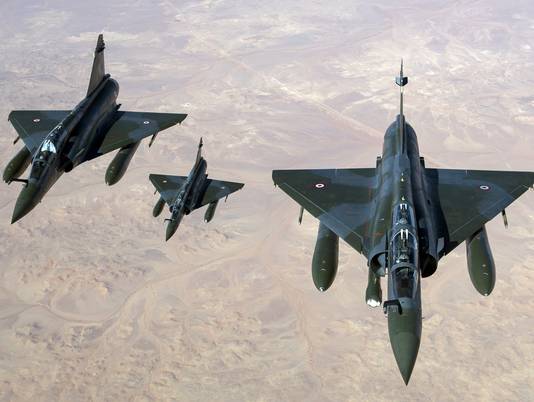
Further analysis will be posted as the information cycle allows.
For now a basic sketch of NATO's unfolding offensive must suffice, beginning in central Mali and expanding outward. At least 550 French air and ground troops have reportedly deployed inside the country as air strikes continue for the third day. A significant portion of these troops landed at the airport in Sevare, the predicted target of Islamist militants that had recently staged attacks on the nearby towns of Konna and Mopti. Malian forces regained Konna with the help of French Mirage and Rafale jets, working in conjunction with assault helicopters, but they would have needed French air-combat controllers in the ground. The war-zone around Sevare was quickly ringed by checkpoints and French ground forces have been deployed from Sevare's airport to Konna and Mopti.
Western sources are already "reporting" the unconfirmed death of Ansar Dine commander Iyad Ag Ghaly, a veteran Tuareg jihadist, but his loss is unlikely to imperil the group.
Using the Inner Niger as NATO and ECOWAS's forward operating position into northern Mali, French warplanes and helicopters have launched an air campaign to shock the Islamists across their territory. Mirages reportedly destroyed a government base that had been taken over in Lere, located on the delta's west side, while a series of strikes targeted bases in Timbuktu and Gao. The latter now serves as the headquarters of the Movement For Oneness and Jihad in West Africa (MUJAO). Air strikes are set to increase in the immediate future before tapering down in reaction to the Islamists' movements.
"Hundreds" of French troops have also been deployed to Bamako to "assess the capital," secure diplomatic personnel and aide French nationals.
Given the fast-moving uncertainty, these factors are worth monitoring in the run-up to Africa's next asymmetric land war.
Shifting Objectives
One set of determining factors is the multiple objectives offered by French officials as they attempt to convince their own voters of Mali's just cause. On Saturday President François Hollande announced that current operations in Mali are "limited to preparing for the deployment of an African intervention force." The Defense Ministry subsequently declared that Paris's goal "is to lead a relentless struggle against terrorist groups," including the prevention of "any new offensive of these groups to the south of Mali." These objectives ultimately intercept: France must provide the force to block the militants' offensive actions and defend the border between north and south until African reinforcements arrive. 2,000 of the planned 3,200 ECOWAS troops are expected to land by Monday - 500 each from Burkina Faso, Niger, Nigeria and Senegal - and NATO air operations will continue throughout their deployment.
How these strikes are interpreted by the local population - as the Islamists full responsibility or hostility towards the south and international community - has been decided for the immediate future. Residents have reportedly welcomed French flags in the sky and expect African ground forces to follow, sentiments that must be nurtured in order for NATO and ECOWAS's mission to succeed. NATO is currently operating without the support of a legitimate government or military.
A U.S. official also confirmed that Washington will deploy drones for surveillance purposes (easily armed at a moment's notice), and Britain has dispatched two C17 aircrafts to transport allied troops. Both powers prefer that France "take the lead" in what could be a long, messy war in Mali.
Underestimating Guerrillas' Capabilities
The joint NATO-ECOWAS force is rightfully viewed as vastly superior to the Islamist umbrella currently entrenching itself in northern Mali. However Western and African capitals should be wary of falling into a quintessential guerrilla trap: underestimating the opponent. Many negative things have been said of the Islamists' relative strength, how they only defeated a rag-tag Malian army, and how professionally trained armies will overpower them. This pattern represents the nature of insurgency; asymmetric forces are inherently weaker than conventional forces, and usually stronger in comparison to weak governments. Some insurgencies, such as Hezbollah and the Taliban, are more disciplined than others, which must evolve their capabilities or risk elimination from the actions of stronger governments.
A weaker insurgency is known to become stronger through the only school of war that is often available: direct combat. This phenomena was noted in U.S. observations of Iraq's insurgency and appears to be occurring in Mali.
After a great deal of talk concerning their weakness, French officials are either flattering Mali's militants or genuinely surprised by their abilities - which would be an inexcusable error and ominous sign of future events. How the Islamists fight NATO and ECOWAS soldiers on land remains to be seen, but the militants are putting their air defense weapons to immediate use. Western intelligence suspects that al-Qaeda in the Islamic Maghreb (AQIM) smuggled out a cache of Libya's surface-to-air missiles, potential fear-mongering that doubles as a real possibility. Heavy machine guns have also been mounted onto the Islamists' pickups.
"What has struck us markedly is how modern their equipment is and their ability to use it," said one of Hollande's aide, but another French official said that Paris expects a short campaign before ECOWAS takes over.
This reaction may come true - or suggests that NATO still has much to learn about the Islamists' overall forces and the non-military environment in Mali. Three different networks, operating with semi-independent agendas, have spent the last six months recruiting across Africa, the Middle East and South Asia in preparation for NATO's intervention.
Overselling Guerrillas' Capabilities
Taken together with this potential underestimate, politically overestimating the situation in Mali could generate more unexpected consequences in a country divided by its own government. French officials speak as though the capital was facing imminent danger, an assessment that The Trench disagrees with considering that thousands of well-trained militants would be needed to effectively sweep across the south. Building on Hollande's mixture of humanitarian and nationalist rhetoric, Foreign Minister Laurent Fabius boasted that, "The Islamist offensive has been stopped. Blocking the terrorists... we've done it."
The Islamists had launched an offensive into the central delta but no one knows how far - they could stopped at Mopti. Yet French intelligence services claim they "detected preparations for what they described as a 'major offensive' organized and coordinated by al-Qaida in the Islamic Maghreb."
Jean-Yves Le Drian, France's Defense Minister, unequivocally announced on Sunday, “There was a spectacular acceleration of these [jihadi] groups since Thursday. If no one intervened, Bamako would have fallen two or three days later. France is at war against terrorism.”
Instability and other uncertainties normally accompany the hype of war against terrorism.
Political Resolution Is Mali's Only Exit
Lastly, the concrete deployment of NATO forces will push a negotiated settlement even further away from reality. African capitals have invested months into pulling Ansar Dine away from AQIM and MUJAO, hoping at the least to sow division between networks. Now this possibility goes from implausible to impossible. Accordingly, NATO and ECOWAS must commit an even greater amount of time and energy to organizing a political-economic resolution with the north's diverse ethnic groups.
None of these challenges begin to address the present lack of government in Bamako.
December 23, 2012
Mali's Islamists Toying With International Negotiators
A rapid turnaround in northern Mali has fully illuminated the multidimensional nature of netwar.
Last Thursday the United Nations Security Council (UNSC) passed a resolution
outlining a dual-track approach of political negotiations and military
engagement against dissenting Islamic militants. As if coordinated
before the UNSC's unanimous vote - itself the process of intense calculation between NATO, the African Union and Economic Community of
West African States (ECOWAS) - Timbuktu's local Islamist outfit struck
back immediately on Friday by announcing a pact
with Mali's rival Tuareg movement. Under their public terms, Ansar Dine
and the National Movement for the Liberation of Azawad (MNLA) pledged
to "coordinate their positions and actions in the context of seeking a
peaceful and durable solution with the transitional authorities in Mali,
with the guarantees of the relevant parties."
Their
joint-statement claimed that mutual security would be established
"through the deployment of security forces comprising members of both
their groups."
These statements belie northern Mali's
ground conditions, which indicate that no sustainable agreement can be
forged between the two groups. They have already fallen out after
leeching each other's abilities to rout Mali's army; once a days-long
pact was broken in late May (or possibly never signed to begin with),
Ansar Dine and its Islamist allies proceeded to kick the MNLA out of its
Gao headquarters. The strategically-located city now hosts the Movement
for Oneness and Jihad in West Africa (MUJAO), an offshoot of al-Qaeda
in the Islamic Maghreb (AQIM), and is unlikely to be shared with the
MNLA. The only tangible progress from months of negotiations between
Ansar Dine and the MNLA, organized by neighboring Burkina Faso and
Algeria, is the Islamists' military advance on MNLA positions.
Ansar Dine recently assisted in MUJAO's capture of westerly Léré after its leader delivered an ultimatum to the MNLA,
essentially threatening to join or die. The MNLA rejected Iyad Ag
Ghaly's message and "expressed their determination to fight against all
terrorists."
Muddy as these negotiating waters are,
Mali's fourth-generation reality emits a polarized clarity and reveals
an ingenious plot at work. The possibility of Ansar Dine establishing
sincere relations with the MNLA cannot be discarded entirely, on account
of Ag Ghaly's history with Tuareg militias, but the odds hover near
zero. In addition to a cutthroat ultimatum, Ansar Dine just spun off Mali's own version of Ansar al-Sharia
with formal approval from the group's leadership. AQIM has supposedly
tasked this new group to improve relations with its Libyan
counterpart, a loose network of jihadist groups blamed for the assault
on
Benghazi's consulate, and potentially construct a training base in
eastern Libya.
The group is reportedly overseen by Oumar Ould
Hamaha, a senior military official connecting Ansar Dine and MUJAO.
Hamaha, a local Tuareg from the Timbuktu area, also doubles as a
confidante of AQIM personality Moktar Belmoktar, who announced the formation of his own El Moulethemine katibat ("Brigade of the Veiled Ones") in early December.
Ansar
Dine and its allies' vision of peace is total control over northern
Mali. Instead of negotiating an agreeable outcome with the international
community or MNLA, the group is stalling to attract more human
resources from West Africa, the Middle East and South Asia. Now Ansar
Dine is taking shelter
beneath the MNLA, a group that the international community cannot avoid
negotiating with, in an attempt to stave off a foreign intervention
entirely. This wise maneuver is reminiscent of the guerrilla hiding
within an urban population, hugging civilians in order to deter aerial
bombardment.
Following the UNSC's vote, an adviser of
Mali's interim president said that his government is ready to "wage war
against the terrorists and continue to negotiate with our brothers who
are ready for dialogue."
Problematically, Malians are
expecting military action but lack faith in their government and
military, directing a trickle-up effect towards the UNSC. Furthermore,
non-state actors move with exceptional quickness in relation to
cumbersome international blocs. As a result of Mali's internal crisis,
which legally bars the U.S. from direct aid, and the
international community's hesitant response to the situation as a whole,
both sets of actors have given the distinct impression that they seek
to avoid fighting under the present conditions. The UNSC has painted
itself into a corner by emphasizing dialogue over military action, and
the Islamists are "cooperating" by giving what is being
requested. Ansar Dine, AQIM and MUJAO all realize the advantage of this
wariness to enter an uncertain terrain the size of Iraq, with less than
ideal resources, for an unspecified length of time.
The end product: Ansar Dine is positioning itself as a necessary component of Mali's political solution and an outright international front of AQIM.
"We
denounce this decision," Mohamed Ag Akharib, a representative of Ansar
Dine, told reporters between meetings in Algiers. "We have always
denounced the (planned) military intervention and we have said that it
is not the solution. We are very optimistic and we ask Algeria and the
international community to join us in searching for a peaceful solution
to the Mali crisis."
Algiers' Département du
Renseignement et de la Sécurité (DRS) is suspected of manipulating both
sides of the Sahel - coordinating with AQIM and other non-state actors
in opposition to the Tuaregs, and using AQIM to establish favorable
military and intelligence relations with Western capitals. The
government's massive influence in the region is unlikely to prove a
source of lasting stability in northern Mali, although Islamists and the
Obama administration are both looking its way for assistance. To its
credit Algiers is
legitimately cautious of spillover into its territory and
understands the opponent better than most. Military and intelligence
analysts have reached a consensus that the proposed force - 3,000 ECOWAS
soldiers, an equal number of Malians and NATO trainers to guide them -
falls disturbingly short of northern Mali's taxing demands.
"You
cannot really fight a conventional war there," warns Abdallah Baali,
Algeria's ambassador to Washington. "Your enemy will vanish in the
desert before your eyes."
Of the other scenarios in
play, Ansar Dine could be gunning for absolute control of Mali's Tuareg
movement with the intention of evicting AQIM, MUJAO and the MNLA in
turn. Thus of all the conceivable scenarios, workable peace between
Ansar Dine and the MNLA appears furthest removed from reality.
December 20, 2012
Mali News Travels Slow To Western Media
Nearly six days ago The Trench recorded the formation of a new Islamic militant group that had branched out from Mali's local tree, Ansar Dine (Defenders of the Faith). Christening themselves as the fourth Ansar al-Sharia (Partisans of Islamic Law) in the MENA (after Yemen, Tunisia and Libya), this group has allegedly recruited Barabiche tribesmen from Timbuktu's surrounding area and placed them under the authority of several Ansar Dine officials: Omar Ould Hamaha and Sanad Ould Bouamama.
In every manifestation Ansar al-Sharia operates either as a loose front for al-Qaeda's general ideology or a masking agent for the group itself, as in Yemen's case. However Mali's new group has reportedly received specific directions from al-Qaeda in the Islamic Maghreb (AQIM). On top of decentralizing the group's network and tapping into local human resources, Ansar al-Sharia has been tasked to build a logistics highway between eastern Libya and northern Mali - and, if AFRICOM is to be believed, establish a base in east Libya to strike the West.
"In return, AQIM is offering to provide Libyan Islamist groups with training and finance," The Telegraph reported earlier this month.
Somewhat oddly, this news created no initial splash in the U.S. media and is just now reaching American ears in the form of an ABC News report. New information is only presented in small portions, namely a welcoming statement from one of Ansar Dine's senior leaders. Although potential disinformation, no mention of the connection between Ansar al-Sharia and Libyan militants is made. Instead, speculation of the offshoot's cause revolves around Ansar Dine's leadership and the absorption of fighters from the Movement for Oneness and Jihad in West Africa (MUJAO).
In the latter case, ABC News claims that MUJAO has been losing fighters to Ansar Dine and Ansar al-Sharia due to their local reputations, which carry more weight inside and outside Mali.
Unnamed "analysts" attribute this trend to Ansar Dine's legitimacy at the negotiating table, but local credibility and momentum is the likeliest culprit of any established pattern. The network of AQIM, MUJAO and Ansar Dine acts as a jihadist funneling system, drawing fighters from across the MENA and shaking them down into appropriate roles. Both Ansar Dine and MUJAO fighters have joined Ansar al-Sharia because the group is allegedly involved in expanding eastward, where MUJAO hopes to go. MUJAO's military planner, Omar Hamaha, also doubles as an Ansar Dine official, reinforcing the connection between all three groups.
While decentralization can instigate personal feuds within a network of militant groups, Mali is big enough to necessitate a portfolio of groups tasked with specialized agendas. The inflation of open territory and density of local actors are determining factors in slicing up northern Mali's pie.
Coincidently, ABC News's reporting is equally sluggish as the international community's response to northern Mali's conflict. Today, almost a year after the National Movement for the Liberation of Azawad (MNLA) and Ansar Dine began to overrun Mali's military, the United Nations Security Council (UNSC) passed a resolution authorizing a two-track intervention in Mali. Except negotiations with Ansar Dine amount to a stalling tactic for AQIM and MUJAO, meaning that an ECOWAS force of 3,300 won't land in Mali until the second half of next year at the earliest. The Trench has frequently reported on the obstacles facing an international coalition, starting with Mali's fractured government and ending with the virtual certainty of guerrilla warfare.
"It is likely that [the MNLA and MUJWA] will avoid direct confrontation, in which case [the intervention force] would have no chance," a senior French officer told the AFP after the UNSC's vote. "If the force sent to deal with them is credible, [the MNLA and MUJWA] will certainly leave the towns and head for their sanctuaries in the mountain ranges close to the Algerian border... and that will become a different ball game to dislodge them."
One "former intelligence chief" states the problem in even blunter terms: "It's not 3,000 men that are needed, it's 100 times as many, and for a long time. We are far from what's required. Take Afghanistan as a reference and you'll understand."
This estimate, while excessively high, still offers a more realistic assessment than the international community (UN, NATO, AU, ECOWAS) has tabled. Roughly speaking, a minimum of 30,000 troops and 3-5 years (plus Western logistics) appear to be needed to control northern Mali's population belt and wage asymmetric warfare against the Islamists. Give Ansar Dine and its allies another 10 months and they will embed themselves that much deeper in northern Mali's terrain.
The international community is trapped between the dilemma of an immediate but reckless campaign, and waiting for Mali's government to put itself back together first.
December 15, 2012
AFRICOM's Coverage of AQIM Mixes Fact, Fiction
Last week The Trench reported on the political and military movements of Mokhtar Belmokhtar, a former leader of al-Qaeda in the Islamic Maghreb (AQIM) and present commander of El Moulethemine katibat ("Brigade of the Veiled Ones"). A significant portion of this information was retrieved from Magharebia, a Pentagon-run site dedicated to covering events in North Africa, and independent information confirms the overall agenda of Belmokhtar. Now Magharebia has reported on a video statement from Belmokhtar announcing the "Signers in Blood," a suicide squad presumably designed to greet an international military coalition in northern Mali.
However the headlines of "breaking away from AQIM" appear to deliberately mislead an overview of the situation.
That Belmokhar has experienced a heavy share of confrontation with AQIM chief Abu Musab Abdel Wadoud (Abdelmalek Droukdel) is well-documented. Various explanations of AQIM's internal strife have been advanced over recent years: divisions between Algerian and Mauritanian leadership, personal rivalries, and the distribution of Western ransoms and drug profits. Leadership schisms are a natural product of regionally-networked militant groups, as the need to decentralize across borders and cultures often erodes a firm hierarchy. Those groups that enjoy permanence at the top usually function as symbols of national power: the Taliban's Mullah Omar or Hezbollah's Hassan Nasrallah.
At the same time, a foreign intervention of northern Mali stands a good chance of closing the Islamists' ranks, at least until the momentum swings against them and the alliance is forced to scatter across northern Mali.
Belmokhtar's recent announcements illustrate the dilemma facing Western and African capitals. While "One Eye" cannot be expected to obey every command of AQIM, he has pledged to abide by the decisions made collectively by AQIM, the local Ansar Dine outfit and the regionally-minded Movement for Oneness and Jihad in West Africa (MUJAO). His group will allegedly specialize in kidnapping Westerns and extorting ransoms to fund the Islamic alliance, thereby dividing their labors. Belmokhtar has relocated his base to Gao, where MUJAO has established its headquarters and oversees the Islamists' campaign in northern Mali.
Reinforcing the line of communication between groups is MUJAO's military planner and Bekmokhtar's deputy, local Tuareg Omar Ould Hamaha.
Abdalahi Ould Ahmed, editor-in-chief of the daily newspaper Chouhoud, gives a more comprehensive explanation for AQIM's proliferating offshoots: "As the organization has grown and incorporated fighters of different origins, conflicts of interests have become increasingly frequent.” This process carries its advantages and disadvantages. Given an increase in funds and territory, turf battles become inevitable in the war for jihadist hearts and minds. Purely commercial elements flock to West Africa's flow of cash and cocaine, undermining the Islamists' overall message and corrupting personalities from the lowest to highest ranks.
Militant groups must also network and decentralize to some degree in order to survive the short-term precision and long-term pressure of joint-government operations. In AQIM's particular case, the group is undergoing rapid expansion after northern Mali opened a huge amount of territory and influence to its sub-commanders. This fragmentation allowed AQIM personalities to establish their own local units under the mothership's flag, pursue their own interests and quickly seize all available power in the region. Accordingly, a group of Barabiche tribesmen from Timbuktu have formed a "new" faction at the urging of AQIM's leadership, with the intention of developing relations with Libya's self-styled Ansar al-Sharia.
The fourth manifestation flying the "Partisans of Islamic Law" banner (after Tunisia, Libya and Yemen), Ansar al-Sharia will now operate out of Gao as they attempt to build a logistics network through neighboring Niger. Their alleged objective: establish a base in eastern Libya to facilitate attacks on Western and African targets in response to Mali's planned intervention.
"Their aim is to establish a foothold in Libya from which to launch attacks against Western targets, as well as gaining access to the large stockpiles of weapons – including Russian-made anti-aircraft missiles – that were looted by Libyan rebels during the fall of Colonel Moamer Kadhafi's regime at the end of last year," The Telegraph reported on December 4th. "In return, AQIM is offering to provide Libyan Islamist groups with training and finance."
As Mauritania's al-Akhbar notes, Gao's branch of Ansar al-Sharia raises the number of Islamic militant groups in Mali to five: AQIM, MUJAO, Ansar Dine, Belmokhtar's "Masked Brigade" and Ansar al-Sharia. Pentagon intelligence and independent reporting has also collaborated the presence of Nigeria's Boko Harem in Gao. All of these groups operate as loose fronts for "the Base", waving the flag to attract recruits and acting semi or totally independent. The efficiency and inefficiency of this cooperation generates the double-edged sword of netwar.
So long as AQIM, Ansar Dine and MUJAO collectively wield influence in northern Mali, its splinter factions shouldn't cause an excessive amount of friction between the alliance. Scattering will become its own strategy if they are initially overrun, and division won't pose a fatal problem if Mali's internal woes and regional deficiencies in governance are left unresolved.
December 6, 2012
Confusion Muddying International Action In Mali
For several months The Trench has documented the widening organizational schism between northern Mali's Islamist network and international blocs, a gap that the latter hasn't been able to shrink since the north's initial takeover.
While Islamist militants lack key advantages in guerrilla warfare, namely popular support amongst local Tuaregs and other ethnicities, their networking has built a formidable unit capable of generating long-term instability in the Sahara. The three-headed hydra of al-Qaeda In Islamic Maghreb (AQIM), Movement for Oneness and Jihad in West Africa (MUJAO) and Ansar Dine fit together neatly so long as their agendas maintain unity. AQIM and MUJAO's banners have given the alliance immediate cache within the global jihadist network, turning Mali into the new hotspot for West African and the Middle Eastern recruits. They also bring heavy arms, technical expertise and the financial resources secured from kidnapping and cocaine trafficking, an industry linked to corrupt governments along the African coast.
Meanwhile Ansar Dine counts enough Tuaregs in its ranks to usurp the opposing National Movement for the Liberation of Azawad (MNLA), and provide its regional counterparts with local guidance.
Together the three groups are entrenching themselves in an environment favorable to guerrilla warfare, an area dubbed “the largest territory controlled by Islamic extremists in the world" by U.S. Senator Christopher A. Coons, chairman of the Senate Foreign Relations subcommittee. Mali's northern desert, though generally unfavorable to guerrillas, is rendered more useful by its sheer size and the means necessary to secure it: a large air force, saturated ground patrols, barrier walls and a strong central government. Mali's desert is further broken up by mountains that AQIM has already embedded itself within. Most distressing of all, the militants could disperse after the initial skirmishes and wage a grinding war against an underresourced opponent.
"You cannot really fight a conventional war there," says Abdallah Baali, Algeria's ambassador to Washington. "Your enemy will vanish in the desert before your eyes."
The international community, on the other hand, is more disorganized than they give the appearance of. Many pieces are technically coming into place within a French-led UN mandate, including 3,000 troops from the Economic Community of West African States (ECOWAS), but uncertainty has overwhelmed their planning. At face value, 3,000 troops won't be enough to clear the north of an estimated 1,500 militants, and then hold the territory until Mali's government can reestablish authority. The capital may need several years to sort itself out and regroup militarily, a time-line that exceeds current UN expectations. Both Western and African capitals realize that a sizable air operation is necessary to compliment ECOWAS's ground force, a demand that they tacitly accept but have yet to approve of.
Neither side seems clear on the details of Western air support, and heavyweight Algeria remains unconvinced of an intervention's prospects.
Additionally, the U.S. response is being obstructed by international protocol and U.S. law, which prevents direct military assistance to Mali until a democratic government can be restored. Western powers hope that Mali’s army can match an international force in troops and take the lead in the field, necessitating an enormous training program and all of the infrastructure that goes with it. Problematically, the Pentagon must funnel equipment and financial aid through West African nations and the European Union. At this rate, the most they can hope for from Mali's army is local assistance - not a force capable of assuming the lead in combat operations.
“That’s a pretty significant impediment, and we’ve got to figure our way through that,” Army Gen. Carter F. Ham, the commander of AFRICOM, said Monday during a lecture at George Washington University.
Militants encounter no such impediments, only checkpoints to the outside world.
As a result, widely varying dates have been thrown into the international media by African leaders, Western diplomats and international representatives. Some reports place the start of an intervention in late January; in Paris to strategize with Francois Hollande, Ivory Coast President Alassane Ouattara told Europe 1 on Wednesday, "we hope to organize this intervention in the first quarter." Generally speaking, African and Western governments desire the quickest response possible to a major international crisis, but lack the resources to immediately respond and have thus cornered themselves in the near term. Some AU leaders, such as Niger's Mahamadou Issoufou, also want the UN-ECOWAS process accelerated faster than others, piling friction onto anxious but hesitant Western capitals.
Even Ham, one of the region's most gungho actors, just admitted that an intervention today (meaning the next three months) "would be unsuccessful." For good reason, Herve Ladsous of the UN Peacekeeping force told a Wednesday press conference, "Nothing could be done before September, October" of 2013.
Unless these reports form a disinformation campaign against the Islamists - and this doesn't appear to be the case - President Idriss Déby of Chad sums up the international situation most accurately: "There is total confusion."
December 3, 2012
Belmokhtar Splinters From AQIM, Eyes Sahara
One of the latest development's in the fast-paced Sahel holds the potential to alter both sides of Mali's crisis.
Several days ago Mokhtar Belmokhtar, a former commander for al-Qaeda in the Islamic Maghreb (AQIM), emerged to warn the international community of "the impossibility of controlling the limits and results of a war in the region." His statements were clipped from a recent interview in Gao, where the Movement for Oneness and Jihad in West Africa (MUJAO) now commands its operations in northern Mali, and dovetail with AQIM and Ansar Dine's overarching narrative in the country (to be addressed in a future post). Essentially, the Islamic alliance that swept across northern Mali is feigning ignorance by entertaining the possibility of a negotiated settlement, and thus positioning itself as the defender rather than the aggressor. They know that an Islamic state leaves no room for compromise with Western capitals and their African allies, and they're playing with house money in Mali.
“We will help and support them - be it at war or during times of peace," Belmokhtar concluded.
Of course the veteran jihadist, a former leader in AQIM, has his own causes to support. Dubbed "Al-A'war" ("the one-eyed") and "the Uncatchable," Belmokhtar is obviously angling himself back into the picture by offering his "unconditional" help - surely with strings attached. He was reported dead during the fog of Gao's battle between MUJAO, Ansar Dine and the oppositional National Movement for the Liberation of Azawad (MNLA), only to emerge in another dispute with AQIM's leadership. After allegedly refusing to step down as commander of the offshoot Al-Mulathameen ("Masked Men Brigade"), Belmokhtar is now pledging to "respect any decision" made by MUJAO, Ansar Dine and the local Tuareg tribes they hope to woo in Mali. He said that his group, “will reveal more details and show his group’s clear position on the war and the methods that they will adopt to repel aggression.”
To this end, Belmokhtar's deputy has confirmed the regional agenda of his network.
“It’s true,” Oumar Ould Hamaha told reporters from northern Mali. “It’s so that we can better operate in the field that we have left this group which is tied to the ‘Maghreb’ appellation. We want to enlarge our zone of operation throughout the entire Sahara, going from Niger through to Chad and Burkina Faso.”
Hamaha is the ideal mediator between AQIM and northern Mali's environment. A native of the Timbuktu region, Hamaha has been involved with Belmokhtar since AQIM's formation in the early 2000s, and now serves as a spokesman for Ansar Dine and MUJAO. He claims that Belmokhtar and himself have technically left AQIM while remaining under the group's regional strategy. Their semi-independence mimics the activity of other AQIM offshoots, such as Mohammed Ghadir's ("Abdelhamid Abou Zeid") Tareq ibn Ziyad batallion, and further diversifies a nebulous collection of militant groups assembling in and around Mali. MUJAO has purportedly split from AQIM for the same reason offered by Hamaha: more independence in expanding regional operations.
Many groups are mobilizing under AQIM's loose control, using the umbrella's affiliation to boost their own profile as they pursue various objectives across West Africa. How these splinters cooperate in Mali will determine the effectiveness of their political cohesion and military defense against an international task force.
November 22, 2012
MUJAO, AQIM Move On MNLA-Controlled Town
As reported last weekend, the militant tandem of al-Qaeda in the Islamic Maghreb (AQIM) and the Movement for Oneness and Jihad in West Africa (MUJAO) has entered the final stage of a campaign to uproot the Azawad National Liberation Movement (MNLA) from Mali's urban centers.
The two forces, one representing Islamic militants from the Eastern Hemisphere and the other stumping for Tuareg rights, have battled for months along northern Mali's population belt. MUJAO and the MNLA clashed on Friday amid significant confusion, with each claiming the initiative and subsequent victory following an ambush near Ansongo. Specifically, the MNLA claimed that its forces were attempting a counteroffensive on Gao, where the group was evicted by MUJAO and AQIM fighters in late June. MUJAO, in turn, placed its infiltration of Ansongo within a broader strategic offensive to take Menaka, the MNLA's temporary headquarters located near Niger's border.
Available information leaned in MUJAO's favor and was confirmed by the group's recent arrival in Menaka.
However Monday and Tuesday's fighting unfolded with equal ambiguity. On one side, MNLA spokesman Moussa Ag Assarid said “around 30 MUJAO and AQIM vehicles" preceded the attack on Menaka, but claimed that his group repelled their advance. He counted only one casualty. A statement posted on the MNLA's website revised their losses to six dead and six wounded, and explained that its forces have "positioned around Menaka... to avoid a human tragedy." The statement put MUJAO and AQIM's casualties at 36 dead and "many injured."
MUJAO offered a polarized version. Spokesman Omar Hamaha estimated the MNLA's death-toll above 90, counting 40 casualties on Friday and 50 on Monday. He said the group lost four fighters and was treating seven wounded. Another spokesman, Abu Walid Sahraoui, claimed to be speaking from within Menaka when he declared, "We've taken prisoners and there were many deaths on the MNLA side." Sahraoui thanked the support of "reinforcements from its Muslim brothers" - AQIM - boasting that the alliance now "controls everything."
Several local eyewitness said that MUJAO gunmen had "taken the military camp and are shouting Allah Akbar (God is great)."
The truth likely rests somewhere in the middle of both accounts. Assarid says that his group still controls part of the desert town, telling the AFP, "We have not given up on Menaka." MNLA fighters have encamped in the area and are liable to mount stiffer resistance than usual, on account that they have nowhere else to run except into Niger. Problematically for the group, northern Mali's overall situation favors the Islamist umbrella and reinforcements are overwhelming the MNLA's local resources. The group is operating as a shell of the force that stormed across Mali in early 2012, seemingly unable to recruit enough manpower from its own backyard. Conversely, MUJAO and AQIM's successes (along with the possibility of jihad against the U.S. and Europe) will continue attracting foot soldiers from West Africa, the Middle East and South Asia.
The MNLA is treading water and stalling for time - foreign support is necessary in order to prove effective during the international community's intervention. Western and African powers themselves face an uphill battle to establish a legitimate government in Mali, mobilize African forces and provide them with Western logistics, estimate the Islamists' numbers and capabilities, understand the full range of non-military issues, and convince neighboring Algeria to approve an open-ended military campaign.
"Seeking to restore the unity of Malian territory by force is an adventure that will never succeed, because it will lead to a military confrontation that could exacerbate tensions in the region,” Interior Minister Daho Ould Kablia told state radio on Tuesday.
Whether these develops accelerate the international community's decision-making remains to be seen, but new reports speculate that an operation could begin as early as January 2013. This dilemma is likely to increase the risk of heading into northern Mali's battlefield without a defined battle plan.
November 17, 2012
AQIM Reinforcements Part of Unfolding Offensive In Mali
Small incidents often leave big footprints in small wars, and Friday's skirmish between the National Movement for the Liberation of Azawad (MNLA) and Movement for Unity and Jihad in West Africa (MUJAO) is a typical example. Fierce info-warfare has also broken out after the MNLA and MUJAO exchanged hostilities in northern Mali, with both sides claiming victory and government sources weighing in MUJAO's favor. An MNLA statement claimed that MUJAO was forced to retreat after losing over 20 men in an ambush.
However one Malian intelligence official put MUJAO on the offensive and attributed the majority of casualties in the MNLA. MUJAO spokesman Walid Abu Sahraoui subsequently told the AFP that his group, a trans-African jihadist umbrella, is preparing to sweep the MNLA out of its home territory.
Friday's hostilities are strikingly geopolitical in nature. Fighting began at around 10 a.m. near Ansongo, around the same time that the MNLA and Ansar Dine, a supposed ally of MUJAO and al-Qaeda in the Islamic Maghreb (AQIM), held a joint-mediation session with Burkina Faso's President Blaise Compaoré. The minutes of these preliminary negotiations have yet to be made public, but Friday's fighting increases the pressure on Ansar Dine to pick a side and stay on it. According to Moussa Salem, an MNLA fighter, "our goal remains to retake Azawad from the hands of AQIM and its allies. We can fall back, but it's only to be able to better push forwards after."
The question is who Ansar Dine truly considers itself an ally of, as the situation could flip from 3-on-1 to 2-on-2.
Eyewitness reports of AQIM reinforcements have since followed Friday's attack, escalating the current anxiety of locals and international observers. This worry is justified by the apparent reality of northern Mali's future. Rather than a sporadic ambush or political message, MUJAO's ambush near Ansongo fits into a larger strategy to uproot the MNLA from its current position. For months MUJAO and AQIM have been stockpiling foreign recruits from West Africa and the Middle East, with varying estimates of success, as part of their effort to counter a foreign intervention. In the meantime MUJAO and AQIM want to reduce the MNLA before the middle of next year, when ECOWAS and NATO are finally expected to act.
To this end MUJAO deployed south to Ansongo, the main town situated between Gao and the eastern city of Menaka, where the MNLA established its headquarters after being pushed out of Gao, Kidal and Timbuktu. According to Djibril Moussa Diallo, village chief of the nearby Fafa, said that MUJAO has been sending fighters into the area to clear MNLA positions, pulling them "from Bourem, from Gao, from Timbuktu." Located some 250 miles east of Gao, Menaka's objective requires that MUJAO shift its forces and gives additional meaning to AQIM's new reinforcements in Timbuktu.
They represent MUJAO and AQIM's emerging supply chain through northern Mali's population belt.
These collective actions also reinforce the asymmetric battle-lines being drawn through northern Mali. The war is now being fought between Mali's Tuareg independence movement and the offshoot of an al-Qaeda branch originally allowed in by Ansar. Diallo explained of the MNLA, "MUJAO says that they are 'kafirs' (infidels). They say they are people who don't want to apply Shariah." Government and MNLA officials are presumably leaning on Ansar Dine's representatives at this moment, and Ansar Dine in turn must address its foreign allies.
A large amount of military and political fallout can be expected in the coming weeks and months.
November 16, 2012
Negotiating Mashup In Northern Mali

Seven months ago the rebel group Ansar Dine, an Islamist-Tuareg outfit, rode its way across northern Mali with the assistance of the National Movement for the Liberation of Azawad (MNLA).
As the initial dust settled, observers began to credit part of the MNLA's military advances to Ansar Dine and the groups' ability to impose order/recruit. The two groups appeared to co-exist out of self-interest rather than mutual interests, telegraphing Ansar Dine's future mobilization and its division with the MNLA. Neither could find a compromise between their ultimate goal of a Taureg state or an Islamic state. After announcing a temporary pact in late May, Ansar Dine's partnership with al-Qaeda in the Islamic Magreb (AQIM) and Movement for Unity and Jihad in West Africa (MUJAO) evicted the MNLA from its Gao headquarters in July.
Mimicking the shifting sands of north Africa's dunes, northern Mali's politico-military equation has since swung back in the direction of MNLA-Ansar Dine negotiations. On Friday Burkina Faso's President, Blaise Compaore, welcomed a joint-delegation sent by the two groups.
"All the international instruments have been put in place (to deal
with this crisis)," Tieman Coulibaly, Mali's Minister of Foreign Affairs,
told reporters earlier this month. "And we are now weighing
the options - either negotiations or military intervention in order to
liberate northern Mali."
Entering into negotiations with the MNLA has been easy enough for African and Western capitals. Displaced by another Tuareg group and its foreign allies, the MNLA has little to lose by cutting a deal with the international community, which was never prepared to accept an independent Azawad. The group has yet to reverse its push for autonomy, but in most other ways is prepared to assist Mali's government in the overthrow of AQIM and MUJAO. This strategy is designed to recoup lost territory and sidestep any military operation conducted by the Economic Community of West African States (ECOWAS).
Fresh information suggest that the MNLA suffered another defeat on Friday night after trying to retake Gao.
The plan to lure Ansar Dine away from AQIM and MUJAO began as early as June, and is proceeding as one would expect of such negotiations. Throughout this period Ansar Dine and its allies have solidified their military positions and carried out strict Islamic punishments, suggesting that Ansar Dine is only toying with foreign mediators. The group has also made contact with Algerian diplomats, whose government seeks to avoid a large-scale intervention that would effect its borders. Thus Ansar Dine's actions could intend to delay a foreign intervention rather than cooperate with foreign powers.
For now spokesman Mohammad Ag Aharib claims that Ansar Dine is prepared to "get rid of terrorism, drug trafficking and foreign groups," telling the AFP that "we don’t agree with taking hostages and drug trafficking." These operations are believed to provide the bulk of AQIM and MUJAO's financing. Problematically, Ag Aharib rejects the possibility of renouncing Shariah law, saying "we insist that it be applied where we live." Ansar Dine's terms indicate that no compromise is available with foreign powers, and that each is feeling the other's capabilities before hostilities begin. How much control Ansar Dine can apply over northern Mali also remains uncertain. Considering its offer to expel "foreigners," meaning AQIM and MUJAO, the group may retain possession over less ground than its initial conquest.
If the group isn't feigning interest with the international community, Ansar Dine must hope to regain any national influence lost to AQIM and MUJAO's international agendas.
The dual track of negotiations and military action accompanies most wars, conventional or unconventional. Speaking to Mali's interim President, Diocounda Traore, on Thursday, French President Francois Hollande told his counterpart (and by extension ECOWAS), "The acceleration of this dialogue must accompany the progress in African military-planning efforts." Negotiating is generally superior to fighting during counterinsurgency, as it addresses non-military sources of friction, and foreign powers seek to fight as limited of an enemy as possible. For months the U.S. and NATO allies have hesitated to commit themselves militarily in northern Mali, realizing that Mali's interim government and a full network of militant groups equates to an unreasonably dangerous mission.
However Western forces are itching for some form of military engagement against AQIM and MUJAO, ruling out a non-violent resolution. Washington in particular doesn't want to miss this opportunity to strike directly at AQIM, and NATO as a whole views Mali as a profitable training ground. U.S. and French Special Forces operated in the country prior to March's coup as part of the Sahel's overall militarization; a large part of Mali's new mission is built around a Western-African training program. The Trench also speculates that a new drone base may find a home somewhere in the Sahel, given the long-term nature of Mali's mission and AQIM's lifespan.
These designs play a motivating role in General Carter Ham's statements from Paris, which linked the attack on the U.S. Embassy in Benghazi to AQIM. The outgoing commander of AFRICOM cautioned that the attack was not necessarily "an AQIM-planned or organized or led activity," but the direction of his message is clear enough. Former CIA Director David Petraeus gave a similar account on Friday to the House and Senate Intelligence Committees (not without its own controversy). Problematically, a military victory in northern Mali simply returns North Africa's environment to a pre-coup state, rather than permanently eliminate AQIM's presence.
Left in the militants’ vacuum: loose insurgents of all types, unresolved national grievances with a weak government, and the residue of Western imperialism.
Subscribe to:
Posts (Atom)