Showing posts with label Arab Revolutions. Show all posts

March 5, 2013

"National Dialogue" Masks Foreign Interference In Yemen

UN envoy Jamal Benomar presents a distorted view of Yemen's situation and the GCC's power-sharing agreement via a Saudi daily: "The Yemenis have done this without any foreign dictates."

To be fair to him, though, the general script of his interview was presumably written by those working above him:
Yemen is perhaps the most troubled state in the Middle East with a history of poverty, civil war and division. Uncertainty about its future following the instability that led to and followed the resignation of its former president, Ali Abdullah Saleh, has prompted regional and UN intervention in a bid to prevent the state from descending into chaos.
The first meetings of a conference that brings together political parties, regional factions, interest groups and civil society organizations from across the country will get underway soon, in a bid to stabilize the situation. Prompted by the UN and Yemen’s neighbors, Yemen’s quarreling groups will attempt to thrash out a settlement on elections and a new constitution among other issues, a settlement that many hope will allow Yemen to avoid secession and possible civil war.
Asharq Al-Awsat spoke to Jamal Benomar, an Assistant Secretary-General of the UN and the organization’s special envoy to Yemen, who has played an important role in the organization of the forthcoming National Dialogue Conference. Speaking by telephone, Benomar told Asharq Al-Awsat about his hopes for the conference, the obstacles it faces, and the efforts of the UN and Yemen’s neighbors to assist the process of a peaceful transfer of power in the troubled state.
Read Interview:

March 1, 2013

Zainab Al-Khawaja Ruling Disregards Bahraini Rights

The latest evidence of King Hamad bin Isa Al-Khalifa's resistance to self-determination and denial of human rights couldn't be more blatant. 

Arrested on Tuesday during a protest for Mahmoud al-Jazeeri, Zainab Al-Khawaja found herself back in a holding cell only for the moments before she was whisked away to a court. Al-Khawaja had joined protesters in demanding the proper burial of al-Jazeeri - the government is keeping his body in an attempt to dictate the funeral's location - when arrested by security forces. She was immediately charged with obstructing traffic, violating a regime structure and damaging property.

Since February 2011 Al-Khawaja has been arrested multiple times, endured physical and mental abuse from Bahraini security forces, and faces over a dozen charges related to "illegal protesting." All of her protests have been conducted peacefully, and many by herself. She is simply too popular and symbolic to leave on the streets, and too defiant against King Hamad's personal authority to escape retribution. Al-Khawaja is known to chants slogans and craft placards against the King, and was picked up in Tuesday with a sign that read "your prisons we don't fear."

She is regularly jailed because Bahrain's monarchy fears peaceful protesters more than violent ones.

Now, after being acquitted from a separate charge of insulting a public official (Bahrain's judiciary throws out certain charges while keeping the more severe ones), the monarchy's Court of Appeals has overturned the ruling and sentenced her to three months in prison. She joins her father Abdulhadi, activist Nabeel Rajab and other oppositional figures in the unfriendly confines of Bahrain's political prison system.

A major security crackdown or political jailing in Bahrain is often accompanied by statements of support for human rights, and Friday's ruling adhered to this pattern when Human Rights Affairs Minister Dr. Salah bin Ali Abdulrahman met with UNHRC Ambassador Remigiusz Achilles Henczel in Geneva. Bahrain has slipped through the UNHRC's sessions with ease, demonstrating the UN's level of compliance in Bahrain and its inability to defend the rights of those who are being trampled on by a power-hungry monarchy. None of the monarchy's words should be believed when its own actions oppose them. Promotion of human rights is mainly a political and propaganda exercise.

"According to a statement issued by the Human Rights Affairs Ministry, Dr. Salah congratulated Mr. Henczel on the new post and lauded the advanced level of the communication and coordination relations between the Ministry and the Human Rights Council, asserting that Bahrain is among the main supporters of the UN mechanisms in all fields, especially the human rights one."

Al-Khawaja's ruling is self-explanatory in its counterrevolutionary nature. Unfortunately the U.S. response was mute as usual, a reaction that jars with the Obama administration's attempt to restart a National Dialogue between the monarchy and opposition. No debate of national proportions can lift off of the ground in the current environment, but the monarchy has taken great efforts to portray the National Dialogue as a success.

It will crash again soon if this denial continues.

February 28, 2013

Ali Saleh Mimics UNSC's Statement On Yemen

On February 15th the United Nations Security Council (UNSC) issued a statement of support for Yemen's political transition and warned potential spoilers against interfering with the UN's diplomacy. Taken at face value, the UNSC's statement appears to spotlight former president Ali Abdullah Saleh and threaten him with financial sanctions. However Saleh's inclusion was primarily based on the art of concealment, as the UNSC couldn't aim at its real targets without first naming Yemen's duplicitous strongman. The other "spoilers" come next: former Vice-President Ali Salim Al-Beidh and the Iranian government.

Accordingly, Saleh has now attempted to blend in by pasting the UNSC's statement into his own rhetorical bag of tricks. Speaking to supporters at a rally organized to mark his transfer of power to Abd Rabbo Mansur Hadi, his vice president of nearly 18 years, Saleh demonstrated the notorious oratory and scheming mind that maintained his power for over three decades. Ignoring the hundreds of civilians killed by government forces during the first year of Yemen's revolution and his own refusal to resign, the former president claims that he "handed over power peacefully and willingly" to Hadi, and never turned to violence. He also called for "reconciliation, shaking hands and forgiveness of the past to build a new Yemen."

“Forget about the past and look at the future."

Saleh can afford to forget about the past because his crimes against the Yemeni people are insulated by the Gulf Cooperation Council's (GCC) power-sharing initiative, a U.S.-Saudi proposal that kept Saleh's ruling party in power and granted his family personal immunity. This agreement not only encourages Saleh to continue resisting the formation of a legitimate government, but to play along with the GCC and UNSC's diplomacy so as not to permanently sever the hands that protect him. The U.S. State Department refused to take a definitive stand when quizzed on the content of Saleh's speech, saying only that all parties should "play a positive role in Yemen's political transition."

According to U.S. and UN terms, Saleh is playing a positive role by supporting his former VP, rhetorically targeting Iran and opposing secession in the south - all actions undertaken by the UNSC. Washington and Riyadh both oppose the loss of influence that would result from the autonomous agendas of the northern Houthi sect and Southern Movement, and relevant international blocs have followed suit. All, of course, oppose Tehran's sphere of hegemony in Yemen.

"No to secession... Our people in the south are with unity," Saleh told supporters who had gathered in Sanaa's Sabiin Square. "A small minority which supports secession is funded from abroad... Those who receive money from Iran know that their days are numbered."

The Southern cause is rooted in Saleh's own misrule and operates independently of Tehran. Southerners regularly stage mass protests in favor of self-determination.

Whether viewing him as too much trouble or too useful to drop, international powers have yet to make any serious move against Saleh and are unlikely to do so unless he takes extreme measures that cannot be ignored. Only Washington and Riyadh wield the political power capable of uprooting him from Yemen's tense environment, but he is instead treated as an emergency asset and a loose end that must be guarded. Saleh is privy to U.S. and Saudi intelligence, along with the human rights abuses that he committed (against the Houthis, Southern Movement and independent revolutionaries) with their military assistance. 

The resulting policy allows him to roam relatively free within Yemen's politics, contrary to warnings from Nobel Laureate Tawakkol Karman, Yemeni activists and even the oppositional Joint Meeting Parties (JMP).

Saleh, in turn, has little reason to act out of line so long as he enjoys international protection. Although he has seen a number of relatives dropped from their political and military positions, Saleh has weathered the brunt of Yemen's political transition and remains a source of power. His mere presence creates a negative inference on foreign politics in the country, while his equally arrogant son Ahmed, former commander of the U.S.-trained Republican Guard, is set to be reassigned rather than stripped of his authority. Saleh's party, the General People's Congress (GPC), also received the most seats of any bloc for Yemen's upcoming National Dialogue, sponsored by the UNSC and GCC.

A gradual reacquisition of power forms the backbone of Saleh's long-term strategy and Wednesday's speech confirmed the planning of a worst-case scenario: the GPC intends to contest next year's parliamentary and presidential elections, and Ahmed has long been feared as an eventual contender.

Everything Saleh says and does obstructs Yemen's revolution, so anything less than international accountability equates to complicity.

February 17, 2013

Amid Peace Talks, Bahrain's Monarchy Cries Iran

The Bahraini monarchy's second attempt at a poorly-named "National Dialogue" has become inevitably obscured by the haze of asymmetric warfare. Given the common theory that King Hamad bin Isa Al-Khalifa's regime is provoking Bahrain's opposition to justify harsh retaliation - whether jailing its leadership or shooting its youth - one must speculate on the timing between political negotiations and the February 14th anniversary. The monarchy clearly anticipated demonstrations on this day and has worked diligently to exploit their fallout in its favor.

Restarting the National Dialogue after its first government-induced collapse accomplishes multiple objectives at once: the opposition's actions in the streets are subverted by diplomatic outreach and ultimately held responsible for any failures at the negotiating table.

Days of running battles between protesters and security forces have also presented an opportune time to announce Bahrain's latest "terrorist cell" and bomb plot, courtesy of Iran's shadow. After highlighting the government's own casualties and the vicious actions of "saboteurs," meaning rock and Molotov-throwing youth protesters, Minister of Interior Lt-General Shaikh Rashid bin Abdullah Al Khalifa informed a televised audience that a 2-kg bomb had been defused at the King Fahd Causeway. Five men linked to Iran's Revolutionary Guard already stand accused of receiving training in a camp along the Syrian-Lebanese, and allegedly admitted (during interrogation) that they planned to start a terrorist organization in Bahrain.

Accordingly, Al-Khalifa confirmed the arrest of eight individuals with "links to Iran, Iraq and Lebanon," where they received weapons and explosives training similar to the previous cells.

The possibility that Iran and its proxies are operating through Bahrain is high, but they are equally unlikely to cooperate with the island's opposition. These actors are pursuing their own ends rather than the democratic opposition's cause of political representation, and in doing have been conveniently shackled to the youth and Al Wefaq. The Iranian specter undermines Bahrain's opposition too efficiently for anyone other than the Bahraini monarchy's enjoyment - combined with Saudi backing and America's Fifth Fleet, Iranian-funded terror cells and bombs form the trump cards in its arsenal. Now, instead of covering the disproportionate force that triggers civil disobedience, Bahrain's narrative in the international media has mutated into terrorist plots.

The contrived elements of this situation are rendered evident by the precise media roll out of Bahraini officials, beginning with hardline Prime Minister Khalifa bin Salman Al Khalifa and his speech of "unity." Regardless of the messenger, the overall message of King Hamad's royal circle remains unchanged: cast protesters as the island's problem and King Hamad's rule as the solution.

"We will not be discouraged by the actions of those who are intent on undermining the stability and peaceful endeavors of Bahrain's government," the Interior Minister declared on Saturday night. "Ours is a nation committed to reforms, human rights and the rule of law."

All of these transparent moves are too insincere to improve the noxious climate of Bahrain's National Dialogue.

February 16, 2013

Iran warns Israel: We'll avenge Guards commander

A variety of allied and competing forces are attempting to pull Syria's revolution into a wider regional conflict. The possibility of deescalation currently rests at 0%.
Iran will soon exact revenge on Israel for the recent killing of an Iranian Revolutionary Guard Corps commander in Syria, an aide to Iranian Supreme Leader Ayatollah Ali Khamenei was quoted on Saturday as saying.

Iran said on Thursday that an Iranian military commander named Hassan Shateri, also known as Hessam Khoshnevis, had been killed in Syria by rebels fighting President Bashar Assad, an ally of Tehran.

But Iran’s envoy to Beirut, Ghazanfar Roknabadi, on Thursday drew a link between the killing and Israel.

Ali Shirazi, Khamenei’s representative to the IRGC’s elite Quds force, said on Friday evening that Iran’s “resolve against Israel” had only grown stronger with Shateri’s killing.

“Our enemies should also know that we will quickly get revenge for [the death of] Haj Hassan [Shateri] from the Israelis, and the enemies cannot shut off the Iranian people with such stupid acts,” Shirazi was quoted as saying by the Iranian Students’ News Agency on Saturday.

Israel has not commented on the killing.
Continue Reading

January 10, 2013

U.S. Interference Spoiling Yemen's Revolution

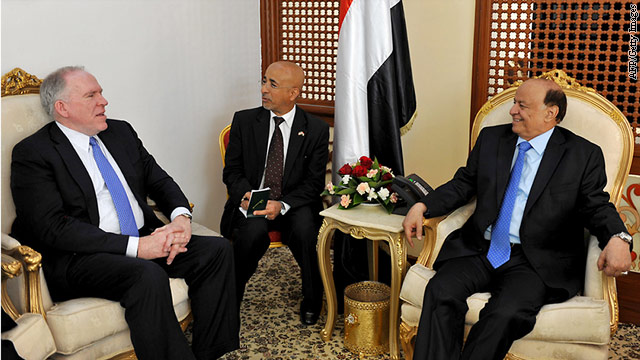
Yemen's new President, Abd Rabbuh Mansur Hadi, established working relations with John Brennan while serving as vice president to Ali Abdullah Saleh

The latest military restructuring announced by Yemeni President Abd Rabbuh Mansur Hadi brought much-needed relief to an anxious nation. Beyond establishing new regional commands to increase the Defense Ministry's centralization, Hadi's decrees finally terminated several high-ranking relatives of former president Ali Abdullah Saleh, namely his son Ahmed and nephew Yahya. Yemenis had demanded their dismissal from Saleh's personal "counter-terrorism" units since launching a revolution in January 2011, and both would assume instrumental roles in spearheading Saleh's vicious crackdown on peaceful demonstrators.

Gone, too, is the First Armored Division commanded by rogue general Ali Mohsen al-Ahmar, who defected from Saleh's government in March 2011 to escape punishment and pursue his own interests. His division and Ahmed Saleh's Republican Guard now count themselves as part of Yemen's Special Operations Command and Strategic Reserve Forces, and theoretically fall under Hadi's personal authority.

This news was lauded by John Brennan, the Obama administration's counter-terrorism coordinator (and current nominee for CIA Director): "Mr. Brennan extended President Obama’s congratulations to President Hadi for the decrees issued yesterday to further restructure the Yemeni armed forces, advancing the goal of a unified, professional military that serves the Yemeni people."

Unfortunately the jubilant air soon cleared and Yemen's situation has tumbled back downhill in the days since. Following their "removal," the normally resistant Salehs welcomed Hadi's announcement and pledged to cooperate fully, triggering immediate suspicion of their payoffs. Ali Mohsen greeted Hadi's orders as though they had nothing to do with him. Reports then surfaced to explain their reactions - new military appointments - and were half-confirmed by the spokesman of Yemen's embassy in Washington; Mohammed Albasha announced on December 23rd that “there are no restrictions to their reappointments in the Ministry of Defense."

Subsequent reports predict that Hadi's decrees could take six months to implement, and that Ahmed Saleh and Ali Mohsen will continue to oversee their positions until then. If they do receive new regional commands or advisory positions, they can thank their ongoing survival for the immunity granted by the Gulf Cooperation Council (GCC) and United Nations Security Council (UNSC).

These collective actions serve more private interests than Yemen's people, beginning with Hadi's interim government and the foreign powers that secured his promotion. Although he has admirably stepped up to fill Saleh's void after serving nearly two decades as his vice president, Hadi remains a controllable instrument of the GCC deal's true brokers, Riyadh and Washington. That leaves Yemen's revolutionaries - the country's future - at the bottom of national and international priorities, at a time when they have enough interference to deal with at home. Out-resourced by the oppositional Islah party, which dips its hands into most of Yemen's political movements, the country's civil parties have already been isolated in the UN-sponsored National Dialogue with few seats relative to the whole (the youth and women received 60 combined seats out of 565).

They could easily be squashed by Saleh's own General People's Congress (GPC) and the 112 delegates they plan to sit - the most of any bloc.

As of now the Islah-dominated Joint Meeting Parties (JMP), in addition to the youth, refuses to participate in the event that Saleh does represent his party (another "medical leave" is being planned by Riyadh and Washington, but both rumor and reality are fraught with uncertainties). Conversely, Islah has interfered with efforts to organize an independent youth conference, a phenomenal idea to advance a democratic Yemen, while Ali Mohsen's loyalists have "protected" the youth by militarizing their square at Sana'a University. The general recently agreed to withdraw his forces following persistent demonstrations against their presence, but only after months of physical altercations with the youth camps.

Yemen's youth and women are tragically viewed as groups to appease with scraps, not sources of national power to nurture and cooperate with. They have found few allies inside or outside the country due to their independent agenda, and cannot turn to the United States in their hour of need. The second incarnation of Yemen's Life March, a mobile demonstration traveling from the revolutionary hub of Ta'izz in December 2011 en route to Sana'a, recently arrived in the capital to remind Hadi and his foreign backers that they won't back down either. With no action taken by their transitional government or the UNSC, Yemenis once again marched to advocate their standing demands: "Dismissal of all military leaders who worked with Saleh, headed by Ahmad Ali Saleh, Ali Mohsen Saleh, Ghalib Algamesh and fully dismissing them and not reshuffling their positions in the new appointments, whatever the circumstances."

The march ended when government forces blocked its path and violently dispersed protesters with tear gas, eroding another piece of the goodwill initially earned by Hadi's military shakeup.

U.S. influence is hardly responsible for all of Yemen's politico-economic dilemmas and the tribal knots created by Saleh's nepotism. However the sheer gravity of America's counter-terrorism is warping Yemen's political and military reforms. The Obama administration no longer has practical use for Saleh and company, but they possess too much incriminating evidence on Saudi and U.S. actions in Yemen to be cast away completely. Instead Saleh has been kept close, traveling to America twice since the revolution began, and silent under the GCC's immunity package. Potential sanctions against "spoilers" - the always unnamed Saleh - remain a manipulative tool to avoid accountability.

In the meantime U.S. drones continue to strike at suspected targets of al-Qaeda in the Arabian Peninsula (AQAP), accumulating enough collateral damage to produce a bombshell report by The Washington Post. Hadi has opened a wider door than his predecessor in exchange for U.S. and Saudi support, approving the Obama administration's covert activities and moving to kill inquiries into civilian casualties. This relationship-building and the preservation of mutual interests is more responsible for Hadi's decrees than any genuine effort to uproot Saleh's regime from Yemen's political equation.

Ultimately, Ali Abdullah Saleh cannot be held accountable for decades of misrule because the U.S. and Yemen's power-sharing government are working outside the bounds of accountability. The fact that Washington and Riyadh have exhausted their operational need for his regime is far from stabilizing, and poses an enhanced threat to Yemen's democratic growth. One can reasonably assume that Washington will possess greater influence over Hadi's Special Operations Command than Saleh's U.S.-trained units. Counter-terrorism activities are being established in systematic fashion - land, sea and air forces surround the peninsula nation - but U.S. policy as a whole represents counterinsurgency at its worse: deep hostility and mistrust with the local population.

The Obama administration cannot realistically expect to defeat AQAP with its current strategy, and the same power that lifted Hadi to his current position is weighing him down with his own people.


"The main problem is not only with the US administration - extrajudicial killings in Yemen of 'suspected' targets, killing and terrorizing civilians and creating animosity towards the US - but rather with our government’s position, approving those drone strikes," says Noon Arabia, a Yemeni-Egyptian blogger who maintains her anonymity for personal and security reasons. "Former president Saleh with all his shortcomings tried to hide his role in allowing the US drones to strike in Yemen, before being exposed by Wikileaks. However his predecessor President Hadi not only publicly endorsed them, he even argued regarding their accuracy. Drone strikes in Pakistan decreased by 41% in 2011 and another 40% in 2012 because the Pakistani government publicly condemned and disapproved of them. Yet in Yemen they have increased by 240% in 2011, and another 250% in 2012 and most likely will increase further in 2013 thanks to our puppet government."

Yemen's revolutionaries are marching, bleeding and dying for a better future than what is currently being forced onto them. The U.S. would be wise to begin a new era of engagement and vanquish the same fear that is normally reserved for al-Qaeda.

January 7, 2013

U.S. and Bahrain: Oppressive Allies Think Alike

In a predictably totalitarian move that threatens the regime itself in the long-term, Bahrain's court system has finally buried the appeals process for 13 oppositional activist accused of plotting to overthrow the government. The decision culminates months of legal warfare with King Hamad bin Isa al-Khalifa's army of legal soldiers, but this illusionary battle never offered a chance to the political prisoners trapped in the monarchy's web. Last month an appeals court knocked one year off Nabeel Rajab's three-year sentence in the vain appearance of fairness. 

Now his partner at the Bahrain Center for Human Rights (BCHR), Abdulhadi al-Khawaja, has been sentenced once and for all to life, while his daughter faces nearly a dozen charges herself for protesting peacefully (and often in solitude). Several of al-Khawaja's fellow defendants were accused of plotting an Iranian coup.

Thus it is clear inconsistencies numerous and large among its ruling the Court of Appeal supported the provisions of the courts of national safety, and what came in the report of BICI of the observations and conclusions which lead that all that the defendants in this case have not only exercised their fundamental freedoms in the regulation and expression, peaceful assembly but they were subjected to serious abuses during their arrest, detention and trial.

As is evident the Court did not respond to the recommendations of the Commission of Inquiry to investigate violations and to prosecute those involved. As is evident synergies of the Constitutional Court and the criminal courts and public prosecution and continuation in the previous approach, making this issue a stark example of the lack of independence of the judiciary in Bahrain, and lack of seriousness in implementing the recommendations of the fact-finding committee.
The rapid nature of news and social media has produced numerous observations to the effect that Bahrain's monarchy "has shown its true colors" - or "pushed the country closer to the brink" - and that its Western allies will be unable to defends its actions. The first two general reactions are inaccurate but partially true. King Hamad's royal circle has demonstrated their inability to redress Bahrain's crisis since the uprising began, making the wrong choice with Saudi Arabia's Peninsula Shield and never looking back from the destruction of Pearl Monument. Aside from a successful propaganda campaign with Western governments and skillful use of low-intensity violence, Bahrain's monarchy has made strategic errors at every turn - if its goal is the resolution of a fundamental political dispute.

Otherwise the monarchy is succeeding wildly in its attempt to provoke and crack down on the island's Shia majority.

Sentencing the opposition's leadership to life in prison sentences the regime itself to permanent unrest. Accordingly, Bahrain has already reached the brink and descended into a canyon of tyrannical abuse and sectarian tensions. Monday's sentencing is simply a new feature in this dangerous environment, and will produce new waves of oppositional action in the streets and at the party level. Protests will occur, counterassaults will follow, and the island will continue spinning out of control until Bahrain's king decides to be a good one - or is removed, internally or externally.

As for Hamad's Western support, particularly Washington and London, they spent last night trying to cover their pig in lipstick rather than formulate a genuine policy to support Bahrain's opposition. Repeated calls for dialogue have bounced off a hardening situation in the streets and prisons, and the modest criticism levied at calculated times has made no lasting effect when outweighed by statements of this type (also here and here). That U.S. policy is blowing in a chaotic wind is increasingly acknowledged by left and right, accepted even by The Washington Post, Wall Street Journal and Max Boot. Yet the same pattern of "concern" and "regret” that has failed to yield any positive change was on display Monday in the State Department.

"We regret today’s decision by the Bahraini Court of Cassation to uphold the convictions and the sentences of these 13 activists. We’re concerned that this decision further restricts freedom of expression and compromises the atmosphere within Bahrain for reconciliation. We have repeatedly voiced our concern about these cases both publicly and privately and at the highest levels, and urged the Government of Bahrain to abide by its international obligations, and we have also had Embassy observers at the trial. So we call on the Government of Bahrain to investigate all reports of torture, including those made by the defendants in this case, as it has pledged to do, and to hold accountable any who are found responsible."

The "atmosphere within Bahrain for reconciliation" is already compromised. Conversely, Western "concern" and naked abuse is regularly heaped on the opposition's use of violence in a systematic effort to disguise the all-consuming reality: involved governments are too busy pursuing their own interests to responsibly address Bahrain's full-spectrum crisis.

They refuse to believe that anyone can stop them and dare the people to prove them wrong.

January 3, 2013

Yemenis Walled In By National, U.S. Courts

On Wednesday the United States District Court for the Southern District of New York (SDNY) dismissed a Freedom of Information Act lawsuit (FIOA) initiated by the American Civil Liberties Union (ACLU). The ACLU had requested government records of Anwar Al-Awlaki, Abdulrahman al-Alwaki and Samir Khan's "targeted killings," but the SDNY predictably struck down an inquiry into the explanation of their deaths - citing the Obama administration's own defense of drones as sufficient reason not to disclose their operations.

The Trench is less interested in becoming mired in al-Awlaki's case, and the questions of whether he constituted an imminent threat and qualified for treason. The U.S.-born preacher had urged jihadists to attack the U.S. homeland and will never win a legal battle regarding his citizenship. Khan's involvement with Inspire magazine, al-Qaeda in the Arabian Peninsula's (AQAP) main propaganda outlet, also leaves no alternatives for a U.S. court. Two overarching debates were heard by the FIOA's end: the constitutional legality of targeted assassinations against U.S. citizens, and whether the U.S. public has a right to transparency.

These issues, though obviously vital to America's health and privacy, ignore another fundamental and interconnected dilemma: U.S. counter-terrorism is making more opponents in Yemen.

In the aftermath of al-Awkali's death, which triggered a miniature replica of Osama bin Laden's killing, the Obama administration readily manipulated a "brand name" to justify an ongoing militarization of the country - a plan that the American majority remains indifferent to. By branding him as the leader or else a high-ranking strategist of AQAP (a ploy that just repeated today), the White House failed to correct exaggerations of his importance in the U.S. mainstream media. Al-Awlaki did run with the group's core and considered himself a planner, preacher and propagandist, but he was far from AQAP's most valuable figure. He's probably more valuable dead, and AQAP has continued to grow its organization in his absence.

A U.S. court of law naturally takes minimal interests in these transgressions.

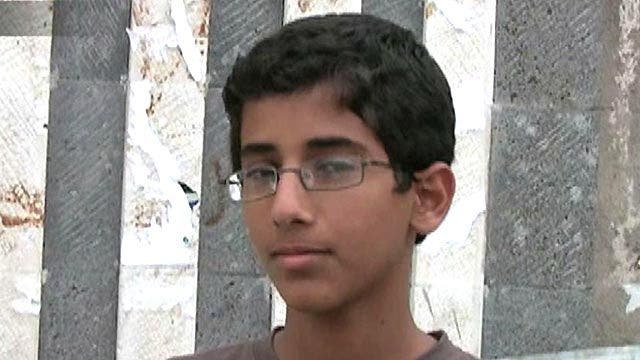
Of greater concern to The Trench is the blatantly unlawful assassination of al-Awlaki's 16-year old son, Abdulrahman, to be treated in depth shortly. Droned three weeks later at a barbecue without the fanfare of his father, the Denver-born Abdulrahman was unassociated with his father's radical teachings and killed without committing a crime. This heinous act was recognized as such by the Obama administration's own coverup; Abdulrahman's killing has yet to be formally addressed directly, and only recently admitted indirectly by anonymous U.S. officials.

His death was excused as "an outrageous mistake" in a Washington Post report that "coincidentally" glorify John Brennan's "true model" of counter-terrorism in Yemen.

Due to ambiguity and denial, the court ruled out the release of his records because no admission was made by the Obama administration. Gross perversity of circular logic is difficult to explain: because the White House didn't talk about a murder it committed, America's courts can't either. The ultimate tragedy of Abdulrahman being erased from the SDNY's ruling, beyond his personal suffering and his family's irreplaceable loss, is how Abdulrahman represents the average Yemeni plight. Few to no Yemeni-Americans are plotting within AQAP to bring down America, while millions of Yemenis live and sleep under drone patrols, and they can't count on either government for protection or accountability.

Yemen's transitional government remains under a heavy American arm and has blocked numerous investigations into civilian casualties, overburdening the remnants of Ali Abdullah Saleh's legal system. Meanwhile the U.S. court system is unlikely to provide any recourse to Yemenis or Yemeni-Americans who become victims of America's escalating war with AQAP.

This policy generates no possibility of improving American relations with Yemen's people - the key to defeating AQAP - and smothers all light of justice.


December 26, 2012

Bahrain's Monarchy Waging Fierce Infowar, Lawfare

Credit must be given where credit is due, however tainted it is.

Under Western pressure to moderate its repression and remain a credible ally, Bahrain's monarchy has wielded a combination of riot tactics, well-connected public relations and legal exploitation to minimize its international profile. This strategy, along with Bahrain's indispensable position vis-à-vis Iran, has achieved its objective of blunting Western criticism and accountability, but utterly fails to resolve Bahrain's political dilemmas. Instead, a recklessly confident King Hamad bin Isa Al-Khalifa is allowed to ignore and thus perpetuate the historical crisis facing his government. Protected internationally by the U.S. and Gulf Cooperation Council (GCC), led by counterrevolutionary sponsor Saudi Arabia, Hamad's alliance seems to believe that he cannot be pulled down from his throne.

On Tuesday Foreign Minister Shaikh Khalid bin Ahmed bin Mohammed Al Khalifa described a United Military Command to the 33rd session of the GCC Supreme Council, envisioning an umbrella of "Peninsula Shield Forces as well as the air and naval forces."

Making these types of statements in Bahrain, ground-zero for the Peninsula Shield's mayhem, is one of countless demonstrations of the monarchy's insensitivity. GCC unity does present a long, winding road that won't reach its goal in the near future, but the trend is gradually pushing towards enhanced economic and military integration. The GCC already functions as a Saudi-fueled NATO, counterattacking the flames of political opposition and revolution wherever dissent erupts.

Addressing King Abdullah of Saudi Arabia as princes would acknowledge their superior, King Hamad concluded his keynote speech by announcing, "We believe that achievements will achieve integration and unity. We ask God Almighty to bless our efforts for a brighter and prosperous future."

Domestically, Hamad's royal circle has pursued the beheading of oppositional leadership in an ongoing effort to isolate the youth coalitions, in turn forcing them towards unorganized and violent reactions to the government's abuses. Medical personal has become another main target of legal prosecution, when they aren't being assaulted or tortured themselves. The Bahrain Center for Human Rights (BCHR) has suffered in particular due to its independence, national appeal and legitimacy with international groups. Its co-founder, Abdulhadi al-Khawaja, was arrested, tortured and sentenced to life in September for "breaching the Constitution and participating in plot to overthrow the regime and having intelligence contact with foreign entities and other charges."

To measure the dizzying height of these trumped-up allegations, a charge levied on eight of his fellow defendants, one was accused of plotting a coup involving 40 Iranian warships.

As for Zainab, one of al-Khawaja's tireless daughters, she as been arrested nearly a dozen times for non-violent protests, many of them solitary sit-ins or vigils. Chants of "Down, Down Hamad" have resulted in verbal and physical abuse during her detention. Nor is Zainab's intimate family safe; her husband was released in January 2012, and her brother-in-law "was released after a six-month sentence in late 2011." She claims they were tortured as well, acts that have disappeared into the shadows of the King's hollow "Independent Commission of Inquiry."

Zainab's sister, Maryam, currently operates in exile, pushed out by her father to continue their cause safely off the island.

The BCHR's other co-founder, Nabeel Rajab, also occupies a jail cell following the recent confirmation of his sentence, albeit reduced from three years to two. An irrelevant detail given the monarchy's ability to rearrest and delay appeals, Rajab's unjust "legal process" inevitably broke the same way as al-Khawaja's and removed both charismatic personalities from Bahrain's streets. Unsatisfied by these gains, the monarchy then arrested Said Yousif Almuhafda, the BCHR's media coordinator, during last Monday's protests in Manama and delayed his hearing until the beginning of 2013. This legal procedure for harassing the pro-democracy opposition has proven effective under the U.S.-GCC's own legal umbrella.

Zainab's case has now been delayed to January 20th, much to the disgust of her supporters who chant "justice delayed is justice denied." Yet this coordinated and calculated assault to undermine Bahrain's opposition has failed to elicit any  accountability from its most powerful Western ally. Instruments of crowd control still flow to the island, advertising America's undemocratic position directly to the people that are expected to negotiated with a monarchy that has lost legitimacy.

Writing in The New York Times before her December 26th hearing, Zainab warns, "This double standard is costing America its credibility across the region; and the message being understood is that if you are an ally of America, then you can get away with abusing human rights."

The deafening silence articulated by Zainab and the BHRC may break after Christmas's media pause, but Bahrain's allies are unlikely to do anything more than talk. The last U.S. statement on Rajab's detention dates August 23rd, while the al-Khawajas have been abandoned to a merciless King. House raids continue day and night as Manama remains outlawed to protesters.

"The BCHR is concerned and disappointed by the silence of the international community and the lack of concrete actions to put an end to the authorities' violence towards peaceful protesters and their militarization of Salmaniya Medical Complex. The BCHR also calls on the United States, the United Kingdom, the UN and all other allies and international institutions to put pressure of the Government of Bahrain to stop its use of excessive force in response to the continued peaceful protests, and to consider a meaningful solution to resolve the persistent political issues of instability in the country."

December 25, 2012

Chaos In Sana'a, On Yemen's Information Battlefield


Rapidly unfolding events in Yemen seem to have acquired lasting significance amid the country's ongoing revolution.

Concluding exactly what happened isn't easy due to the fact that no Western media is paying full attention to Yemen's revolutionary streets. Add in Yemen's notorious uncertainty and proliferation of semi-reputable news sources, and dispersing the fog of war becomes nearly impossible. The only information agreed upon by all involved parties describes a confrontation between Yemeni demonstrators and security forces in the capital of Sana'a.

Beyond this rudimentary consensus lies a thick haze of asymmetric war. Accounts from Yemeni civilians claim that police and military units opened fired with tear gas in an effort to disperse a second coming of their Life March, a mobile demonstration that just arrived from Tai'zz to advance their cause. The marchers had entered Sana'a from the south and proceeded to Al-Sabeen Square, located between the Presidential Palace and Al Saleh Mosque, where they encountered a security presence in their way.

Opposing accounts diverge at this point. Those involved with Yemen's democratic movement claim that government forces opened fire without provocation. The situation turned ugly fast, from picture-posing in the day to confrontation at night, and reportedly left multiple protesters wounded or missing. The corresponding information also jumped quickly between participants, eye-witnesses and supporters through transmedia, presumably undergoing a warping process. Reports of casualties have turned negative, but the information regarding several kidnappings has yet to reverse course. Protesters have since moved in front of President Abd Rabbuh Mansur Hadi’s home on nearby 60th Street to continue their demands:
1 - Dismissal of all military leaders and Supreme Security who worked with Saleh, headed by Ahmad Ali Saleh, Ali Mohsen Saleh, Ghalib Aalghemh and fully dismissing them and not reshuffling their positions in the new appointments, whatever the circumstances; and accelerate the implementation of the decisions of the army restructure and achieving safety, security and stability in the country and the extend the state power on the entire regions and provinces, particularly Saada and Marib.

2 - The release of prisoners of the revolution, and forcibly disappeared, and support the families of the martyrs and the wounded, and prosecute the killers of the rebels and looters of public wealth and the private sectors, and recover the looted and stolen wealth.
Yemen's government has released a different viewpoint of Al-Sabeen's showdown, claiming that security forces were provoked by rock-throwing youths. One protester was injured after falling from a vehicle and is receiving medical attention at the State's expense. All other injuries were denied by Interior Ministry, "those detained have been released" and an investigation is supposedly forthcoming.

A relatively minor clash lies behind the tear gas, but one that carries a bigger punch than may be expected. The upshot appears to be a tangible shift against Hadi's moderate popularity, which has kept him floating above his connections to Saleh. Al-Sabeen's confrontation is negating a piece of the goodwill earned by Hadi's recent military announcements, and represents another step back into his former boss's shoes. He must act wisely and cautiously to prevent further escalation ahead of Yemen's anticipated National Dialogue.

Protesters do not bear the burden of disproportionate force and cannot be faulted for distrusting the corrupt parts within Yemen's interim government (including Saleh as the head of his General People's Congress), or the foreign powers shielding them from accountability.

December 17, 2012

No Rest For Bahrain's Duplicitous King

 Zainab Al-Khawaja being arrested at Salmaniya hospital on December 9th

Celebrating Bahrain's National Day on Sunday with the usual festivities, King Hamad bin Isa al-Khalifa delivered another of his patented rhetorical offensives to a divided nation. Hamad had arrived at the University of Bahrain in order to mask his intentions, employing his father's name to establish the Shaikh Isa bin Salman Al Khalifa Fund to "serve all citizens without distinguishing between religions, sects or cultures." A noble concept in theory, but those Shia facing government discrimination (largely carried out by Sunni police and mercenaries) don't have time to wait for future promises. Nor do they have time for the denial that has gripped Bahrain's tottering monarchy.

Hamad's circle has refuted any connection to the Arab revolutions throughout the island's 22-month uprising, and employs his speeches to ignore a fundamental political crisis rather than address it.

"In conclusion and on the great occasion of the National Day, we call on everyone to move forward, to be diligent for the sake of further accomplishments and to continue the nation-building process in various fields in order to achieve the well-being of our citizens... We commend our armed forces and the security and the National Guard forces who are always ready to provide the appropriate climate for development and progress through achieving security and stability and meeting all challenges for the sake of all people’s welfare and benefit.”

Protests naturally ensued before and after Hamad's speech. Disenchanted by anything their king in name only had to say - and he waisted no time vindicating their reaction - the youth-led February 14 coalition organized roadblocks and protests around Manama's surrounding villages. They were promptly met with the ubiquitous tear gas and rubber bullets that characterizes Bahrain's unique low-intensity situation. On Monday protesters attempted to march on the capital, now a strict no-go zone under de facto emergency law, resulting in a number of arrests. Among them, the acting head of the Bahrain Center for Human Rights (BCHR) and his wife, Yousef al-Muhafedha and Zainab al-Sairafi.

Al-Muhafedha currently oversees the BCHR's activities because its founders, Nabeel Rajab and Abdulhadi al-Khawaja, already occupy jail cells for "instigating unrest." Rajab's three-year sentence was reduced to two last week and legitimized in the process, a cheap scam to keep him unjustly imprisoned. Al-Khawaja's daughter Maryam has also been forced into exiled to avoid the fate of her sister Zainab, who was recently handed another month-long sentence for one of more than a dozen pending charges. Zainab has been verbally and physically on multiple occasions for staging one-woman protests and chanting for the King's resignation, treatment shared by her BCHR comrades and other political prisoners.

The systematic assault on Bahrain's leading human rights organization, by itself, demonstrates that the monarchy is far less concerned with substantive reform and more committed to terror tactics than the opposition. Concealing the truth and covering up Bahrain's political fissures is priority one. Dispatched by the monarchy as the fist inside Hamad's velvet glove, the King's official spokeswomen laid all responsibilities of violence on Bahrain's oppositional network as she established favorable terms for negotiations.

"Any national dialogue to overcome the crisis will not ignore any component of the Bahraini society and will not be with one side at the expense of the other," State Minister for Information Affairs Samira Ibrahim bin Rajab told al-Sharq al-Awsat. "It will, however, be complementary to the national consensus dialogue that took place in July 2011 and will commence as soon as the opposition stops violence and relinquishes conditions and restraints put to engage in that dialogue."

The egotistical notion of Bahrain's monarchy refusing to hold a second "National Dialogue," after the first failed so miserably, is no less absurd than staging one immediately. Government security forces and allied mercenaries from friendly governments (Saudi Arabia, Jordan, Kuwait, UAE, Pakistan) bear the majority of responsibility for applying disproportionate force, however non-lethal. Complaints of Molotovs lose legitimacy when the monarchy blows hard on the streets' flames; Shia communities are raided at night, gassed, beaten and tortured for the past and future actions, while no political measures have been arranged to mitigate the fallout. 

Rifts between loyalist and oppositional forces - and between their own ranks - continue to widen at a treacherous pace. This accumulation of events has pushed Bahrain's environment beyond the trust necessary to open a dialogue in the first place. An expanding section of Bahrain's opposition has lost all faith in the monarchy, and cannot be expected to participate until substantial goodwill offerings are secured: ending military raids and releasing political prisoners. And even these moves may fail to end one overriding demand.

"Down, Down Hamad."

December 4, 2012

Israeli Settlements Become Prop In U.S. Propaganda

Israel's response to the Palestinians' successful observer bid in the United Nations was equally swift and predictable. Less than 48 hours removed from the 138-9-41 vote, members of the Israeli government announced that Prime Minister Benjamin Netanyahu had approved the “preliminary zoning and planning preparations" for 3,000 new settlements units in the West Bank and East Jerusalem. One section intends to fill the space between the West Bank settlement of Ma'ale Adumim and East Jerusalem, located some five miles east of the city, as part of the highly controversial E1 development project. Israeli officials stress that the plans remain in their "preliminary" stages.

"No one will build until it is clear what will be done there," Israeli Housing Minister Ariel Attias attempted to clarify on Sunday.

However his government's message is crystal clear. In addition to the E1 announcement, 1,600 units were also penciled into the Ramat Shlomo settlement, which gained prominence in March 2010 at the expense of visiting U.S. Vice President Joe Biden. The following year, 1,000 units were announced prior to an April 2011 meeting between U.S. President Barack Obama and Israeli President Shimon Peres. Apparently Israel's Interior Ministry doesn't put a premium on creativity, since it announced 1,600 units in Ramat Shlomo during the run-up to last year's UN confrontation with the Palestinians. This settlement, in addition to E1, is being utilized as provocative soft-power against the Palestinians and Washington alike - a threat capable of morphing into tangible damage to a two-state solution.

"The answer to the attack on the Zionist character of the state of Israel obliges us to increase the tempo of settlement building plans in all the areas that the government has decided to settle in," Netanyahu said before the start of his weekly Cabinet meeting in Jerusalem.

How Israel benefits from these decisions remains speculative, given that Israeli officials and citizens expressed regret over the announcement's nature. Current and former officials, along with Israel's various allies, have unveiled a calculated response that weighs Israel's right to build against the provocative selection of territory. They generally believe that Netanyahu erred in defying Washington so soon after the Obama administration stood on the losing side of an overwhelming victory in the UN, as well as the losing side of Gaza's 8-day battle. And they fear that a two-state solution is drifting further into history with each passing day.

Even pro-settlement actors have been forced to disapprove of Netanyahu's timing and its implications.

"We don’t like the idea of developing our communities as a sort of retaliatory or punitive step,” said Dani Dayan, the leader of Israel’s settler movement and a supporter of E1.

Except Israel's government will get what it wants in the end - sticking its finger in the UN's chest - and suffer negligible punishment from Western capitals. The EU ministers that rushed to condemn settlement announcements in East Jerusalem still hope to "persuade" Israel back to the negotiating table with the Palestinians. Nor is President Barack Obama and his administration willing to openly break ranks with Netanyahu's hardline government, whatever the cost to America's image. The White House and State Department defended America's "no" vote as a "principled stand" when reporters inquired into the motivation behind resisting the international community at large.

AP journalist Matt Lee was forced to respond, "Doesn’t this ever give anybody any pause that you might be – that your principled stance doesn’t – isn’t seen as a principled stance by the rest of the world, but seen as – it’s seen as an obstacle? Doesn’t anyone ever – why does the United States think that it has the moral high ground and the rest of the world doesn’t on this when the rest of the world disagrees with you?"

As for Washington, settlement announcements prove too useful to a government in need of appearing objective. The output of criticism from the White House and State department has certainly piled up since the weekend announcement, having nowhere else to go after the UN debacle; ironically, spokeswoman Victoria Nuland told reporters on Friday that the administration opposes "any action that undercuts the way Israel is seen by the world." Unfortunately a hollow tone continues to pervade U.S. rhetoric. Each statement is so formulaic that a sense of "going through the motions" becomes evident. Now the U.S. gets to oppose Israel's unilateral actions and market itself as "fair and balanced," a narrative that runs perpendicular to reality. The U.S. will still be standing behind Israel during "direct negotiations" with the Palestinians - whether on the table or battlefield.

"We reiterate our longstanding opposition to settlements and east Jerusalem construction and announcements," said Tommy Vietor, spokesman for Obama's National Security Council. "We believe these actions are counterproductive and make it harder to resume direct negotiations or achieve a two-state solution. Direct negotiations remain our goal and we encourage all parties to take steps to make that easier to achieve."

"We have made clear to the Israeli Government that such action is contrary to U.S. policy," added a special statement from the State Department, which quickly flooded the international media with false headlines of "shock" and "condemnation." "The United States and the international community expect all parties to play a constructive role in efforts to achieve peace. We urge the parties to cease unilateral actions and take concrete steps to return to direct negotiations so all the issues can be discussed and the goal of two states living side by side in peace and security can be realized."

This situation is too coincidental to be coincidental. 

At least Israeli Finance Minister Yuval Steinitz will allude to this much: "I want to tell you that those same Europeans and Americans who are now telling us 'naughty, naughty' over our response, understand full-well that we have to respond, and they themselves warned the Palestinian Authority."

November 29, 2012

Palestinians Secure UN Observer Status, New Battles Await

Today the Palestinians took a step towards self-determination after a popular landslide in the United Nations General Assembly voted in favor of their observer status.

The vote culminates a multi-year plan by de facto Palestinian President Mahmoud Abbas, whose term officially ended in January 2009, and his dangerous dance with Israel and Western powers. These forces had hoped to use Abbas as their own pawn during final-status negotiations, a plan that contributed to Abbas's image as an U.S.-Israeli puppet, but they appear to have underestimated his pliability and survivalism. Abbas will now face a higher level of Western pressure to reengage the Israelis on their terms, before his UN mission and future elections potentially decreases the control over Palestinian leadership.

"Regardless of what happens in New York today," the State Department's Victoria Nuland told a group of incredulous reporters shortly before the vote, "the United States is going to continue to try to bring these parties back to the table. Obviously we’re going to. The President is committed to that, and I think the only question is what kind of environment we’re working in."

Obviously - because President Barack Obama has been so supportive of the Palestinians and generally engaging towards a frozen peace process.

There is no questioning the type of environment that Washington envisions. The Obama administration's new diplomatic push will almost certainly be directed behind Israeli and Western interests, rather than an equitable two-state solution. Accordingly, the administration attempted (futilely) to counteract these immovable perceptions by deploying UN Ambassador Susan Rice with a serious piece of doublespeak:
For decades, the United States has worked to help achieve a comprehensive end to the long and tragic Arab-Israeli conflict. We have always been clear that only through direct negotiations between the parties can the Palestinians and Israelis achieve the peace that both deserve: two states for two peoples, with a sovereign, viable and independent Palestine living side by side in peace and security with a Jewish and democratic Israel.

That remains our goal, and we therefore measure any proposed action against that clear yardstick: will it bring the parties closer to peace or push them further apart? Will it help Israelis and Palestinians return to negotiations or hinder their efforts to reach a mutually acceptable agreement? Today’s unfortunate and counterproductive resolution places further obstacles in the path to peace. That is why the United States voted against it.
The rest of her speech continues to advance this argument: only the Israelis and Palestinians can solve their problems, therefore no one should get in the middle. Except if Rice meant what she said, Washington wouldn't dictate terms to the Palestinians at the behest of Israel - deciding Jerusalem's fate or a demilitarized Palestine, for example. Rice's twisted logic is designed to whitewash America's own dirty hands in the process, and to spin the source of obstruction from the Israelis back into the Palestinians. Israel's blockade of Gaza and disproportionate warfare is counterproductive to peace. So too is the U.S. bias in Israel's favor, whether inside or outside the Palestinian conflict. The Obama administration isn't protecting regional or world peace, only the private interests of Wasington and allies, and the Palestinians must guard against Western diplomatic retaliation.

Today's vote is widely viewed as a vote for or against oppression and occupation. The Obama administration possesses no rhetoric capable of burying this reality, but it will try in the coming months.

November 24, 2012

John Mearsheimer: "A Pillar Built on Sand"

This analysis by John Mearsheimer, co-author of The Israeli Lobby, immediately captured the futility of Israel's 4GW beyond anything The Trench witnessed during Gaza's latest battle:
In response to a recent upsurge in tit for tat strikes between Israel and the Palestinians in Gaza, Israel decided to ratchet up the violence even further by assassinating Hamas’s military chief, Ahmad Jabari. Hamas, which had been playing a minor role in these exchanges and even appears to have been interested in working out a long-term ceasefire, predictably responded by launching hundreds of rockets into Israel, a few even landing near Tel Aviv. Not surprisingly, the Israelis have threatened a wider conflict, to include a possible invasion of Gaza to topple Hamas and eliminate the rocket threat.
There is some chance that Operation ‘Pillar of Defence’, as the Israelis are calling their current campaign, might become a full-scale war. But even if it does, it will not put an end to Israel’s troubles in Gaza. After all, Israel launched a devastating war against Hamas in the winter of 2008-9 – Operation Cast Lead – and Hamas is still in power and still firing rockets at Israel. In the summer of 2006 Israel went to war against Hizbullah in order to eliminate its missiles and weaken its political position in Lebanon. That offensive failed as well: Hizbullah has far more missiles today than it had in 2006 and its influence in Lebanon is arguably greater than it was in 2006. Pillar of Defence is likely to share a similar fate.
Israel can use force against Hamas in three distinct ways. First, it can try to cripple the organisation by assassinating its leaders, as it did when it killed Jabari two days ago. Decapitation will not work, however, because there is no shortage of subordinates to replace the dead leaders, and sometimes the new ones are more capable and dangerous than their predecessors. The Israelis found this out in Lebanon in 1992 when they assassinated Hizbullah’s leader, Abbas Musawi, only to find that his replacement, Hassan Nasrallah, was an even more formidable adversary.
Second, the Israelis can invade Gaza and take it over. The IDF could do this fairly easily, topple Hamas and put an end to the rocket fire from Gaza. But they would then have to occupy Gaza for years to come, since if they left Hamas would come back to power, the rocket attacks would resume, and Israel would be back where it started.
An occupation of Gaza would trigger bitter and bloody resistance, as the Israelis learned in southern Lebanon between 1982 and 2000. After 18 years of occupation they conceded defeat and withdrew all their forces. This experience is the reason the IDF did not try to invade and conquer southern Lebanon in 2006 or Gaza in 2008-9. Nothing has changed since then to make a full-scale invasion of Gaza a viable alternative today.
Occupying Gaza would also place another 1.5 million Palestinians under formal Israel control, thereby worsening the so-called ‘demographic threat’. Ariel Sharon withdrew Israeli settlers from Gaza in 2005 to reduce the number of Palestinians living under the Israeli flag; going back now would be a huge strategic reversal.
The final, preferred option is aerial bombardment with aircraft, artillery, missiles, mortars and rockets. The problem, however, is that the strategy does not work as advertised. Israel used it against Hizbullah in 2006 and Hamas in 2008-9, but both groups are still in power and armed to the teeth with rockets and missiles. It is hard to believe that any serious defence analyst in Israel thinks another campaign of sustained bombardment against Gaza will topple Hamas and end the rocket fire permanently.
Continue reading

November 21, 2012

Israel Remains Careless In Gaza's Fourth-Generation Warfare

Israel's fresh bombardment of Gaza and its political aftershocks have reinforced a maddening status quo: Hamas's armed resistance cannot reverse Israel's statehood, IDF operations cannot physically destroy Hamas's resistance, and involved foreign powers lack a concrete plan to advance an equitable two-state solution.

Hamas and those Palestinian leaders that fail to offer an alternative deserve their share of responsibility for bringing Gaza to boil. Fatah's inability to move a peaceful solution forward, albeit within a biased system of international mediation, has given Hamas ample room to grow and kept Israel's leadership focused on military action. However the blunt reality of asymmetric warfare does not place the burden of responsibility on non-state actors, but on the state actors theoretically beholden to international standards. Non-state actors attract popular support by offering modest improvements over a tyrannical, corrupt government. For this reason (and others, of course), Hamas's behavior is partially or fully accepted by Palestinians and Muslims who view Israel's behavior as incomparably monstrous.

Advanced states can make fourth-generation warfare (4GW) look flawless and futile at the same time.

4GW is named for its placement after 3GW, a phase that technologically evolved the tactical and strategic concepts developed in the 20th century. A major difference between 3GW and 4GW stems from the balance of power; while 3GW conflicts generally occur between states, 4GW develops between state and non-state actors. Firepower becomes less important in this type of warfare as the conflict blurs deeper into the local civilian population, placing a premium on the non-military factors - political, economic and social - that govern a territory. This strategy addresses the need to protect an area's natural and human resources instead of destroying them, along with the tasks of cooperating with international organizations and keeping battlefield blunders out of the international news cycle.

Although amplified by technology, 4GW is designed to confound superior militaries and their technological advantages. Accordingly, retired Marine Colonel Thomas X. Hammes advises America's leadership against believing that technology can overcome non-military sources of conflict and their political manifestations. Having monitored Washington's delusional expeditions in Afghanistan, Iraq and the "War on Terror," Hammes holds this error above all others in asymmetric warfare.

"We continue to focus on technological solutions at the tactical and operational levels without a serious discussion of the strategic imperatives of the nature of the war we are fighting," he writes in The Sling and The Stone, an authoritative study of 4GW.

Israeli leadership and the soldiers under their command are similarly geared towards urban warfare rather than the totality of 4GW. Israel's objectives remain military-oriented: eliminate a key Hamas strategist, destroy his long-range weapons, stop Gazan rockets from falling on southern Israel, and ultimately impose a ceasefire that demands the elimination of Egypt's smuggling tunnels into Gaza. Prime Minister Benjamin Netanyahu's political objective is domestic in nature, or else aimed at the Palestinians' upcoming recognition bid at the United Nations. Settling the conflict's non-military grievances has been noticeably absent from Netanyahu's agenda throughout his four-year term.

Israel certainly enjoys an abundance of political power and media influence, strong-arming Western governments with ease by dangling a ground invasion beneath a massive air raid. Netanyahu has reportedly told President Barack Obama that he will only launch a ground operation if Hamas continues firing rockets into Israel. Naturally Gaza's bombardment becomes more palatable in the face of a bloodier alternative, a comparison that helps maintain the West's green light for as long as possible. Furthermore, Netanyahu is attempting to portray himself as a tough but wise statesman (think Iran) ahead of January 22nd's election.

"Before deciding on a ground invasion, the prime minister intends to exhaust the diplomatic move in order to see if a long-term ceasefire can be achieved," a senior Israeli official said after Monday night's cabinet meeting.

U.S. Secretary of State Hillary Clinton has now arrived in the region to broker a truce "in the days ahead," allowing Israel to continue bombing every last target and giving Hamas little incentive to comply. Except this Western reservoir of diplomatic power cannot fully overcome the power attributed to world opinion, and steamrolling over all objections to the disproportionate force being applied in Gaza generates more enemies - civilian and militant alike - than Israel can eliminate.

Israel's government has grown dangerously accustomed to winning Gaza's tactical battles and losing the conflict's wider political narrative. Its military and intelligence agencies, among the world's elite, skillfully locate arms caches, intercept rockets and track Hamas officials with a Skynet-like grid of technology. Over 1,350 air strikes were counted by Monday, a growing number of them launched from unmanned aerial vehicles (UAVs). Many of Hamas's Fajr-5 rockets, considered a "tie-breaker," were wiped out in the moments after Ahmed Jabari's assassination. The Israeli military just Tweeted that it "surgically targeted a Hamas intelligence operations centre" on the seventh floor of a media building.

Meanwhile Carmela Avner, Israel's chief information officer, boasts that Israel can fight a war on three technological fronts: "The first is physical, the second is on the world of social networks and the third is cyber."

All of these capabilities, as Hammes warns, gives Israel's leadership a false sense of control over Gaza's military and non-military battlefields. There will always be more rockets to intercept from the political status quo. New Hamas leaders will inevitably replace the fallen and Israel's own websites are being hacked by supporters of the Palestinians. Worse still, the false sense of security inspired by the Iron Dome emboldens Israel to strike with minimal consequence, producing more hostilities instead of reducing them. "Precision" air strikes, far from precise, contribute to the eventual stalemate imposed by the international community's frantic jockeying to savage credibility with their own populations.

Israel is a master of war - disproportionate warfare. Over 150 Palestinians have been killed (at least 50 of them civilians) and over 840 wounded, including 225 children, since Operation Pillar of Defense began on November 14th. Israelis have suffered five fatalities and an estimated 250 injuries from Gaza's rockets, underscoring the conflict's fundamentally disproportionate nature. The faces of dead Palestinian children will outweigh anything Israel has to say to the world at large, and the government is losing minds and hearts at an unsustainable pace. Contrary to resolving any sources of conflict, disproportionate force and the resulting spectacle functions as a main driver of 4GW.

Israel's government argues that Hamas's stockpile has essentially been reset, but the same breathing room failed to yield any progress towards a two-state solution following Gaza's last war. Netanyahu will emerge wrapped in victorious rhetoric, ignoring 4GW and dooming the cycle to repeat again.

And if his government doesn't care what the world thinks, why should the world treat Israel with special care?