Showing posts with label Space Warfare. Show all posts

March 1, 2010

The International Moon Station

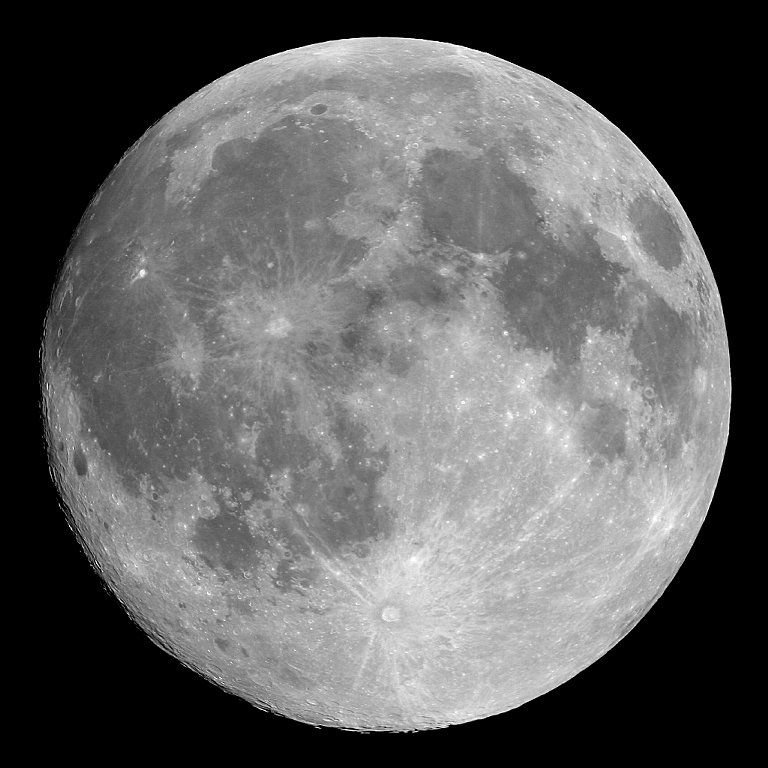
There is only place to begin humanity’s exploration into space. Regular journeys to Mars, closer to the Sun, or past Jupiter, as regular as they can be, depend on them. Semi-permanent lunar bases are necessary for space exploration in the 21st century and beyond.

It’s hard to imagine humans going anywhere without them.

The Moon, indeed all of space, is not a political race to be won, given a trophy, and off you go back home. Colonizing the Moon will play an immense role in humanity’s new era in the third millennium. Yet it is thus impossible to escape the totality of lunar exploration.

Scientific experiments in space will discover or invent saviors, oddities, and rarities over the coming centuries that can barely be dreamt of. We could make contact with other sentient life. An age of discovery is rising slowly upon humanity’s long term horizon, but with those types of ages comes war and corporations, usually resulting in a breakdown - or evolution - in society.

The clash of science vs. military vs. economic use of space will define space exploration as much as its discoveries.

The Space Race of the 1960’s to the 1990’s was a prelude to what could happen on the Moon - this time the race wouldn’t be so quick to end. But space politics are also likely to be cyclical, whether corresponding to Earth politics or creating an independent cycle. As such, the reverse situation could occur on the Moon.

America and Russia competed individually to reach space and the Moon, then united afterward to build the International Space Station. With a lunar base, the participants would group together until they finished together, before gradually splitting apart and fracturing the political lunarscape.
Developing the first semi-permanent lunar structures is likely to mimic and expand on the technology pioneered through the ISS. Not the first outposts, which could be developed by individual states, but the first established lunar center. As with space components of the ISS, lunar structures will be standardized and designed to be assembled piece by piece over a decade or longer.

The ISS launched in 1998 and, after installing 16 modules, is expected to be completed in 2011. The total process could take three or more times as long to build a lunar base, but will follow a similar pattern as the ISS.

As political scientists, who participates in this process is of particular concern to us. The ISS is a collaborative of America, Russia, the EU, and Japan. Any new collective will attract the attention of China and India, multiplying the geopolitical match-ups. The ISS has put aside politics because of the magnitude in task and danger, and the first lunar base could rally the same spirit, trumping nationalism and greed.

Conversely, the ISS is not the same premise is a lunar base. They are created with diametric functions in mind. The ISS is has a scientific goal, whether that knowledge is applied militarily, economically, or health wise. A lunar base comes attached with direct military and economic goals beyond research at the ISS.

Humans will go to the Moon to learn but also to land grab, militarize, resource harvest, and to set up tourism. All of these purposes involve capitalism and capitalism is another word for competition, which is a few steps away from war.

Earth’s most powerful states will likely devote their resources to an International Moon Station (IMS). The task appears too difficult for any one entity, government or private, and so an IMS is the rational prediction. But competition exists over deserts, oil, fish, gold, and plenty of other terrestrial semi-valuable.

It is no less rational to predict that the same competition will exist for the Moon’s best views, prettiest natural structures, and best spots for military bases and mining/factory hubs.

Locations to construct solar energy systems will be especially critical to maintaining life on the Moon. No matter what the reality turns out to be, we can also be sure that elements in every world power and major energy/engineering corporation has its eyes on helium 3. Popular Mechanic estimated in 2004 that helium 3 is worth 40,000$ per ounce, barring the market and technology to process it.

The has price fluctuated over the decade, but always remains a dozen times more precious than platinum. There will be competition unless helium 3 is disproved as a second generation fusion energy source. And regardless, humans compete violently and non-violently for any given terrestrial prize and the Moon will be no different.

This anticipated competition is the overriding reason why America, or any super power hopeful for that matter, must be planning for a lunar base right now if it wants to be ready when humans return after 2020. For a while they will be forced together, but for long long is another story.

We have no way of knowing the true motivation of America or China, the EU, Russia, or India at their deepest political levels. But we suspect they think the same as we do.

February 22, 2010

Moon Monday

There is no reason not to colonize the Moon - except the potential pollution of the Moon and the human species. Yet it is improbable that world powers, in conjunction with powerful individuals and consortiums, will resist the urge to weaponize and resource harvest the Moon. We have little choice other than to accept this inevitable future.

The wheels are already in motion. Understanding the process becomes the next best course of action.

By no means do we treat 2010 as the moment when lunar exploration takes off. Humans have been debating the finer points for over a century, and reports now can appear disturbingly similar to those dated 2000. Individual governments and private interests are still decades removed from establishing a permanent residence on the Moon.

That said, lunar exploration will become reality only through continual determination, awareness, and innovation, and we intend to contribute to the process. 2020-2030 should see significant lunar development. No party can afford to wait, each much strive every day until 2025 and beyond if they want to touch down first and claim the prime real-estate.

Monday night in The Trench is now Moon Monday. Here’s why:

1. Politics
2. Military bases

3. Extra-terrestrial experimentation of:
a. micro-gravity
b. space atmosphere
c. solar rays
d. the elements
e. agriculture
f. military technology
g. space technology

4. Resource harvesting
5. Space port to asteroids, Mars, and beyond
6. Lunar elevator
7. Tourism
8. Human curiosity and competition (intrinsic and political)
9. No Choice (global warming, excess population, low resources, etc.)
10. Inevitable (see above reasons)

These topics and more will be explored every Monday in hopes of constructing a theoretical lunar infrastructure. Space is the ultimate political frontier.

January 9, 2010

America and China's Hegemony War: Lunar Warfare

To inaugurate the 2010's, Octopus Mountain will be examining America and China's burgeoning hegemony war over the coming year. As the end of this decade will develop into a Moon race, we felt there was no better place to launch.
Avatar’s meteoric rise as 2009’s most controversial movie can has one natural outcome: box-office record breaker. Millions of people continue stuffing theaters to join the debate, then turn towards the sky wondering what it all means for up there and down here.

You can philosophize about the future of space exploration and exploitation, but you can also gaze at the moon and watch it unfold now. Or as now as the near-future can seem.

The term “space warfare” is somewhat of a misnomer. “Outer space warfare" or "extraterrestrial warfare” is more accurate if debating the future of war outside the Earth, in outer space. “Space warfare” is exactly that - war over space, a given area of existence.

Parking spaces, lawns, football, and West Asia are examples of space warfare.

We don’t want to challenge the term too far though; the two terms shouldn’t be separated completely. We only point out that humanity’s “outer space warfare” is technically “space warfare.” Humans are imaginative, curious - and running out of space and resources on Earth. We may be destined to fight over everything beyond our planet once we’ve tapped it dry, so potential lunar warfare could very well begin the same as many terrestrial wars.

“Outer-space warfare” as commonly dreamed - space ships, lasers, and foreign planets - may be centuries away, but “space warfare” on the moon is right around the corner. Nor is it much of a secret.

Ouyang Ziyuan is extremely fond of informing anyone within earshot about the amazing properties of helium 3, a light, non-radioactive isotope believed ideal for nuclear fusion. Among other things, the chief scientist of China's Lunar Exploration Program (CLEP), a component of its manned Moon missions, boasted that, “each year three space shuttle missions could bring enough fuel for all human beings across the world.”

Though Ziyuan is often accused of hyperbole and scientists have yet to agree on helium-3’s overall viability as a second generation power source, wide consensus remains that the element will be pursued vigorously by all space powers to replace depleting carbon fuels.

Wired ran a story in 2006 titled Race to the Moon for Nuclear Fuel that failed to connect the dots, possibly intentionally to save its insight. As China’s lunar fever starting to pick up and catch on, the time to connect America and China’s battle for global hegemony and lunar warfare has come. In fact the war has already begun.

Wired quotes Ziyuan as saying back in 2006, “We will provide the most reliable report on helium-3 to mankind. Whoever first conquers the moon will benefit first."

Those aren’t the words of a space “race.”

At this point we can jettison helium-3 much like a spacecraft rids itself of spent rockets. Helium-3 is just the surface of what could be vast stores of iron and other minerals desirable to governments back on Earth. The Moon Agreement was supposed to protect lunar reserves from being harvested by the few states with outer space capabilities, but since neither America, Russia, India, or China ratified the document, only one conclusion remains.

“NASA plans to have a permanent moon base by 2024, but America is not the only nation with plans for a moon base. China, India, the European Space Agency, and at least one Russian corporation, Energia, have visions of building manned lunar bases post-2020,” reports Wired.

Every one of those states is interested in helium-3 and whatever else lies beneath the Moon’s crust. While these bases will be founded under the banner of research and exploration, they will quickly morph to resource exploration and extraction. Competition will start gradually before developing into a free for all as the 21st century passes, barring international legislation.

And realist opinion on international organizations is common knowledge.

The presence of multiple governments and companies should prompt the need for security on the Moon. As time passes military bases on the Moon would be the next logical step to secure a growing network of roads, mines, labs, and residences. More advanced weapons could then be positioned in space to protect lunar infrastructure, spawning new threats to the dream of a united humanity.

Back on Earth a lunar divide between developed and developing countries will threaten terrestrial stability, as non-space governments will band together and oppose the world's super-mining powers.

Their efforts, however, may be futile; no global power will voluntarily allow itself to fall behind in the Moon Rush. China isn’t to blame if this movie turns to reality. Responsibility falls on the collective of America, the EU, Russia, India, and China, who are all vying to operate the first lunar base, harvest the first lunar energy and water, and blast off to Mars.

Who digs into the Moon first is a mere formality because the others will be close behind. 2020 isn’t that far away.