[Note: The current situation in Mali continues to accelerate within the fog of war: "Hundreds of French troops drive back Mali rebels."]
Clearly deeming the situation as immanently unacceptable, the start of what should be a long foreign intervention has finally commenced in Mali's central river delta. Responding to estimates of 500-900 Islamic gunmen and their convoys, French military assistance has reportedly driven Ansar Dine and its allied muscle out of Konna for the time being. The bones of this information were jointly confirmed by Malian officials and French President Francois Hollande, who issued a national address on Friday to announce that France's operations will "last as long as necessary."
"French armed forces supported Malian units this afternoon to fight against terrorist elements," Hollande said from Paris.
The muscles and flesh of this information, though, remain obscured by the fog of war and must be pieced together as best as possible. Accepted as true is the presence of French military forces on Malian soil; Col. Abdrahmane Baby, an operations adviser for the foreign affairs ministry, confirmed that French forces had arrived in the country. Who landed, where they arrived, how long they plan to stay and what they specifically intend to do is left unanswered. It's possible that French forces had already arrived in the country on standby, and one must assume that standard soldiers were not called upon for the task at hand. France's Army Special Forces Brigade (known by the French acronym BFST), which experienced combat in Afghanistan, is the most likely unit to land first.
Beyond providing air combat controllers to multiply Mali's existing forces, the BFST would fulfill the initial training and scouting duties until NATO's first official batch of trainers arrives.
Also obscured is the status of Konna and how Malian forces dislodged the Islamist umbrella that moved on the city days earlier. French air-strikes were reportedly used to roll back militants and establish momentum for Malian forces, but no further information was provided to explain the actions of French soldiers. Paraphrasing the other officials willing to go on record, Lieutenant Colonel Diaran Kone simply told Reuters, "The Malian army has retaken Konna with the help of our military partners. We are there now."
For his part, Ansar Dine spokesman Sanda Ould Boumana denied that the group vacated Konna and its surrounding area. He claimed that “some planes came and bombed some civilians,” along with a mosque - overt propaganda to discredit the French. He would state matter-of-factly, "That’s France, and that’s the West. We are not surprised.”
The developing counteroffensive to Ansar Dine and al-Qaeda in the Islamic Maghreb's (AQIM) activities in central Mali holds the potential to accelerate a foreign intervention, or else spin it out of control at its launch. Delayed by all sorts of obstacles - U.S. laws barring direct support to Mali's coup-stricken government, the vast terrain of northern Mali and expected forecasts of its rainy seasons - the international blocs planned to unroll an intervention over the next eight months. Now the first NATO member is sliding down Mali's slope and threatening to pull other members in, even though Mali's government and military remains inoperable at the national level.
Washington and France had previously demanded that Mali hold elections, scheduled for April, before an intervention could begin.
Hollande also seems to be overselling the urgent threat of Mali's Islamists in order to justify a preemptive strike. Arguing that the "very existence of the Malian state" is at stake, France's president repeats his emphasis by adding the Islamists "are seeking to deal a fatal blow to the very existence of Mali." In reality the Islamist alliance has already dealt a fatal blow to Mali's sovereignty by sheering off half of the state, and the cost of re-securing the north outweighs the ease that it will lost. However The Trench believes that the Islamists are unlikely to pursue a genuine offensive into the south, so the threat of losing Konna and nearby Mopti is defensive-oriented. Capturing these areas and the air-base at Sevare would hinder an intervention into the north, and thus hinder its reunification with the south.
A full-blown march on the capital, Bamako, has no basis in reality.
Problematically in the near-term, the Islamists don't need to hold Konna at the moment and can leave the town alone while they target other areas in the Inner Niger. Once they withstand the initial air-strikes, they will likely take greater pains to disperse their forces in civilian areas. France will then be forced to add more troops, or else receive assistance from other NATO or AU forces (presumably the U.S. and U.K.), in order to provide defensive support and pursue several networks of militants; over-relying on air support is liable to backfire. Meanwhile Catherine Ashton, the European Union's (EU) foreign policy chief, has called for "accelerated international engagement" and said the bloc would speed up the deployment of 200 trainers, but organizing this process requires more time than coordinating offensive actions.
Furthermore, the Islamist coalition is likely to enjoy its own boost from France's involvement, and should receive an influx of recruits in the coming weeks. That pressure would add to the lobbying for more troops, but risks their deployment without a defined time limit or the resources necessary to compete their mission. The air-strikes that will be used to supplement an initial force carry the potential of civilian casualties, and U.S. drones are likely to make an eventual switch from surveillance to targeted strikes. Mali's war will subsequently expand into a front along the boundary between north and south, and then degenerate into a multi-year conflict inside the north.
Ultimately, more rush will add to the international community's friction and could work in the Islamists' favor. Counterbalancing this force is vital to their success in central and northern Mali.

Showing posts with label AU. Show all posts
Showing posts with label AU. Show all posts
January 12, 2013

July 21, 2012
MUJAO Expands Network In Northern Mali
Yesterday Adnan Abu Elwalid Sahraoui, a member of the Movement for Unity and Jihad in West Africa (MUJAO), announced that his group had freed three hostages in exchange for a reported $18.4 million and two imprisoned MUJAO members. The payoff culminates a 10-month test of endurance for two Spaniards and one Italian, captured from one of Algeria's Sahrawi refugee camps, and sowed new anxieties in African and Western capitals in the process. Repeated success has emboldened MUJAO to continue expanding its kidnapping operations across the Sahel region. According to Sahraoui, “We will take them as soon as they enter the territories of Mauritania, Mali, Algeria or Niger."
For now, MUJAO can use its new funds to amass weapons and supplies for incoming recruits in northern Mali.
If MUJAO's fortunes were traded in stock, the group's shares would have exploded between October 2011 and now. Less certain is the group's murky origins, which appear to be divided along two competing narratives: MUJAO emerged as a kidnapping outfit of al-Qaeda in the Islamic Maghreb (AQIM), or else broke off from AQIM after rejecting the influence of Algeria's government. In either case MUJAO has only needed a short span of months to deliver a rough jihadist paradise in Mali, a key step to establishing a haven in the wider Sahel. The group would belatedly pair with northern Mali's other Islamist network, Ansar Dine (Defenders of Faith), after the latter rode the National Movement for the Liberation of Azawad's (MNLA) military uprising and capitalized on Mali's March coup.
Once the government was displaced from Mali's vast northern territory, Ansar Dine and MUJAO then asserted their military and religious authority to supplant the MNLA's control of urban areas. Their rise to de facto power and open invitation to international jihadists has attracted hundreds of foreigners to Mali, triggering visions of Somalia circa 2006. Last month Nigerien President Mahamadou Issoufou claimed that Pakistani advisers had arrived to train recruits in Gao, the regional capital and garrison for both Islamic groups. The latest reports suggest that another foreign unit has just landed in Gao via neighboring Burkina Faso, possibly numbering in the 200s. The majority claim to possess citizenship from Senegal, the Ivory Coast and Niger, along with an average age of 16, and come for the two rewards of jihad - cash and promises of "the sun, moon and stars." A man by the name of Alioune, chief of Gao's Islamic police, added that the youths are separated onto two training camps "where they will undergo military and religious training."
He's "awaiting many more."
The prospect of youth soldiers won't yield the deterrence that MUJAO hopes to achieve against the international community, but they are symbolic of the group's efforts to effect a permanent takeover of northern Mali. Hundreds of trained fighters will do the immediate dirty work of policing territory and battling "invaders," keeping the youth recruits in reserve or training them for support missions. As time passes - an international intervention is unlikely to begin before 2013 - younger seeds will grow into more formidable fighters and augment the main force. They also form natural connectors to Africa's younger, technologically-savvy generations.
On a second strategic level, conflicting reports have yet to pin down estimates of MUJAO and Ansar Dine's populations; the percentage of national and foreign recruits cannot be underestimated from either direction. Although the international web spun by Pakistanis, Afghans, Jordanians, Somalis and Nigerians has triggered a large amount of regional and international concern, an African-led movement would produce a more sustainable threat to Western Africa. The friction between national and international jihadist agendas has generated tangible fallout in Afghanistan, Pakistan, Iraq and Somalia, weakening each network relative to its maximum potential. If MUJAO and Ansar Dine can load the majority of their ranks with Africans, they should be able to instill at least some sense of local community within their base. Non-African elements would then assist as needed, not as they desire.
Bilal Hicham, a Nigerien, styles himself as the first black leader of a "katiba" (fighting unit) and claims, "Here there are Malians, Somalis, Ivorians, Senegalese, Ghanaians, Gambians, Mauritanians, Algerians, Guineans, Nigeriens, all the Muslims are here."
"We are many Africans, come from all over to join the mujahideen in Gao," says one Ivorian recruit.
MUJAO is also thinking ahead, at least publicly, by reacting to Ansar Dine's strict punishments in Timbuktu tombs reprisals and its own actions in Gao. Residents report an easing of Sharia law in Gao after protesters demonstrating a ban on playing football and watching TV. Enforcing new laws and securing the people's consent presents a constantly shifting line for insurgents to walk, and MUJAO must continue its religious agenda or risk its internal credibility. At the same time, a change in behavior cannot be ruled out when MUJAO is putting so much thought into its expansion. At least some commanders should realize that a supportive population mounts a higher level of resistance to external threats.
The ongoing evolution of MUJAO injects another complicated dimension into a complex power equation.
While the majority of political questions seem to center around an alliance that never truly existed (MNLA-Ansar Dine), the relationship between Ansar Dine and MUJAO may be of greater consequence to Malians and the international community. The latest information suggests that MUJAO, which considers itself to be above the AQIM-affiliated Ansar Dine, is now calling the shots in northern Mali. Instead of confronting one well-armed and motivated force (the Tuareg-dominated MNLA), African and Western powers must now dispose of three entities that have fused into a loose guerrilla network.
Every last attempt to secure the MNLA's allegiance must made, but this possibility remains a longship despite extensive negotiations with African mediators; the group's liberation agenda is viewed as an equal threat to African stability. Worse still, Ansar Dine and MUJAO indicate no willingness to compromise their core objective of an Islamic state, instead ridiculing the UN's threat to punish the desecrators of Timbuktu tombs. And they could mount the most ferocious resistance if "invaders" do try to restore government rule in northern Mali.
"Yes, we have placed military devices which are defending the town [Gao] against attacks," warns spokesman Abou Walid Sahraoui." Our enemy is also all the countries who will send fighters here."
May 28, 2012
Updates From Northern Mali's 4GW
After concluding weeks of tense political negotiations - at times conducted through the assertion of military and religious power - with an informal declaration of the Islamic State of Azawad, the National Movement for the Liberation of Azawad (MNLA) and Ansar Dine finalized their "protocol agreement" during Saturday's a high-profile ceremony in Gao.
In an emailed statement to the AFP, the two groups announced to the world that they "have created the transitional council of the Islamic state of Azawad." Nearly the entire international community rejects both group's claims to northern Mali, but they have so far avoided direct and potentially suicidal confrontation with each other. The MNLA had previously contested the formation of a strict Islamic state, while Ansar Dine's proxy alliance with al-Qaeda in the Islamic Maghreb (AQIM) was preparing to oppose a secular Azawad before choosing a more patient strategy. The MNLA continues to soften its actions by clarifying, "The Koran will be a source of the laws of the state," a non-absolute stance that could prove intolerable to Ansar Dine's interpretation of Sharia. For now, though, the two groups insist, "We are all in favor of the independence of Azawad... we all accept Islam as the religion."
This loose alliance should stay relatively intact as long as the international community remains united against both networks.
Gao might have hosted another event of significance when Ansar Dine members allegedly unearthed the government's emergency arms stockpile. According to a Mali security official, the "impressive" cache will "really boost AQIM's striking power" and equip the network beyond "the combined armies of Mali and Burkina Faso." Such information is conducive to conspiracy theory; AQIM has been questioned by locals and regional observers, who attribute its control to Algeria's security apparatus, and the Mali official speaks as though Ansar Dine is AQIM. The existence of a massive arms cache thus begins to sound like justification for a foreign military operation, but this possibility cannot be readily dismissed when so many accounts of AQIM are surfacing.
Alarmed Timbuktu mayor Hallé Ousman told Maghrebia, "Al-Qaeda's elements can enter and exit anytime. This has become a usual thing for us. They can pass in front of me without being observed."
How the international community plans to react in northern Mali remains hidden from view. Mali's transitional information minister, Hamadoun Toure, "categorically" rejected the declaration of Azawad in comments to AFP (apparently handling most of the conflict's information flow), while ECOWAS's Abdel Fatau Musah stated the established line between African and Western capitals: "The territorial integrity of Mali is non-negotiable." Problematically, neither Mali's incomplete government nor ECOWAS is military capable of retaking and holding the vast northern territory from a coherent insurgency, as Musah threatens. This mission can only be accomplished once Mali's government has been permanently stabilized and a unified strategy is developed at the international level.
Further complicating this process is the ambiguous merger between the MNLA and Ansar Dine, which is almost certain to obstruct an international dialogue with the MNLA. Musah claims that ECOWAS "is not going to entertain any negotiations with groups that we consider terrorist groups," but ECOWAS officials are stalling for time that they don't have. The passage of time has already driven the MNLA and Ansar Dine into a temporary alliance and time will allow the groups to prepare for a foreign intervention. Given the urgency in northern Mali, the Western response (for once) is either underestimating or muting the unfolding situation - a situation that is reminiscent of Somalia circa 2006. The possibility remains that AQIM intends to use Ansar Dine's foothold as a training ground for global jihadists, rather than a staging ground for attacks on the West, but the two tracks are likely to blur in the futute. Move Mali's events to Yemen and the U.S. media would hyperventilate over America's nightmare scenario, Pentagon statements drones and Special Forces ("training" in Mali as of late 2011).
The U.S. response, or lack thereof, is a crucial piece of the strategic puzzle being scrambled by the day in Azawad.
May 25, 2012
Northern Mali's Mushrooming Uncertainty
Despite NATO's fear that Libya's civil war could trigger new unrest in its neighbors, the National Movement for the Liberation of Azawad (MNLA) and Ansar Dine's rapid seizure of northern Mali appeared to catch all involved parties off guard. Having disposed of Mali's president after accusing his government of negligence and corruption, a military coup led by Captain Amadou Sanogo soon watched Timbukfu fall to Tuareg insurgents and Islamist ideologists. Ensuing attempts to configure a new government are marred in political and popular strife. Outside Mali, the Economic Community of West African States (ECOWAS) has vacillated between negotiating a new government and entering the country to confront both dilemmas.
Western countries are similarly wary of intervening in an internal political dispute and a regional insurgency.
Although the situation in northern Mali is ripe for an al-Qaeda induced overreaction, there is something equally disturbing about the West's relative silence. With Yemen now receiving the majority of America's terror-related attention, northern Mali remains a low public priority for the Obama administration and creeps below the U.S. media's radar as a result. The administration is presumably constructing a new contingency for an event that semi-officially began in October 2011, and the lack of media attention has helped contain the demand for an overt counterterrorism response. Northern Mali's socio-religious environment is incredibly complex, to locals and foreigners alike, and outside forces cannot kill the MNLA or Ansar Dine into submission.
Highlighting its nationalist roots, the MNLA has rejected speculation that most fighters and commanders fled from Libya. Problematically, the West's resistance to most African independence movements (including the Tuaregs) is driving the MNLA into a partnership with Ansar Dine, a group with established links to al-Qaeda in the Islamic Maghreb (AQIM).
After announcing that the MNLA does not tolerate terrorism and calling for international support, the group has modified its narrative in recent days. Speaking to Magharebia following a tentative political agreement with Ansar Dine (along with the Arab Front for the Defense of Identity and Movement for Unity and Jihad in West Africa), MNLA member Nina Welet Ntalo said the factions have "agreed to choose Belal Ag Sharif, head of the MNLA political bureau, to lead the interim government." This agreement has yet to be finalized, but the emerging double-edged sword has the potential to minimize or agitate Mali's situation. Regional analysts observe a weakening in the MNLA's secular authority, increasing the need to broaden its Islamic outreach.
Together the two groups can provide more effective oversight for ethnic and religious issues.
Realizing that Ansar Dine and its Taureg leader, former MLNA personality Iyad Ag Ghaly, cannot be evicted without major damage to its own network, the MNLA appears to be keeping its competition within sight. "Join them if you can't beat them" goes the cliche, and the MNLA intends to neutralize Ag Ghaly by giving him a piece of northern Mali's political pie. Amid ongoing accounts of the imposition of Sharia in Timbuktu, a senior MLNA commander (who refused to be identified) told Magharebia that his group "agreed with Iyad Ag Ghaly Sunday evening on the principle of Azawad state independence." He also claimed that the two groups agreed to remove Ansar Dine's black flag from Timbuktu and "install MNLA flags instead."
"As to work under Islamic Sharia, we agreed that the choice will be for the Azawad people through a popular referendum about accepting the Islamic Sharia or secular system."
In exchange the MNLA hopes to separate Ansar Dine from AQIM, whose foreign members have been spotted in Timbuktu, and resolve international suspicions over their movement. Thus the MNLA can remain opposed to terrorism while entering into an alliance with Ansar Dine. The anonymous MNLA commander confirmed that his group is urging Ag Ghaly to "abandon" his alliance with AQIM, but the charismatic commander has refused to do and may never make this decision. However AQIM leader Abu Musab Abdul Wadud (known as Abdelmalek Droukdel) reciprocated after the MNLA and Ansar Dine signed their initial agreement, ordering the latter to respect the MNLA and gradually impose Sharia law.
"Avoid as much as you can problems with the (MNLA), and stay away from provoking them as much as you can," he advises Ag Ghaly. "Invite them to cooperate to establish the common ground and reject the conflicts."
"Avoid as much as you can problems with the (MNLA), and stay away from provoking them as much as you can," he advises Ag Ghaly. "Invite them to cooperate to establish the common ground and reject the conflicts."
In doing so, Droukdel intends to mask AQIM activity under the accepted presence of Ag Ghaly's faction: "practice all their field activities concerning the sharia-implementation project in the Azawad region under the cover of (Ansar Dine) and keep the cover of (AQIM) limited to our activities in the global jihad." Taking these evolving factors into consideration, how long is the international community - both African and Western powers - willing to let Ansar Dine fester? Military force appears to be a non-starter in northern Mali, an undeveloped space covering more territory than southern Afghanistan, Somalia or Yemen. While the MNLA and Ansar Dine's combined strength is estimated at a modest 4,000 fighters (more heavily armed than before), Mali's terrain and non-military dimensions are likely to overpower any military response by ECOWAS, the AU or UN. That leaves a political response as the only realistic strategy to a political conflict.
Unfortunately African and Western powers still appear to be searching for direction in the hazy Sahel.
May 24, 2012
Ethiopia Feigns Withdrawal Before Assault On Kismayo
The explanation didn't sound right in the first place and, in the end, may not have existed at all.
Two months ago Ramtane Lamamra, the African Union's (AU) Commissioner for Peace and Security, announced that several Ethiopian battalions would redeploy out of Somalia by the end of April. The announcement left many questions unanswered and defied Ethiopia's recent gains against al-Shabaab, including February's capture of Beledweyne and Baidoa. Having opened an enormous front involving hundreds of trucks, armored personnel carriers and tanks, Addis Ababa would risk its advantages by transferring near-term control to green AU reinforcements and Somalia's Transitional Federal Government (TFG). Its pincer assault was so immediately successful that many Somalis welcomed the arrival of their historic enemy, and some demand that they stay for the foreseeable future.
Lamamra, himself an Algerian diplomat, did qualify his statements by predicting that Ethiopian troops will remain in central Somalia if they can be "re-hatted" like Kenya's, making them eligible for AU funding. This clue tipped off the probable reality that Addis Ababa never intended to withdraw, only secure international funding and deceive al-Shabaab's leadership, and its troops are headed for the same destination as Kenyan troops. On Saturday an Ethiopian Major General involved in the Somali campaign announced, "Truthfully Ethiopia has fulfilled its mission in Somalia, and it is not a problem for our military to liberate the port city of Kismayo." Prime Minister Meles Zenawi publicly ruled out a withdrawal soon afterward, congratulating Ethiopian troops and promising to "take over more key strongholds."
Determining the exact cause behind Ethiopia's actions from the outside is impossible, but its motivation combines a number of factors. If the government wasn't employing deception from the start, military officials on the receiving end of positive local feedback may have convinced their political superiors to keep advancing into Somalia. Both parties would have experienced second thoughts about leaving a vacuum along Ethiopia's border and straining the TFG's capacity.
Another distinct factor is the slow pace of Kenya's Operation Linda Nchi, which has yet to reach Kismayo since its launch in October 2011. The TFG and AU's ideal strategy planned to secure all major population centers before August's presidential election, an event that will theoretically end the UN's current roadmap and established a more representative government. Kenyan forces were supposed to besiege Kismayo by February, according to Ethiopia's Major General John, but they remain locked in peacekeeping operations between the port and their border. Some observers attribute Kenya's pace to poor military planning, inexperience or a cautious approach, in contrast to Ethiopia's blitzkrieg movements. Garowe Online tackled this issue directly, reporting that Kenya ”has made little progress against Al Shabaab compared to Ethiopian troops.”
The likeliest explanation fuses all factors together.
As is the case with general war strategy, summoning Ethiopian troops to finish the job generates a matrix of risk and reward. The TFG-AU conceived a three-prong battle plan to restore an image of national stability to Somalia, deploying an influx of AU reinforcements to Mogadishu as Ethiopian and Kenyan troops advance from the west and south. The three forces would expand their area of operations until they overlap, then gradually turn local authority over to the TFG, but the plan appears to be taking longer than anticipated. Armored and ready for new battles, Ethiopian troops could be the only force capable of dislodging al-Shabaab from Kismayo before August and speeding up the AU's designs. By seizing all of the insurgency's strongholds (Beledweyne, Baidoa, Bardahaarrey, Baardehere, Kismayo, Afgoye), the AU hopes to flush al-Shabaab out of its remaining water, sever its economic network and dismantle the group into smashable pieces.
Clearing space for August's election is also vital to Somalia's stability; al-Shabaab has already interfered with clan leaders headed for Mogadishu and is expected to disrupt the election on the politico-security front. [Update: due to security concerns, the UN has decided to elect Somalia's next president through a centralized parliamentary vote in Mogadishu.]
However racing to Kismayo may not be possible before July. Deep as Ethiopia has treaded into Somalia, a 200-mile journey and multiple river crossings separates Baidoa from al-Shabaab's southern port. This distance will stretch Ethiopia's supply lines far from its border, making them more susceptible to ambushes and IEDs, and remove Ethiopian troops from an established comfort zone. The army did travel towards Kismayo in 2007, forcing tribal elders to evict the Islamic Courts Union (al-Shabaab's predecessor), but a formal incursion is likely to trigger more resistance. 2007’s eventual outcome must also be avoided: Somali militants have been forced out of Mogadishu and regional centers numerous times, only to re-infiltrate them when no government entity stood up on two legs. Although Ethiopia presumably has a plan to clear Kismayo, its plan to govern is likely no more advanced than Kenya's.
Capturing individual cities, even a string of them, represents a specific type of mission. Holding all of Somalia's south-central territory presents its own challenge, one that time may force the AU and TFG to break up into pieces.
May 20, 2012
“al-Qaeda 2.0” Watching
Many question marks but one certainty: the battle between America and al-Qaeda, in any of its forms, is far from over.
Is Al-Qaeda Beefing Up Its Presence in Mali?
Could Al Qaeda be infiltrating the Syrian uprising?Ali Cissé, 30, a shopkeeper, couldn't contain his curiosity when a new wave of gunmen rolled into town. Outside the governor's compound in downtown Gao — a dusty administrative center of adobe architecture and open skies — he saw a fleet of armored vehicles with foreign fighters standing guard. "I saw [militants] from Niger, Pakistan, Algeria, Mauritania [and] Tunisia," Cissé tells TIME by phone from northern Mali. "I identified them by their accents because they like approaching people... to try to win their [sympathy]." Whatever their provenance, the fighters had one thing in common: they rode with Ansar Eddine, a group at times almost indistinguishable from al-Qaeda in the Islamic Maghreb (AQIM), the regional terror franchise.Ever since a motley combination of Tuareg separatists and Islamic supremacists swept through northern Mali in a blaze of gunfire, an echo-chamber of rumor, gossip and misinformation has supplanted hard facts, and it's worth treating all information — however credible the source — with caution. But it isn't just Cissé claiming that foreign Islamic militants are flocking to this latest of troublespots. In the fabled waystation of Timbuktu, 300 miles upriver from Gao, a tour guide called Buba tells TIME that "Algerian nationals" are prevalent among the armed groups controlling the city. Taken with other reported sighting of foreign Islamist supremacists arriving in northern Mali, it's one of a number of signs that will have al-Qaeda watchers wondering whether northern Mali is becoming a new jihadist playground — even as the U.S. and its allies move against al-Qaeda in the Arabian Peninsula and a relentless drone campaign batters the badlands of Pakistan's Northwest frontier.
Suicide bombings and sophisticated attacks on key Syrian government sites have stirred fear among some Middle East analysts that Islamic extremist groups are trying to infiltrate the 14-month-old rebellion against Syrian President Bashar Assad. Assad has blamed foreign militants for the uprising against him since it began in March 2011, trying to cast his bloody crackdown as part of the broader fight against Islamic terrorists, including Al Qaeda.Although no direct evidence of Al Qaeda involvement has emerged, some Obama administration officials and Middle East analysts say they have detected the group's hand in recent attacks. They point to the scale and tactics of recent suicide car bombings in Damascus and to calls by Al Qaeda leaders for Muslim holy warriors to join the fight against Assad.“We do have intelligence that indicates that there is an Al Qaeda presence in Syria, but frankly we don't have very good intelligence as to just exactly what their activities are,” U.S. Defense Secretary Leon Panetta said last week in Washington.In February, Ayman Zawahiri, the elusive Al Qaeda strategist who took the reins of the terrorist network after Osama bin Laden was killed last year, called on Muslims from neighboring countries to flock to Syria to help their embattled brethren topple the Syrian regime.A little-known militant group calling itself Al Nusra Front has claimed responsibility for bombing Syrian government sites, including the coordinated suicide attacks in Damascus on May 10 that killed 55 people. Al Nusra Front has said its attacks are carried out by fighters returning from battles elsewhere, triggering suspicion of links to Al Qaeda and the insurgency in Iraq.Rebel leaders in the Free Syrian Army have insisted that they want nothing to do with the terrorist network. But some security analysts contend that Al Qaeda or other extremist groups could take advantage of Syria's chaos and violence to resume operations in the region.
NPR interview with The Nation's Jeremy Scahill: Why The U.S. Is Aggressively Targeting Yemen
SCAHILL: Well, in the past week, Terry, the United States military announced, quietly, but announced that it was sending U.S. trainers back into Yemen. Somewhere between 50 and 100 U.S. soldiers are going to be on the ground in Yemen operating alongside of Yemen's military and security forces.The U.S. basically created a counterterrorism unit in Yemen made up of Yemeni soldiers, and U.S. Special Forces troops for years have been in Yemen building up these units, and the idea behind it was that the U.S. didn't want to send troops into Yemen but believed that there was a substantial threat posed by al-Qaida figures in groups in Yemen, and so they wanted to encourage the Yemeni government to start taking a more active role in actually hunting down and killing these people.But what happened, Terry, is that these forces that the U.S. built up, and it began in the mid-2000s, ended up not fighting terrorism but actually defending the failing regime of Ali Abdullah Saleh. So they were never operating in the territories where al-Qaida figures were believed to be but rather being used to defend the U.S.-backed regime of Saleh as it was crumbing to pieces.And so there was a lot of resentment from Yemenis. They call them the Saleh family military, the U.S.-backed units. They call them the Saleh family military, not the national military. Anyway, so the U.S. builds up that, they have trainers on the ground, and then you have a network of Saudi informants that are inside of Yemen.And then you have U.S. airpower in the form of drones, as we've mentioned, but also cruise missiles that are being launched off the coast of Yemen from vessels or submarines that are there ostensibly to fight pirates in the Gulf of Aden, and there have been a number of Tomahawk cruise missile strikes. In fact, the most deadly strike that we know of in Yemen to date, authorized by the Obama administration, was his first strike in Yemen, and that was on December 17, 2009, and it was not the CIA, and it was not a drone. It was cruise missiles launched from the sea, and it slammed into this village called Al-Majalah, which is in south Yemen, and the U.S. had intelligence that was given to it by the Yemeni government that there was an al-Qaida training camp there and storage facilities for weapons.Well, it turned out that that wasn't true, and the U.S. bombed this village and killed 46 people, and we know the names of all of the people that were killed. I went there myself. I interviewed a woman who lost her entire family. An old man, 17 of those 46 people that were killed were members of his family. There were five pregnant women among the dead.It was a huge scandal in Yemen, and what ended up happening is that when the WikiLeaks cables came out, we discovered that General David Petraeus, who's now the director of the CIA, was in a meeting with the president of Yemen shortly after that strike where they conspired to cover up the fact that it was a U.S. bombing, and the Yemeni president famously told Petraeus, according to this U.S. cable, we'll continue to lie and say the bombs are ours and not yours.And that kicked off - that bombing, Terry, kicked off a sustained almost three years of bombing by the United States in Yemen in the form of drones, cruise missile strikes, and the backing of these so-called elite counterterrorism units that actually have done very little to fight terrorism and a lot to fight the pro-democracy movement in Yemen.
April 24, 2012
al-Bashir Dares World Powers In Heglig
On the list of "Things Nobody Needs Right Now," another open war in the middle of Sudan ranks high on the international community's agenda.
Western and Eastern officials alike have scrambled to avert full scale hostilities between Sudan and the freshly-declared South Sudan. In one hemisphere, U.S.officials in Washington are nervously watching years of political negotiations play out on Heglig's disputed battlefield, a scenario laced with al-Qaeda's growth in Africa. They're joined by their counterparts in Beijing, who require stability to expand China's economic infrastructure across the region and through Heglig's oil fields. Of course the inhabitants of both countries and their neighbors don't need another war either.
"This is not the time for war," U.N. Secretary-General Ban Ki-moon told reporters last week. "This is a time for leadership, for engagement, for negotiation — in the name of humanity, and in the interests of the people of both countries and the region. The last thing the people of these two countries need is another war — a war that could claim countless lives, destroy hope and ruin the prospects of peace and stability and prosperity of all Sudanese people."
The problem is that Sudan and South Sudan's governments don't necessarily agree. After speaking to representatives from each side, U.S. Special Envoy for Sudan Princeton Lyman claimed, "virtually everyone I have talked to has said, 'Look, we don't want to go to all-out war with the other. We need to find a way." Lyman also admitted that "emotions are running very, very high," but his cautious statements conceal a major slight of hand in the word "all-out." Theoretically, the two governments do intend to avoid a war that would destroy each other's economy. Neither "wants" to go to war. They do, however, want what they believe is theirs and are willing to employ force to get it.
Sudanese President Omar al-Bashir in particular believes that Heglig is his to develop and cash in on. al-Bashir's words and actions speak for themselves; Sudanese artillery and air power has formed the crux of his response to Southern movements in the area. During his send-off ceremony for a "popular defense" brigade, al-Bashir declared that South Sudan's "capture" of Heglig "revived the spirit of jihad and martyrdom among the Sudanese people" and threatened to "cut off the hand that harms it" by toppling Juba. al-Bashir has patiently awaited an opportunity to strike after January 2011's referendum, when the Comprehensive Peace Agreement (CPA) left Heglig's status to be determined at a later date (the process was frozen after repeated clashes). The South's new movements in Heglig, which President Salva Kiir attributed to self-defense, finally offered the perfect scenario to "legally" retake the area.
al-Bashir may not seek a war now that he's done so, but he was looking for a battle with his new neighbor.
The international community must decide what to do based on these factors. Too little energy was applied to Heglig's negotiations over the last year and Western powers are suffering the consequences. President Barack Obama's calls to ceasefire and begin a dialogue have traveled straight through al-Bashir's ears, and the strongman appears convinced that America will shirk military action. Meanwhile China has nurtured both sides for its own benefit and ultimately encouraged al-Bashir to flex his muscles. Being the dominant international powers, Washington and Beijing must combine their own strength with the African Union and Intergovernmental Authority on Development (IGAD) to extinguish Heglig's fires. They must decide how much to confront al-Bashir and how much to cooperate with him.
For its part, the South Sudanese government also believes that no crime has been committed since Heglig's status is undefined (British colonial borders are similarly invoked). Juba has reportedly offered to withdraw from Heglig if the African Union can guarantee a ceasefire, evict Sudanese forces from the area and complete the deployment of Ethiopian forces to Abyei region. These terms are unlikely to satisfy al-Bashir after his forces displaced the South's from Heglig, leaving the international community to navigate through a stalemate in the middle of Africa.
Step one to averting total war is not assuming that one or two parties don't seek a near-war outcome. Although neither government has issued a formal declaration of war, each side claims that the other has declared war on them. Both governments are prepared to apply force at a relatively high scale and this mindset could spin out of control. The Obama administration and other Western governments seem to have been lulled to sleep by al-Bashir's long-term plots.
Ferocious urgency is critical to politically resolving the crisis in Sudan's stomach.
March 19, 2012
Fog of War Surrounds al-Shabaab's American Commander
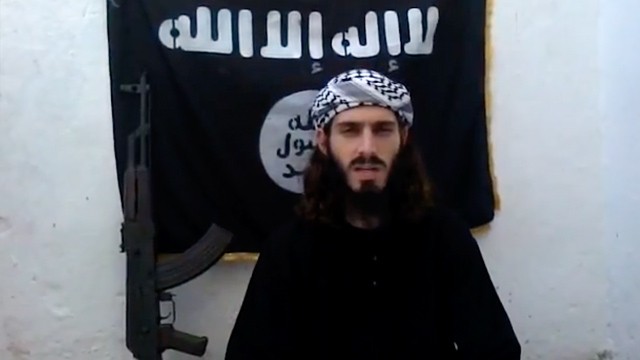 Omar Hammami didn't travel across the world - from Alabama to Toronto to Cairo - and survive five years of warfare just to be killed by his own side. A veteran of Ethiopia's 2007-2009 invasion, Hammami had monitored the rise of Somalia's Islamic Courts Union (whose hardliners later assumed the name of their military wing, al-Shabaab) and landed in Mogadishu amid the first waves of diaspora. Hammami quickly joined the movement's pursuit of an Islamic state and used his charisma to rise through al-Shabaab's ranks. He's also defied two death notices and one airstrike while taunting Washington through propaganda videos and crude raps.
Now Hammami, known as Abu Mansoor al-Amriki to his followers, sits at the crossroads of al-Shabaab's disinformation and foreign recruiting.
On Saturday Hammami released a new video to "whomever it may reach" on YouTube, alleging that his life "may be endangered by Harakat Shabab al-Mujahideen due to some differences that occurred between us regarding matters of the Sharia and matters of the strategy." From one media to the next, al-Shabaab utilized it's Twitter feed to inform Hammami and "our Muslim brothers that Al-Amriki is not endangered by the mujahideen, and our brother still enjoys all the privileges of brotherhood." This process repeated itself on Sunday after al-Shabaab supposedly raided Hammami's house in Merca, an insurgent base located 70 miles south of Mogadishu.
Other reports claim that he was arrested near Kismayo, 200+ miles south of Merca. Either way, al-Shabaab's Twitter feed again rejected this news as "false propaganda" and warned its fighters, "Beware of such inaccurate reports."
False as they may be, Somali journalists and observers see something tangible to the latest crack in al-Shabaab's hierarchy. Hammami's current situation may not symbolize any fresh divisions within the insurgency's chain of command, but he does highlight the established gap between national and transnational factions. Hammami has served as al-Shabaab's international face, attracting dozens of foreign fighters to Somalia, and allegedly supported the group's merger with al-Qaeda. The emerging theory, outlined by Somali-American reporter Abdi Aynte, predicts that the nationalist faction seeks to remove him from the battlefield and keep the conflict internalized.
Whether or not Hammami has overstayed his welcome in Somalia, the struggle between al-Shabaab's factions continues to exert an influence on the insurgency, Somalia's Transitional Federal Government (TFG) and its foreign allies. The merger between al-Shabaab and al-Qaeda is the formal work of Moktar Ali "Godane" Zubeyr, who pledged allegiance in 2010 and again in 2012. A Somaliland native, Godane led al-Shabaab and oversaw al-Qaeda's integration before being replaced by Ibrahim Afghani in December 2010. He was later promoted to the head of al-Qaeda's cadre after the death of Fazul Mohammed; Aynte cites "firsthand knowledge" that Godane setup Mohammed at an Afgooye checkpoint.
An unnamed intelligence agent from al-Shabaab has since told Somalia Report that Godane remains the leader after Afghani resigned in December 2011. Although this information cannot be verified, Godane's February missive to Ayman Al-Zawahiri went unchallenged by the insurgency's nationalist commanders.
Like Hammami's own fate, the long-term effects of this national-transnational split remain to be seen. Division within an insurgency's leadership and ground forces can expose the force to widespread vulnerabilities, impairing its fighting ability, recruitment and message to the local population. Conversely, a divided network can be more difficult to assess, militarily eliminate and negotiate with. Taking these factors into consideration, Hammami's future could shed light onto a strategic blind spot or merely add a new chapter to his history as a propagandist.
March 12, 2012
AU Plans Next Operational Phase In Somalia
Three weeks ago al-Shabaab's central garrison of Baidoa fell in undramatic fashion. Following a pincer movement along Somalia's western border, launched in December to capitalize on Kenya's operation in the south, Ethiopian troops and tanks rolled into the city as the militants blended into the surrounding grasslands and fled south. Brigadier-General Johannes Woldegiorgis, the commander who led a mechanized force on a 140-mile assault through 10 towns, quickly summoned foreign journalists to tour the city.
"They are history," he declared of al-Shabaab.
"They are history," he declared of al-Shabaab.
Confident in the progress of its soldiers, the Ethiopian government recently announced a near-term withdrawal after meeting with representatives of the African Union's (AU) troop contributors. Beyond an open admission that Addis Ababa doesn't want to overstay its welcome, the decision has a sizable financial component built into its status within Somalia's AMISOM. Ramtane Lamamra, the Commissioner of the AU Peace and Security Council, told reporters on Friday, "The decision up to now is that it is essentially Baladweyne and Baidoa (for Ethiopia) and they have to be handed over to AMISOM and then Ethiopia will withdraw its forces to its own national territory."
"It provides for Djiboutian forces to be deployed in Beledweyne by the end of April at the latest. Two thousand five hundred troops from Burundi and Uganda will also be deployed in Baidoa by the 30th of April at the latest."
Lamamra held the door open for continual military assistance inside Somalia's western border, seemingly expecting to negotiate a "support package" for Ethiopia's military. The government is currently fighting on its own dollar, though Washington has provided political and financial compensation in the past (including payment for the drone base in Arba Minch). Bringing both Kenyan and Ethiopian troops under the AU's financial umbrella would streamline AMISOM and increase its long-term viability after the Transitional Federal Government's (TFG) UN-sponsored mandate expires in August. The AU's national campaign to recapture central and southern Somalia, lost to al-Shabaab after Ethiopia withdrew in January 2009, cannot succeed without Ethiopian firepower.
"For now, it's mission accomplished and AMISOM would be able to take over in both places," Lamamra said.
This situation represents the day to Ethiopia's previous invasion, a dark episode that killed thousands of Somalis and Ethiopians and opened a vacuum for al-Shabaab's rise. Both missions unfolded with similar speed - Ethiopian battalions seized Baidoa, Beledweyne and Mogadishu within a week of entering Somalia in December 2007 - but troops are now greeted with reserved optimism. During the two years following Ethiopia's exit, Al-Shabaab became its own worst enemy by engaging in the systematic destruction of local life and drying up the last of its water. When Kenya and Ethiopia finally entered the battlefield in relative unison, the popular scales tilted to the TFG and AU's advantage.
Even minor improvements in governance and social laws could have buffered popular resistance against the group, but years of hard line rule (including the use of child soldiers) turned the despised Ethiopian military into a friend. Although he condemned al-Shabaab for brainwashing children into jihad, Captain Mahamoud Yissak admitted from Baidoa, “At that time people liked Al Shabaab, there was a lot of support for them."
The positive takeaway is an increased acceptance of Ethiopian aid and the possibility for sustainable cooperation. One local MP, Mohamed Habselleh, said he believes, “We need Ethiopia’s long presence here." Most residents appear to believe that al-Shabaab's reign in Baidoa is over, but expect the militants to return when the Ethiopians leave. Other reports indicate that Somalis from al-Shabaab's remaining territory have requested Ethiopian armor, giving Addis Ababa plenty to think about in the weeks and months ahead.
While al-Shabaab mounted no initial resistance in Baidoa, the group has staged multiple bombings and attacked Ethiopian troops in nearby areas. The latest 3-hour battle near Yuktow, situated halfway between Baidoa and the Ethiopian border, is connected to al-Shabaab's counterattack; Ethiopian military sources claim that they preempted an ambush on a nearby unit. Both sides have reported substantial casualties (above 70), but neither side gives accurate information about their losses.
"They engaged our troops after regrouping in tiny pockets outside our area of control," Ethiopian Foreign Ministry spokesman Dina Mufti told Reuters. "Al Shabaab rebels sustained heavy casualties and have retreated... the battle scene is littered with the bodies of dead enemy combatants. "It's a statement of survival, a desperate attempt. All claims are false."
The negative takeaway is that al-Shabaab remains determined to mount a resistance outside of its main urban centers. The decision to defend most of its threatened territory could exhaust the group and leave it vulnerable to a decapitating blow, but al-Shabaab's guerrilla tactics will distort the AU's time-frame. Its leadership appears to be satisfied with outlasting the Ethiopians - the latest attack was immediately spun as a sign of retreat - and taking their chances with the incoming Burundians and Ugandans. Even in a weakened state, al-Shabaab could exceed the AU's planned force levels and keep Ethiopians inside the country.
In order for the AU's strategy to gain traction outside of Mogadishu, TFG representatives must move in with AU troops and begin their work immediately to restore confidence in the Somali government. Western pipelines into the UN and AMISOM cannot afford to fail political and military personnel in the field. Now the TFG must fill every space that Ethiopians and Kenyans clear, forming a triangle of security between Mogadishu, Beledweyne and Baidoa. From here they must expand across the rest of the country, an area more than double the size of the territory in question, and they need to move fast despite the risks of rushing their advance.
"You know the character of al-Shabaab," explained regional governor Abdifatah Mohammed Ibrahim. "They like to fight, hit-and-run. So I think they will be back. They are [just] hiding here, under trees."
February 26, 2012
Kenya, Ethiopia Grind Deeper Into Somalia
 Over three months have elapsed since Nairobi made the executive decision to launch Operation Linda Nchi (Swahili for Protect the Nation). Depending on the individual - a Kenyan commander, Somali official or civilian, al-Shabaab gunman or Western observer - Kenya’s military campaign is trending towards victory or quagmire. Reality likely falls in between two extremes, but foreign capitals are entering a slippery phase of their politico-military campaign.
Last month Colonel Cyrus Oguna asserted that “Al Shabaab is halfway in the pit.” Whether Kenyan, Ethiopian and African Union (AU) troops can complete their mission may be determined over the next three months.
Nairobi’s confidence in reaching Somalia’s main southern port begat heightened expectations at the start of Linda Nchi, and the combination of Kenya’s swift incursion and al-Shabaab’s tactical withdrawal gave rise to the possibility of reaching Kismayo in the near future. However the majority of Kenyan troops haven’t advanced more than 50 miles during a month-long rainy reason, remaining at their mud-locked positions around Bur Gaavo and Afmadow. Bur Gaavo’s delta lies on Somalia’s coast, roughly 40 miles from Kenya’s border and 60 miles south of Kismayo, while Kenyan commanders predicted they would take Afmadow last month.
The bulk of Kenya’s ground forces remain tens of miles away from Kismayo, one of al-Shabaab’s main strongholds and a key military-economic gateway. They have yet to create the buffer zone envisioned by Nairobi; grenade, mine and IED attacks continue to disrupt life across Kenya’s border. Villages behind Afmadow, such as Tabda and Badhaadhe, are still being fortified as assault preparations are made on the strategic town. Even Defense Minister Yusuf Haji added to Somalia’s confusion in early December, telling reporters, "I don't know where this objective came from. We have never stated at any time that Kenya was going to Kismayo.”
"All we said is that we were pushing Shebab away from our boundary and securing our border, and we will go as far as we will go.”
Kenyan commanders have since clarified that their units are, in fact, still headed for Kismayo. They insist that Haji simply meant that their troops won’t occupy the port, only secure and transfer authority to Somalia’s Transitional Federal Government (TFG). Major Rashid Seif explained from Bur Gaavo, "Our conduct of operation here is basically in conformity with the other troops that are in other sectors, the northern sector and the central sector. So basically the ultimate objective is the capture of Kismayo, so it is building up to that.”
Although Nairobi’s timeline isn’t publicly available, a sensible prediction would circle August 2012 as Kenya’s target date to exit southern Somalia. The TFG’s UN mandate is finally set to expire after several delays, and involved foreign powers are demanding presidential and parliamentary elections before the UN’s mandate dissolves. As a result, involved members of the African Union (AU) have lobbied to increase AMISOM’s force ceiling from 12,000 to 15,000-20,000). Nairobi presumably feels the same rush and attempted to synchronize its military campaign with 2012’s political roadmap.
Kenya’s operation functions as one part of the TFG, African Union (AU) and Intergovernmental Authority on Development’s (IGAD) national strategy, with AU reinforcements envisioned in Mogadishu and Kismayo. As Kenya clears al-Shabaab from the south and the TFG expands its presence out of the capital, Ethiopia would exert its influence along al-Shabaab’s western flank. This strategy theoretically covers Somalia proper without stretching any single force over the country - and potentially breaking it. Ethiopian troops cross the border on a regular basis in their pursuit of al-Shabaab and other armed elements, but upwards of 1,000 troops are now operating inside Somalia.
Ethiopian forces recently took control of Beledweyne, a strategic city located over 400 miles from Kismayo, and are moving into al-Shabaab’s Bay stronghold.
Yet the strategic obstacle for Kenya, Ethiopia and the TFG remains as is: opening up a wide front. Even a piece of Somalia is hard to clear, hold and restore TFG authority to. Ethiopian troops recently cleared Baidoa, one of al-Shabaab’s main strongholds in Somalia’s central Bay district, and could move on Garbahaarey and Baardheere (Gedo’s largest cities) as well. While striking into Baidoa and Baardheere could send al-Shabaab scrambling across its territory, the long-term battle for Bay, Hiiraan and Gedo will entail harder fighting than Kenya’s intervention into Lower Juba.
Restoring TFG authority is also the primary goal of any national offensive, and seizing more territory than the TFG’s reach can handle will create extensive friction on the ground. Ethiopia has “dismantled” al-Shabaab before, only for the group to re-inflate itself and fill the ensuing security vacuum.
Ethiopia’s wild-card image poses a secondary concern in a mission that depends on positive perceptions. According to various sources (including American), Ethiopian troops have been thrown into the battlefield because African leaders consider to be more proficient than their Kenyan counterparts. The good news is that local Ethiopian approval is being reported at higher levels than in the past. In accordance with practical sentiments towards America and Kenya, some Somalis are willing to stomach any foreign intervention in order to escape al-Shabaab’s rule. However many accounts note the long-standing animosity between neighbors, and Ethiopian support could flip overnight in the event of mass collateral damage.
While al-Shabaab is suffering casualties and facing enemies on all sides, the insurgency doesn’t appear to be panicking at the level described by African officials. Its commanders rejected local reports of a name-change - to Imaarah Islamiya (Islamic Authority) - and avoided the initial blitzkrieg that could have knocked al-Shabaab on the permanent defensive. Nor is the war “almost half lost,” in the words of Colonel Oguna. Kenya’s army spokesman argues that al-Shabaab is “now facing serious challenges as far as command and control is concerned and logistical support,” but these terms are more applicable in conventional warfare.
Ultimately, the roots of Somalia’s political friction must be destroyed in order to permanently defeat al-Shabaab. Military victory could recede into a political collapse, facilitating al-Shabaab’s restructuring.
In a related development, Western and African capitals maintain extensive concerns over the TFG’s ability to implement the UN’s roadmap. Modified in June under heavy pressure from Ugandan President Yoweri Museveni, the Kampala Accord extended the TFG’s mandate for one final year by sacrificing Prime Minister Mohammed Abdullahi Mohammed. This outcome allowed President Sharif Ahmed and Parliamentary Speaker Sharif Hassan Aden to shelve their rivalry (each has tried to force the other out of power) until November, when Somalia’s parliament was ordered to reach a vote on Kampala’s revisions.
Except the vote never occurred and Hassan now finds himself mired in a no-confidence vote. He suspects that President Ahmed is pulling the political strings.
Given that any AU mission cannot succeed in the long-term without a stable Somali government, Ahmed and Aden’s unresolved feud is pulsing throughout Somalia’s neighbors and international financiers. Nairobi’s strategy explicitly outlined the following sequence: “enter southern Somalia, drive away Al-Shabaab, create a buffer zone to allow the fledgling Transitional Federal Government to take control and increase its capacity to retain it.” Although military gains can be secured independently from Somalia’s political factors, combining the two spheres represents the primary objective of counterinsurgency.
Lindsay Kiptiness, Kenya's Foreign Affairs spokesman, cautioned, “A new round of political conflict would affect the transitional process eight months away.”
Fundamental divisions within the TFG’s structure pose a grave threat to the AU’s mission. Destabilization inside Mogadishu’s political core affects the country as a whole, thus impacting Kenya and Ethiopia’s semi-independent operations. Operation Linda Nchi may have been conceived two+ years ago, but Nairobi launched its military campaign within AMISOM’s national campaign. This strategy builds on AMISOM’s gains in Mogadishu by allocating Kenyan and Ethiopian forces to Somalia’s south and west, creating a patchwork grid across the entire country. Additional AU and TFG troops will then deploy to Kismayo and central Somalia.
"As more territory is liberated,” predicts UN Secretary-General Ban Ki-moon, “the federal government must strengthen its outreach to the local population and form new regional entities in line with the Transitional Federal Charter. On the military front, we must not exclude the incorporation of new forces and the expansion of Amisom.”
These troops have no chance of landing until the TFG’s political crisis is untangled and permanently settled. A lack of confidence in the TFG impacts donations to the UN and AU, in turn delaying deployment of AU forces and over-stressing Somalia’s nascent security forces. In January the UN and AU urged “the leadership of the Transitional Federal Institutions, parliamentarians and to all stakeholders [to]… avoid any statement or action that could exacerbate the already tense situation and further aggravate the crisis.” A fist-fight later broke out over Hassan’s unresolved status.
al-Shabaab can only stall Operation Linda Nchi and the AU’s coordinated assault, but the TFG can stop Kenyan and Ethiopian armor in its tracks.
October 16, 2011
Somalis, Kenyans Accept Risks of Southern Offensive
On Saturday night a team “comprising Kenya Army and Rapid Deployment Unit officers” left Kenya’s border in the direction of Dhobley, Somalia. Located a mile across the border, Dhobley has experienced intermittent fighting under the control of the Raskamboni movement, a Kenyan-backed militia combating al-Shabaab’s territorial influence. Two weeks ago al-Shabaab attacked from three sides, sparking a battle outside the town and sending residents fleeing. Dhobley’s melee degenerated to hand-to-hand fighting before al-Shabaab was repulsed by government and Raskamboni forces.
The group’s leader, Sheikh Ahmed Madobe, has been itching to launch a counter-attack to Kismayo, and now his request appears to have been granted. After discussing a joint-military operation with officials from Somalia’s Transitional Federal Government (TFG), the Kenyan team returned to their side of the border several hours later. Wasting no time, warplanes began bombing al-Shabaab positions late Saturday night. Several hundred soldiers in armored trucks and tanks crossed into Somalia on Sunday, along with assault helicopters, and reinforcements are gathering at the border.
"We have crossed into Somalia in pursuit of al-Shabab, which is responsible for the kidnappings and attacks on our country," Kenyan spokesman Alfred Matua said.
Although the recent kidnappings of aid workers is justifying the current operation - Minister of Internal Security George Saitoti argued, "For the first time our country is threatened with the most serious level of terrorism” - Nairobi has been inching towards an assault for months. Having accepted a high number of refugees fleeing Somalia’s famine and al-Shabaab’s rule, Kenya’s only path to long-term stability is reversing the border’s unsustainable environment. The immediate question is how much weight Kenyan soldiers can lift.
“They’re going all the way to Kismayo,” according to one Kenyan security official, referring to al-Shabaab’s port roughly 100 miles inland. “We’re going to clear the Shabab out.”
Another official added, "They [the army] have been instructed to get ready for the assignment, which will mainly include pushing the Shabab rebels far inside Somalia, away from the common border.”
Over the last year Kenyan forces have actively coordinated with the TFG to undermine al-Shabaab’s hold on the south. Back in early April, former Somali officials gathered in Nairobi to declare the creation of a new autonomous region in southern Somalia. The formation of Azania, a piece of the wider Jubaland, was loosely coordinated with the TFG in order to provide a buffer zone along the Somali-Kenyan border. However the arrangement also served to encroach upon al-Shabaab territory, not simply contain the group, and Madobe’s militia gathered his strength under this umbrella.
"They (Kenya) help with many things including guns and bullets,” said Major Abdikadir Bashir, a Raskamboni intelligence officer. “Without that support, how could we have beaten them?”
Now Madobe’s militia and TFG soldiers are advancing under Kenyan air-strikes. al-Shabaab positions in Qoqani and Afmadow, two towns roughly 50 and 70 miles into Somalia, were bombarded and occupied by TFG and Raskamboni forces, providing a staging ground into Kismayo, 60 miles to the south. Madobe’s faction of the Raskamboni Bridage was evicted from the port in 2009 by al-Shabaab, with the help of the Brigade’s other half. Abdinasir Sayrar, a spokesperson for Madobe’s faction, told Shabelle Radio that their forces in Qoqani were headed “directly for Kismayo.”
Hassan Abdullah Hersi al-Turki, the opposing Raskamboni commander, has already welcomed Kenyan troops by vowing to inflict pain.
The time-frame and scope of Nairobi’s mission currently remains unclear, but the operation is the result of a coordinated buildup, not a spontaneous decision to defend Kenya’s border and its citizens. This level of planning suggests an extended operation rather than a blitzkrieg; while foreign incursions into Somalia are known to spin out of control, Nairobi had time to weigh the risks and rewards of such an operation. Both governments believe that al-Shabaab is vulnerable in the south, and that now is the moment to strike. A movement south could be a precursor for separate assaults to the west and north.
Government spokesman Abdirahman Omar Osman told reporters, "The enemy is lost and we will continue pursuing them.”
Fears of an imperialist narrative are also evident; Francis Kimemia, permanent secretary at Kenya’s Ministry of Internal Security, told the private-owned Citizen Television that, “it's important to indicate we are not at war with the government of Somalia, or with the people of Somalia.” The TFG is masking Kenya’s level of involvement for varying reasons, either to absorb most of the credit or to minimize local fears of an occupation (or both). Several officials denied that Kenyan troops entered the country, contrary to Kenyan statements and local eye witnesses, but lauded assistance to TFG units. One commander claimed that reports of Kenyan activity are designed to confuse al-Shabaab.
“Kenya can never invade Somalia,” Osman said, “but we are working together for security issues and to defeat the extremists. It’s our troops who are in our territory, it’s our troops doing the legwork; Kenya troops are at the border. Our neighbor Kenya is fully supporting us militarily and our mission is to drive al-Shabaab out of the region.”
Much of Nairobi’s risk will be determined by the choice of its reward, and thus the length of its mission. al-Shabaab stands no chance of repulsing a coordinated air-and-ground assault, so the smart move is to melt away and dodge Kenya’s assault (the group vacated Qoqani and Afmadow). Besieged areas would be re-infiltrated at a later date, jeopardizing a reentry but keeping the group’s units alive. Kenya would presumably like to clear a path into Kismayo and allow the TFG to take over, but the possibility of guerrilla warfare may demand that Kenya maintain a presence inside the country, whether on the ground or in the air.
One reason al-Shabaab withdrew from Mogadishu was to reinforce its southern territory, suggesting that it anticipated an eventual attack. A desperate fight awaits its enemies.
As dangerous as intervention is, Kenya’s strategy could flip either way depending on its actions. al-Shabaab has already raised the anti-Christian, anti-imperialist battle-cry, except Kenya isn’t despised like arch-enemy Ethiopia. Nairobi has also assisted countless Somali refugees, providing a base of goodwill to stand on, and seizing territory will open humanitarian corridors into the south. So long as Kenya avoids flagrant civilian casualties, al-Shabaab may be lucky to see a small boost in recruits. The situation is a marked improvement from Ethiopia’s last campaign, when a mass of armor launched a doomed occupation across the country. While TFG and Kenyan forces will need time to clear Somalia’s south, Nairobi has no reason to get involved in Mogadishu.
This isn’t to say that Kenya’s mission can’t go wrong - and external attack poses its own threat - but enough “laws” of war are being followed to provide a semblance of optimism in Somalia.
Subscribe to:
Posts (Atom)