Showing posts with label Libya. Show all posts

November 1, 2012

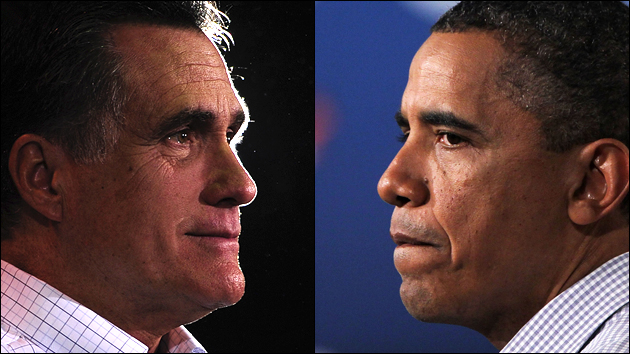
Obama, Romney Vie for Middle East Hegemony

Published by Muftah.org - Visit Muftah for independent analysis on events in North Africa, the Middle East and South Asia.

In the days following President Barack Obama’s speech at the Democratic National Convention in September 2012, administration officials and U.S. media seesawed over a post-convention “bump” that elevated his standing above Republican challenger, Mitt Romney. Numerous polls, including a recent Fox News survey, marked a widening gap between the candidates on a variety of issues, with Obama largely taking the lead: education (+14), Medicare (+11), terrorism (+8 points) and foreign policy, where Obama rated 15 points higher than Romney.

However, no matter who wins this November, people in the United States and Middle East will likely be stuck with largely the same U.S. policies toward the Middle East and North Africa that have held sway for decades.

Romney Runs on Traditional GOP Diesel

Although Romney’s policies in the Arab world are masked by ambiguity, scarecrows and red herrings designed to project a friendly aura toward the region, his administration runs on traditional GOP (Grand Old Party) diesel and exploits a widespread anti-Muslim trend in the mainstream Republican party.

While blaming Obama for “diminishing American leadership” is standard fare, and a valid point when it comes to the Middle East, Romney’s hawkish and insensitive tendencies toward local populations and fledgling pro-democracy movements in the region are undeniable. In his own words, Romney’s circle is staffed by pollsters who apparently are not “going to let our campaign be dictated by fact checkers.”

More importantly, however, in many areas outside Iran and Israel’s airspace, Romney’s proposals mirror Obama’s. In his October 2011 white paper, titled “American Century Strategy: secure America’s enduring interests and values,” Romney demonstrates the numerous points of mutual agreement between himself and Obama while exposing the toxicity beneath his sweet rhetoric.

According to this document, the “unfinished” project for an “American Century” is something his administration would complete, and the Arab revolutions something to be manipulated under the banner of democracy: "To protect our enduring national interests and to promote our ideals, a Romney administration will pursue a strategy of supporting groups and governments across the Middle East to advance the values of representative government, economic opportunity, and human rights, and opposing any extension of Iranian or jihadist influence. The Romney administration will strive to ensure that the Arab Spring is not followed by an Arab winter."

In a “dangerous, destructive, chaotic” world, Romney plans to “lead the free world” as the “free world leads the entire world.” This policy includes joining Israel’s crusade against Iran’s nuclear sites, a potential war that an estimated 60-70% of Americans disapprove of, as a means of projecting America’s strength.

Two Sides of the Same Imperialist Coin

Obama, on the other hand, has fashioned himself into an arbitrator of war and peace, wielding a Nobel Peace Prize in one fist and Osama bin Laden’s head in the other.

Four years removed from his promise of a new era of engagement between the U.S. government and Muslim world, negative perceptions that have accumulated between both sides as a result of decades of war, intervention, exploitation and continual strife continue to hold sway.

Obama is not personally responsible for this entrenched status quo, but he is to blame for overselling and under-delivering on his promise to repair relations with the ambiguously-defined Muslim world. Under Obama’s watch, U.S. policy in the Persian Gulf’s sphere of influence has continued to lack “American leadership.”

The race for bin Laden represented a triumph for whoever reached him first and Obama will likely reap the personal benefits of this success for the rest of his life. The glorified kill, along with an increase in drone warfare across the region and the strategic rise of U.S. Special Forces missions, has allowed Obama to continue his foreign policy of “less force” with minimal domestic resistance.

Obama’s case for non-military action against Iran, withdrawing from Iraq and Afghanistan, and promise to “disrupt terror plots wherever they form” became more convincing after bin Laden’s death on May 2nd, 2011. Well-meaning critics of America’s new military strategy find it difficult to attack a policy that costs less American lives and taxpayer dollars.

Iraq & Afghanistan

Obama and Romney have wrangled over their respective policy positions on Iraq and Afghanistan. Nevertheless, they share more common ground than differences and have both failed to present a realistic approach to U.S. engagement with these countries. The President has grown fond of bragging that he “ended the war in Iraq,” and has refused to unspin Romney’s own policy, as ongoing Iraqi casualties make for dangerous political ground.

With regard to Iraq, Romney claims that “a democratic Iraq allied to the United States is within our reach,” but that Obama has “threaten[ed] to snatch defeat from the jaws of victory.”

Promising to use a “broad array of foreign policy tools – diplomatic, economic, military” to bring Iraq within the U.S. sphere of influence, Romney focuses on Obama’s “failure” to install a residual military force. He ignores the political void that the administration has encouraged by supporting Prime Minister Nouri al-Maliki. To the extent that the Obama administration has responded to Romney’s attacks, it has described his approach to Iraq as “tragic.”

In reality, Obama and Romney have ended up in al-Maliki’s leaky boat, a circumstance that neither candidate likes to discuss. Both fail to acknowledge (at least publicly) that Washington’s deficiencies in Iraq stem from political inequalities, not military shortages. Prolonging the deployment of U.S. troops under the authority of the divisive al-Maliki would have added to the Iraqi prime minister’s leverage over Sunni, Shia, and Kurdish political opponents; an extension of American involvement would have generated as many security problems as it would have solved.

The incumbent and challenger find similar common ground in Afghanistan, where Romney agrees with the bulk of Obama’s strategy despite public feuding.  In line with Obama administration policy, Romney’s white paper approves of the 2014 transition to Afghan security forces and demands greater accountability from Afghanistan and Pakistan’s governments. Contrary to Obama’s DNC announcement that “in 2014, our longest war [Afghanistan] will be over,” his administration – like Romney’s – hopes to maintain a long-term security presence in the country after 2014.

Romney opposes negotiating with the Taliban and still intends to eliminate the group from Afghanistan, an unrealistic move that would ultimately extend the war. Much like Obama, Romney is liable to send air or ground troops across Pakistan’s border in search of the elusive Haqqani network, one of the Afghan Taliban’s most organized arms and a major thorn in U.S. strategy. Such a move would likely perpetuate Afghanistan’s war by causing new friction between Washington and Islamabad.

The Illusion of Choice

The greatest regional divergence between the candidates centers around U.S. policy toward Israel and Iran. On this front, Romney believes he can score fast points by portraying himself as the anti-Obama. For his part, Obama has remained focused on isolating Iran globally and has tread cautiously around talk of war, in response both to advice from America’s military leadership and public resistance to another “big” war in the Gulf.

While conceding that economic and diplomatic isolation is necessary, Romney insists that defusing Iran’s nuclear ambitions can only be achieved through the real threat of war – a plan that includes “repairing relations with Israel.” Unlike Obama, Romney would “never refuse a meeting” with Prime Minster Benjamin Netanyahu (a story that the White House denied), reject Israel’s insistence on a “red-line” for stopping Iran’s enrichment program, or throw Israel “under the bus.

Romney casts Obama as “pro-Palestinian,” reinforcing the twisted state of U.S. policy toward the Arab-Israeli conflict under either candidate. In reality, Obama has abandoned the Palestinians and spent far more energy confronting the Iranians, as the Israelis prefer.

Upon taking office, Obama announced that he would break from the Bush administration’s 11th-hour drive for peace between Israelis and Palestinians and pursue an equitable two-state solution  “from day one.” Sadly, Obama has fallen into the same trap of bias and inaction, even excluding the Palestinians from his acceptance speech at the DNC. If peace is harder to make than war, it stands to reason that greater energy must be applied.

As for Romney, he is far from eager to help the Palestinians and certainly more passionate about the Israeli cause. He claims that Iran, not the Israeli-Palestinian conflict, serves as the region’s central issue. Tehran’s regional policies admittedly run on a variety of unrelated interests, from Syria and Afghanistan to its hegemonic dispute with Saudi Arabia. Its nuclear ambitions may beyond compromise. Yet, at the same time, one cannot help observing that the Islamic Republic of Iran has never known a world with a sovereign Palestinian state. Should such a state come to be, one wonders how Iran’s regional ambitions and strategies might change.

Continuity on the Arabian Peninsula

In Yemen, the current administration has deployed Obama’s trusted counterterrorism adviser John Brennan as its lord of war and occasional senior “diplomat” in the country. Both he and U.S. Ambassador to Yemen, Gerald Feierstein, are extremely unpopular figures due to U.S. handling of Yemen’s ongoing revolution, its extensive drone program, and other covert U.S. activities in the country.

Romney would likely follow similar policies in Yemen by utilizing drones, Special Forces and CIA personnel to safeguard U.S. interests.

As Obama and Romney both operate their regional agendas on a steep Iranian tilt, U.S. policy toward Bahrain would also stay consistent between administrations – planted firmly on the side of Bahraini King Hamad bin Isa Al Khalifa’s crackdown against pro-democracy forces.

America’s counterrevolutionary actions in select regional states have reinforced the hypocrisy of U.S. foreign policy in the region, especially toward the Libya and Syria interventions. Rather than pointing to this inconsistency, Romney has instead accused Obama of encouraging an “Islamic winter,” while portraying himself as tougher on Iran and Islamists.

Conclusion: Marooned on Hope Island

Given his own positions, Romney is clearly incapable of fostering lasting stability and peace in the Middle East. Improving the trajectory of U.S. policy in the region requires the type of personality that Obama promised and never delivered, making his failures historically significant.

Poll after poll concludes that Obama fell into an enormous trust gap left by previous administrations. Too many Muslims still perceive America as a unilateral actor in the region and an outright threat to their national interests. Accordingly, in Egypt, Turkey, Jordan, Yemen, Pakistan, the Palestinian territories and other regional countries entangled within U.S. foreign policy, Obama’s popularity remains very low.

Romney is minimally concerned with public relations in these countries. He is, nevertheless, right one on account: Obama has failed to deliver the leadership that he promised in the Middle East. Romney would, however, offer no respite from Obama’s fox-like friendship with the Palestinians and pro-democracy actors in the region.

The dilemma of lesser evils may be an inherent problem of democracy, but the ranking of America’s presidential candidates cannot be pegged to the failures of past leaders, such as George W. Bush. Finding a truly excellent candidate is an ideal worth pursuing. As for the diverse peoples of the Middle East, nothing has changed since Obama entered the Oval Office and nothing will change if Romney evicts him: they must still free themselves of foreign interference on the path toward determining their own future.

October 19, 2012

Pin The CIA Base On the Map

Yesterday The Washington Post excited or disturbed a wide population of various individuals by announcing the CIA's request for additional unmanned aircraft systems (UAS).

Pentagon-approved plans are in the final stages of being submitted to the White House, where the proposal will be evaluated by counterterrorism chief John Brennan and a group of national security officials. If approved by President Barack Obama, the CIA's drone fleet is expected to rise from 35 to 45 and increase the range of its entire assassination/surveillance operations. The CIA currently supplements its forces by employing weapons systems from the Joint Special Operations Command (JSOC). A boost in its capabilities is aimed at retaining the CIA's autonomy; the CIA relies on military pilots to operate from the U.S. and reportedly chafes at using JSOC airstrips.

This latest move that has unnerved some Pentagon departments, if their own staff is to be believed, except none of them could be as stressed as those inhabiting a drone's flight path.

The Washington Post only breaks small pieces of "new" information, and even then no aspect is surprising. Drones are scheduled to increase the ranks of all branches that fly them, especially covert divisions, and CIA officials speak as though their shipment is late. The Department of Defense naturally wants to clarify their terms, but has no overriding reason to stop a process that cannot be stopped. Brennan then acts a buffer for all parties in the White House. Most surprising would be a veto from the drone-slinging President.

What's unnerving to foreign populations are the requirements of UASs and their collateral damage. A drone's range is grimly impressive for its machinery - up go 1,000 miles - but it needs a network to support its operations. Drones fly out of multiple points in Afghanistan, having been evicted from Pakistan, while a grid of drone bases has been constructed over the Horn of Africa to target al-Qaeda and its affiliated militants. Ethiopia, Djibouti, Kenya, Somalia and the Seychelles all host their own bases, controlled by either the CIA or JSOC, and Yemen just received its own during a popular revolution. Many of these cases illustrate the hegemonic threat that drones bring to their area of operations. In Yemen, the CIA had already began construction under Ali Abdullah Saleh's secret approval when the revolution struck, and the White House accelerated its building schedule from two years to eight months in response.

This decision was attributed to al-Qaeda in the Arabian Peninsula's (AQAP) growth in southern and eastern Yemen, a predictable that did come true. However the corrupt Saleh himself was largely responsible for watering AQAP and his duplicitous approval of U.S. air strikes fertilized the soil. More virus than cure, U.S. policy would have gone in a vicious circle with Yemen's tribes had Saleh survived the revolution's first phase. Washington happily accepted his vice president, Abd Rabbuh Mansur Hadi, and turned over the base's secrecy to him - one of many reasons why Washington and Riyadh orchestrated Hadi's ascendency.

Yemenis themselves were never told anything or allowed any input, despite the fact that they suffer most when a drone misses. Even then civilian casualties are denied - forget compensation - and the mere presence unnerves adults and children alike. The entire project is thoroughly totalitarian.

As The Washington Post reports, "Any move to expand the reach of the CIA’s fleet of armed drones probably would require the agency to establish additional secret bases." This "need" entails more secret handshakes with autocratic, unrepresentative and unreliable governments. The new wave of bases will hit northern Africa hardest, possibly starting with Algeria as a launch point into Libya and Mali. Algiers runs a notoriously anti-interference policy to tamp down its cooperation with foreign powers (Washington), and may eventually consent in a similar fashion as Ethiopia's government. The two governments have already assembled a chain of bases in the Sahel and a new agreement would ensure no problems in the event that pro-democracy demonstrations flair up, as they periodically do.

Friendlier lands could be found in Nigeria, one of world's the most pro-American states, and neighboring Niger. Mauritania or even Mali itself could play host to a base as part of NATO and ECOWAS's intervention, which includes a robust training mission and the need for Western support bases.

The populations of these nations will be lucky to receive an advanced warning of their new guests.

September 17, 2012

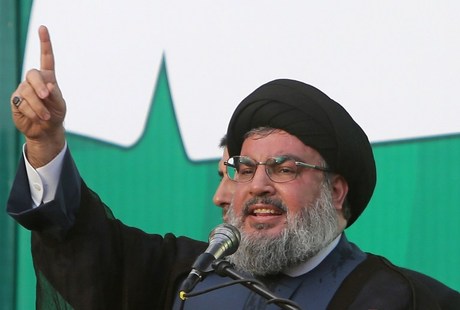
Hezbollah's Nasrallah Sharpens Muslim Outrage

As government officials and international news organizations race to examine the plots of extremist splinters, reactions of involved governments and their relation to the U.S. Embassy protests, Washington finds itself confronting a parallel threat to the safety of its diplomatic assets. America's opponents have grown adept at capitalizing on anti-Muslim propaganda made by rightwing personalities, using the opportunity to challenge Washington's foreign policy and advance their own local interests. The friction generated by this dog-pile effect represents the holistic threat posed by inflammatory anti-Muslim films.

In Yemen, a large body of protesters rallied not to protest Nakoula Basseley Nakoula but Ambassador Gerald Feierstein, whose cooperation with former president Ali Abdullah Saleh and the new government has earned him widespread disapproval. They have every right and ample motivation to "take advantage of the situation." The Taliban slapped Nakoula's film onto their raid of Camp Bastion even though the assault was planned weeks (or longer) ahead of time, and intend to milk its propaganda for as long as possible. Now another bad nightmare has manifested in reality and jumped on the pile. Speaking to an estimated 500,000 Shia Lebanese on Monday, Hebzollah chief Hassan Nasrallah urged protesters to organize peaceful and sustained demonstrations against the film, the U.S. and Israel.

"The world should know that our anger is not a passing thing... This is the start of a serious campaign that must continue all over the Muslim world in defense of the prophet of God. As long as there's blood in us, we will not remain silent over insults against our prophet."

A credible voice in at least parts of the Arab world, including many anti-Western havens, Nasrallah's words could force the Obama administration into some form of direct response. Hezbollah's face and brains has conclusively lost Muslim support over the last five years, particularly in Egypt and Jordan, and risks a significant amount of popularity by standing behind Syria's Bashar al-Assad. Nasrallah would boldly call for more urgent action from the Arab League, a demand that provokes more ridicule than agreement. At the same time, Hezbollah is still viewed favorably in comparison to other Islamic militant groups and considered a legitimate resistance movement by millions of Arabs. While the group is suffering from a general trend against extremism, active social work and military restraint has kept the group from drifting into al-Qaeda territory.

Anti-Israeli opinion also remains a useful supplier of popularity.

Nasrallah's strategic mindset and flare for the dramatic further demonstrate why his charisma draws supporters from outside Shia Lebanon. Appearing in public for the first time since December 2011, an animated Nasrallah spent the majority of his 15 minutes painting lavish religious overtones and history lessons. He believes that the film is “more serious than burning Al-Aqsa Mosque," which was set aflame by Denis Michael Rohan in 1969 with the intention of spawning the return of Jesus Christ. Yet Nasrallah wisely appeals to peace rather than war, stressing peaceful rallies and unity with other religions in an apparent attempt to modernize Hezbollah's image.

“We should bear the historical responsibility of the whole Islamic Ummah (Nation) and of every honorable Christian believing in coexistence to work to issue an international resolution criminalizing the defamation of heavenly religions, and the prophets at least, especially Abraham, Moses, Jesus and Mohammad.“

In conjunction with his religious call to action, Nasrallah also sees an opportunity to lead the political counterattack against the U.S., Israeli and Arab governments - an offensive that has no central command. Holding Washington responsible for the film's availability, Nastallah called on the Obama administration to intervene and censor the film's release online. This unrealistic but seemingly reasonable demand casts Washington and allied Arab governments as accomplices to the film, “which offers another witness to its hypocrisy, deception and double standards in dealing with issues.”

"The ones who should be held accountable and boycotted are those who support and protect the producers, namely the U.S. administration," Nasrallah said. "We should not only express our anger at an American embassy here or there. We should tell our rulers in the Arab and Muslim world that it is 'your responsibility in the first place' and since you officially represent the governments and states of the Muslim world you should impose on the United States, Europe and the whole world that our prophet, our Quran and our holy places and honor of our Prophet be respected."

In effect, Nasrallah has designed an interdependent politico-religious narrative that, at times, neutralizes the religious in favor of the political. He would get nowhere by portraying the battle as Muslims versus Christians - especially in his own country - and instead posits another conflict between America, Israel and the Arab world. Announcing that, "Muslims released their anger on the U.S. and Israel, and not on Christians," highlights this shift from his perspective. He also dares to transfer blame onto Israel as a means of diffusing tensions with Christians: "Those who made the movie knew that the Muslims would be enraged by it, and attributed it to Christians to cause strife between Muslims and Christians. Israel wants to watch Muslims killing Christians and burning their Churches.”

Protests could wane over time as they tend to do; if not, Nasrallah might only play a limited role in mobilizing sustained demonstrations. Yet the Obama administration cannot afford to ignore the principle of his warning or underestimate his regional influence. Although Hezbollah's strongman will be unable to escape the title of propagandist and extremist, his speech currently represents the highest level of articulation from America's asymmetric opponents in the Middle East.

September 15, 2012

Obama's Hope Is the Middle East's Lesser Evil

In the days following President Barack Obama's speech at the Democratic National Convention, administration officials and U.S. media seesawed over a post-convention "bump" that reportedly elevated his values above Republican challenger Mitt Romney. Numerous polls, including a recent Fox News survey, have marked down a widening gap across the board: education (+14), Medicare (+11), terrorism (+8 points) and foreign policy, where Obama rated 15 points higher than Romney. Many Americans and the Middle East's populaces do share something in common after all.

They are stuck with the Obama administration's foreign policy by default.

Judging from the overall actions of his first term, Obama himself received no bump in the Middle East after delivering a one-sided and misleading acceptance speech in Charlotte, North Carolina. Four years removed from promising a new era of engagement between the U.S. government and Muslim world, both sides refuse to stray far from the negative perceptions that have accumulated over decades of war, intervention, exploitation and continual strife. Obama isn't personally responsible for this status quo, only for over-promising and under-delivering in order to cast a favorable political glow upon himself. Stagecraft would trump statecraft as the U.S. economy came first and now U.S. policy in the Persian Gulf's sphere of influence is, as Romney warns, lacking "American leadership." Unfortunately his proposals are both vaguer than Obama's and more hostile to the region's stability, and his circle is staffed by pollsters that apparently aren't "going to let our campaign be dictated by fact checkers."

"The worst part of this election is there are so many valid grounds to criticize Obama," The Guardian's Glenn Greenwald Tweeted the day after Obama's speech, "and the Right voices almost none of them."

Washington's
Shades of War

Although Romney's policies in the Arab world are masked by ambiguity, scarecrows, red herrings and other distractions, his potential administration runs on traditional GOP diesel and factors into account a widespread anti-Muslim trend in the mainstream Republican party. Blaming Obama for "diminishing American leadership" is standard fare, and a valid point in the Middle East if not for his own hawkish and insensitive tendencies. Inside his October 2011 white paper, titled "American Century Strategy: secure America's enduring interests and values," Romney meets Obama at numerous points of mutual interest while exposing the toxicity brewing beneath his sweet rhetoric. His circle of GOP veterans believes that the "unfinished" project for an "American Century" is something to be completed, and the Arab revolutions something to be manipulated under the banner of democracy.

"To protect our enduring national interests and to promote our ideals, a Romney administration will pursue a strategy of supporting groups and governments across the Middle East to advance the values of representative government, economic opportunity, and human rights, and opposing any extension of Iranian or jihadist influence. The Romney administration will strive to ensure that the Arab Spring is not followed by an Arab winter."

In a "dangerous, destructive, chaotic" world, Romney plans to "lead the free world" as the "free world leads the entire world." This policy includes joining Israel's crusade against Iran's nuclear sites, a potential war that an estimated 60-70% of Americans disapprove of, as a means of projecting America's strength. Obama, on the other hand, has fashioned himself into an arbitrator of war and peace, wielding a Nobel in one fist and Osama bin Laden's head in the other. The race for bin Laden offered a trophy to the winning administration and Obama will personally reap the benefits as long as he lives. The glorified kill, along with the advance in drone warfare and strategic rise in U.S. Special Forces, also allows him to continue his foreign policy of "less force" with minimal domestic resistance.

Obama's case for non-military action against Iran, withdrawing from Iraq and Afghanistan, and promising to "disrupt terror plots wherever they form" became more convincing after May 2nd, 2011. Well-meaning critics of America's newest version of war find difficulty in attacking a policy that costs less American lives and taxpayer dollars.

War Obama still brings, though, and leaves unfinished. The President has grown fond of bragging that he "ended the war in Iraq," and refuses to unspin Romney's own policy because ongoing Iraqi casualties make for dangerous political ground. Romney claims that "a democratic Iraq allied to the United States is within our reach," but Obama is "threatening to snatch defeat from the jaws of victory." After promising to use a "broad array of foreign policy tools - diplomatic, economic, military," Romney then zeroes on Obama's "failure" to install a residual military force and ignores the political void that the administration has encouraged by supporting Prime Minister Nouri al-Maliki. He fails to understand (at least in public) that Washington's problems in Iraq stem from political inequalities, not military shortages. Prolonging the deployment of U.S. troops would give the divisive al-Maliki more leverage over his opponents, not less, while an extension could generate as many security problems as it solves.

Obama, Romney and Tehran have all ended up in al-Maliki's leaky boat, a circumstance that neither candidate likes to talk about.

The incumbent and challenger find similar common ground in Afghanistan, where Romney seems to agree with the bulk of Obama's strategy despite their public feuding. He may keep a lower profile for this reason: Romney's white paper approves of the 2014 transition to Afghan security forces, demands greater accountability from Afghanistan and Pakistan's governments, and expects a residual force to be discussed in the future. The Obama administration also hopes to maintain a long-term security presence after 2014, contrary to his DNC announcement that "in 2014, our longest war will be over."

Nor does the absence of U.S. troops end an asymmetric war. Here the candidates share something else in common, because Romney opposes negotiating with the Taliban and plans to "rid" the group from Afghanistan - and extend the war in this unrealistic quest. He's also more likely to send ground troops across Pakistan's border in search of the elusive Haqqani network, another move that is liable to prolong the conflict.

At a wider strategic level, Romney would surely get the hang of drone warfare as fast as Obama.

A Pattern of Division and Unity

The greatest regional divergence between candidates centers around U.S. policy towards Israel and Iran, where Romney believes he can score fast points by portraying himself as the anti-Obama. For his part Obama has tread cautiously around Tehran at the direction of America's military leadership and public resistance to a "big" war in the Gulf, awaiting the final results of global isolation. Romney concedes the need for economic and diplomatic isolation before clarifying that a real threat of war offers the only possibility of defusing Iran's nuclear ambitions, a plan that includes "repairing relations with Israel." Unlike Obama, he would "never refuse a meeting" with Prime Minster Benjamin Netanyahu (a story that the White House denies), reject Israel's insistence on a "red-line" for stopping Iran's enrichment program, or throw Israel "under the bus."

Casting Obama as "pro-Palestinian" reinforces the twisted state of U.S. policy under either candidate. In reality he has abandoned the Palestinians to Israel's terms for a two-state solution - requesting a settlement pause distorted this policy in America and Israel alike - and spent far more energy confronting the Iranians. Upon taking office, Obama announced that he would break ranks from the Bush administration's 11th-hour drive for peace and pursue an equitable two-state solution "from day one." Sadly he has fallen into the same trap of bias and inaction, even excluding the Palestinians from his second acceptance speech, which harms Israelis in the process. If peace is harder to make than war, it stands to reason that greater energy must be applied.

Romney claims that Iran, not the Israeli-Palestinian conflict, serves as the region's central issue, and Tehran's external policies do run on a variety of unrelated interests. Yet one cannot help observing that the Islamic Republic of Iran has never known a world with a sovereign Palestinian state.

Aside from this divide Romney finds a good amount of common ground in the region, and Washington's transition-oriented counterrevolution to the Arab revolutions is no exception. Obama's absence on the Palestinian sideline has done its own local damage, but this conflict falls into an established struggle between the modern world's haves and have-nots. Romney is right one on account: Obama has failed to deliver the leadership that he promised in the Middle East. However the GOP's new face would offer no respite from Obama's pseudo friendship with the Palestinians and other democratic actors. In Egypt, Romney has consistently and falsely accused the administration of supporting the Muslim Brotherhood, finding no fault in supporting the authoritarian Supreme Council of Arms Forces (SCAF) or thwarting Egypt's popular revolutionary forces.

Obama recently countered this charge by urging the Brotherhood to maintain Egypt's peace treaty with Israel.

Elsewhere in Yemen, Obama has deployed his trusted counterterrorism adviser John Brennan as his lord of war and, on important occasions, as Washington's senior "diplomat" in the country. Both he and Ambassador Gerald Feierstein are extremely unpopular figures due to the administration's handling of an ongoing revolution, and Feierstein is currently being denounced at the U.S. Embassy in Sana'a. Romney would surely appreciate the same luxuries afforded by drones, Special Forces, CIA agents and a dominate geopolitical relationship with Saudi Arabia, and thus operate no differently in Yemen. Bahrain's policy would also experience a smooth transition between Obama and Romney's administrations, just not the Bahraini protesters who labor under state-sponsored oppression. Counterrevolutionary actions in select states have reinforced a hypocritical pall over U.S. foreign policy in the region, especially Libya's mission and Syria's intervention, but neither acknowledges this burden.

Instead, Romney accuses Obama of encouraging an "Islamic winter" while portraying himself as tougher on Iran and Islamists. He presumably sees nothing wrong with supporting authoritarian governments, opposing Islamic political groups or aiding an Israeli military operation in the name of America's "enduring interests," even if this policy damages them. Before becoming trapped in another battle over apologies, Obama enjoyed his time in Charlotte by ripping Romney for "taking us back to an era of blustering and blundering that cost America so dearly."

Marooned On Hope Island

Given his own statements and positions, Romney is clearly incapable of fostering lasting stability and peace in the Gulf region. Improving the trajectory of U.S. policy in the Middle East requires the type of personality that Obama promised and never delivered, making his disappointment historically significant. Poll after poll concludes that he fell into an enormous trust gap left by previous administrations. Too many Muslims still perceive America as a unilateralist actor in the region - whether cooperating with its allies or not  - and an outright threat to their national interests. 

Accordingly, Obama's popularity remains anchored near Bush's in Egypt, Turkey, Jordan, Yemen, Pakistan, the Palestinian territories and other areas entangled in U.S. foreign policy.

The dilemma of lesser evil may be an inherent problem of democracy, but rating America's presidential candidates cannot be jaded by the previous failures of George W. Bush's administration and past presidents. Finding a truly excellent candidate, rather than once again settling for the lesser of two negatives, is an ideal worth pursuing throughout history. As for the diverse peoples of the Middle East, nothing has changed since Obama entered the Oval Office: they must free themselves of foreign interference on the way to determining their future.

July 23, 2012

King Abdullah Circling All Of His Chariots

Deep within the Saudi Kingdom lie the political blueprints of a spectacular offensive against democratic forces in the Gulf region and North Africa. Evidence of this plot is dispersed far and wide, but the latest proof has surfaced courtesy of Riyadh itself, where Prince Saud Al-Faisal just announced the Extraordinary Conference of Islamic Solidarity at the behest of King Abdullah bin Abdulaziz. The summit is penciled in for August 14-15, the prophetic "Blessed Night" (Lailatul Qadr'), with Mecca serving as a dramatic backdrop.

Saudi Arabia's King and Foreign Minister may have cooked up their most potent counterrevolutionary plot yet. 

Given no other details to analyze, observers are left to piece together the monarchy's probable thought-process. The Associated Press quotes one political analyst, Al-Yaum columnist Abdullah Al Shammri, to piece together a strategic explanation, but the truth is largely inferred by the Saudi conception of "Islamic diplomacy." Al Shammri claims that "everybody in the Arab world is getting more Islamist" and Riyadh doesn't want to "lose this chance" to "open the door" - even in "our house." More bluntly, the King and his royal family want to reassert their dominance amid a period of independent thinking, manipulate Islamic energies in the region and quell internal protests.

Immediate reactions to the "Extraordinary Conference of Islamic Solidarity" center around the urgency of Syria's revolution and Bashar al-Assad's ruthless crackdown. Beyond the material support that Riyadh is supplying to Syrian oppositional units, King Abdullah has also announced a national fund-raising campaign "to support our brothers in Syria," a development that stands to gain from the conference's venue. Having lost Mubarak's version of Egypt, Syria has ascended to Saudis' main priority as Riyadh attempts to inflict a counterstrike on Tehran. Gaining the upper hand, either through military means or influencing a political transition, would slow the Kingdom's blood-loss and reorient strategic boundaries in the region. By positioning the Kingdom as a defender of Islam and all Muslims, Saudi Arabia intends to mask the sectarian and totalitarian nature of its regional agenda. 

However Riyadh is preparing to fry every revolutionary fish at once. In May, Prince al-Faisal would don his Foreign Ministry hat at the Gulf Cooperation Council's (GCC) 14th Consultative Summit to accelerate the bloc's unionization. The Prince was forced to cool his hand after several states balked at his pace, telling reporters that the GCC's leadership "expects the issue to take time," but his objective shined through: “I am hoping that the six countries will unite in the next meeting." Days later, the media adviser of Bahraini King Hamad Isa bin Al-Khalifa announced that an "extraordinary" GCC summit would be held in the "coming months." 

Two summits in one summer would be "extraordinarily" counterrevolutionary. 

The list of secondary targets beyond Syria feel endless. At the top sit Egypt, Yemen and Bahrain's democratic movements, each vigorously assaulted by GCC's collective actions but refusing to quit. Media reports suggest that Riyadh hopes to capitalize on the Muslim Brotherhood's rise to power in Egypt, along with the Islamic coalition that took Tunisia's election, as if either forgot that Saudi Arabia plays a counterrevolutionary role. Riyadh did everything possible to salvage Hosni Mubarak, then sent Bahrain's King to powwow with Egypt's generals and float the idea of GCC membership.

Tunisia's request to extradite Zine El Abidine Ben Ali went ignored. 

The Kingdom also forcibly stamped a GCC-sponsored "transition" on Yemen, a non-GCC member, and presumably hopes to absorb it in the future. Many Yemenis reject this move as unrepresentative of their national interests. Bahrain's mad dash under the GCC umbrella is ridiculed by its opposition as a sign of weakness, but the kingdoms possess every intention of crushing the uprising into submission. Key states experiencing minor unrest, such as Algeria and Morocco, are also targeted for sustained counterrevolution as part of a wider effort to preempt new outbreaks in the region. Thus reality stands opposite of the Kingdom's expressed goal to develop "unity" in the Muslim Umma. Far from "fragmentation," the Arab revolutionary wave has spread a new sense of unity amongst Arabs and filled the gaps between Islam and democracy. 

What's standing in the way of unity is the Kingdom of the Two Holy Mosques. Wrapped head to toe in the language of Islamic liberation - as if covering revolution with a Burqa - King Abdullah's regime aims to divide the Muslim world against a proliferating awareness of self-determination and free expression.

July 13, 2012

Annan, UN Out of Excuses In Syria

Beneath the international outcry directed at Bashar al-Assad and his murderous regime may lie the potential truth of Traymseh village. Up to 200 people have reportedly fallen victim to a coordinated ground and air assault by Syrian military forces, the latest massacre of a ruthless slaughter, but the exact details remain shrouded by the fog of war. U.S. Secretary of State Hillary Clinton joined many Western and Gulf officials by condemning al-Assad for "deliberately murdering" the lives of ”over 200 men, women, and children," except she recently exaggerated a helicopter story to squeeze Moscow's nerves (the plot failed). 

The regime and oppositional sources also seem to have reached a loose agreement over Traymseh's events. State media boasted that a "big number of terrorists" had been killed in a "qualitative operation," complete with pictures of their seized armaments. Conversely, local activists report that many of the casualties were members of the Free Syrian Army (FSA), with pure civilians only accounting for some of the dead. This information may prove false as identities begin to surface, and other activists claim that government forces mowed down dozens of fleeing villagers.

If Syrian forces did surround a hundred or more FSA guerrillas, some of these men were still civilians when they died in combat.

Kofi Annan's visit cannot be verified as the shooter of Traymseh's massacre, but he is splattered by the blood of revolutionaries. Massacres and suspicious bombings have become a normal companion of the UN's actions, part of al-Assad's tug of war with the international community. With FSA units becoming more active in the village, al-Assad perceived Annan's Monday visit as another window of opportunity to crush the militarized opposition. Annan would express "shock" on Friday, four days after publicly accepted al-Assad's commitment to the UN's six-point plan. 

“I am shocked and appalled by news coming out of the village of Treimseh, near Hama, of intense fighting, significant casualties and the confirmed use of heavy weaponry such as artillery, tanks and helicopters,” Annan said. “This is in violation of the government’s undertaking to cease the use of heavy weapons in population centers and its commitment to the six-point plan.” 

Retrospect isn't needed to see that his meeting with al-Assad was a mistake, and Annan's new statements indicate that the UN remains trapped between a costly intervention and the illusions of diplomacy. Secretary-general Ban Ki-moon and company are trying to hammer out this dilemma by guilting Moscow and Beijing into pulling their political life-lines out of al-Assad's regime: "Inaction becomes a license for further massacres." Unfortunately Ki-moon returned straight to an idealistic world by telling reporters that Traymseh's assault, "casts serious doubts on President Assad's recent expression of commitment to the six-point plan in his meeting with the Joint Special Envoy." 

That doubt had already solidified when Annan met with al-Assad on Monday.

Guilty as the Russians and Chinese are in prolonging Syria's conflict, the UN's condemnation serves to conceal its own errors and counterrevolutionary plots. The body initially deferred its response to the Arab League in a futile attempt to mask Western desires for regime change. This process laid the groundwork for the UN's eventual response, but it also costs thousands of Syrian lives and has yet to deliver any benefits to the revolutionaries. The UN's political transition intends to hand off power to one of al-Assad's vice presidents in order to facilitate a "national dialogue" and elections, and this strategy may be only non-violent path out of a civil war. Problematically, foreign powers (America, Saudi Arabia, Russia and China) lack the unison that forced the Gulf Cooperation Council's "transition" upon Yemen's revolutionaries. 

U.S. and Saudi support of Egypt, Yemen and Bahrain's counterrevolutions add another dimension to Syria's conflict - the hypocritical dimension. 

Moscow has naturally balked at Washington's idea of a political transition because the Obama administration continues to cherry-pick the Arab revolutionary wave. The Russians simply won't give up Syria on American terms, and Deputy Foreign Minister Gennady Gatilov would repeat his country's opposition to sanctions and intervention on Friday. Foreign Ministry Spokesman Alexander Lukashevich spoke as though the FSA was solely responsible for Traymseh's crimes. 

“Without anticipating the results of the investigation of the crime, on which we insist, we would like to stress that we have no doubt that this atrocity benefits the forces that do not seek peace but obstinately keep trying to sow the seeds of sectarian strife and civil conflict in Syria, and those for whom the grief and suffering of the Syrian people mean nothing." 

Western and Gulf powers must intensify their actions on some level in response to Traymseh, otherwise al-Assad will believe that the UN Security Council is never going to act. This doesn't mean rushing into an intervention, but inaction will only escalate Syria to a point that the international community must act to preserve regional stability. At the least, UN officials cannot meet with al-Assad and act as though everything is OK - unless Annan wants to hear from Facebook pages and protests that “Syria is Annan’s second Rwanda." Scrapping his plan may come next now that Abdulbaset Sieda, the new chairman of the Syrian National Council (SNC), labeled it a "thing of the past." 

And the White house must change its own behavior in the region if its occupants expect Moscow to do the same.

June 30, 2012

Northern Mali Awash In Questions

Unpredictability has reached a tangible level of predictability in northern Mali. Following weeks of tense negotiations between the Taureg-dominated National Movement for the Liberation of Azawad (MNLA) and Ansar Dine, an Islamic group with self-pronounced ties to al-Qaeda in the Islamic Maghreb (AQIM), another AQIM affiliate has staged a hostile takeover of the MNLA's position in Gao. A spokesman for the Movement for Oneness and Jihad in West Africa (MUJAO), AQIM's formal offshoot, told Al Jazeera that the group killed several dozen MNLA members, captured more than 40 prisoners and seized a group of tanks over the past week. 

"Al Qaeda in the Islamic Maghreb and all the mujahidin are with us here in Gao, including Ansar al Din and all the al-Qaeda emirs," Abu Al Waleed al Sahraoui triumphantly announced on Thursday. "The entire city is happy and celebrating now that we have gotten rid of the MNLA." 

Although the MNLA has refuted key elements of al Sahraoui's version of the battle, its members paint a picture with rough similarities to his account. They claim that two of AQIM's lieutenants, Mokhtar Belmokhtar and Hamid Abou Zeid, arrived in Gao to personally direct an offensive against the MNLA. Neither side disputes the fact that MUJAO attacked both the MNLA's headquarters in Gao's governors' building and the house of its secretary-general, Bilal Ag Acherif. Belmoktar, the commander of an AQIM "battalion" in Algeria, has since been reported killed in action by Algerian state media (Ennahar TV), while an MNLA official said that Ag Acherid was "accidentally shot" by friendly fire. He currently rests in a hospital bed in Ouagadougou, the capital of neighboring Burkina Faso. 

Belmokhtar's ultimate fate remains unknown. 

As for Gao itself, another MNLA source said that a military convoy had been dispatched from Kidal to regain total control of the town. Yet the MNLA is also minimizing its losses by exploiting Mali's information vacuum, just as MUJAO has exaggerated its victory and local support. Colonel Asaleth Ag Khabi, the MNLA's deputy chief of staff and commander of military operations in Gao, told the Associated Press, "I cannot confirm that the HQ of the NMLA, which is located inside the governor's building in Gao, has been taken by the Islamists from MUJAO.” 

"But in any case this headquarters is just a political office, not a military building." 

Despite Gao's confusion, the status between the MNLA and Ansar Dine is clearing with each passing battle. Both groups have validated the expectations of many analysts; incompatible with each other's ideology and political objectives, the competing insurgencies attempted to join forces due to their overlapping interests. However the MNLA seeks an own autonomous state based on ethnic factors, along with a system of governance that includes the moderate version of Sharia followed by most Tauregs. Ansar Dine and MUJAO are pursuing a strict Islamic state that would host international jihadists. While the groups might have joined forces against an imminent intervention, the MNLA is now actively collaborating with foreign powers in order to negate Ansar Dine's influence. 

Beyond this relative certainty, though, lies a host of unanswered dilemmas. Ansar Dine now claims over half of a territory the size of several American states, a measurement that the MNLA rejects, but residents and journalists have persistently alerted the outside world of Ansar Dine's expanding authority. Realistically, the group only needs to control a fraction of Mali to pursue its militaristic ends. Holding Azawad in its entirety - an area that exceeds all of al-Qaeda's territory in Pakistan, Afghanistan, Iraq, Somalia, Yemen and Mauritania - is almost too good to be true. One can begin to understand why Islamic militants believe that their "new state" fell from the heavens. 

Equally clouded is the number of foreign fighters populating Ansar Dine and MUJAO's ranks. The latter is mostly composed of Mauritanians that publicly seek to expand AQIM across West Africa, though other sources allege that MUJAO subscribes to a leading conspiracy in the Sahel: Algerian intelligence founded or else infiltrated AQIM in order to suppress the Tuaregs, Polisario and other separatist groups in the area. Regardless, MUJAO is suspected of trafficking in fighters from Algeria and Libya, a stream that flows into Ansar Dine and AQIM's own recruitment. According local residents and an intelligence report from Nigerien President Mahamadou Issoufou, Pakistani gunmen are also busying themselves patrolling Timbuktu's streets and building training camps near Gao. AQIM officials have toured the process (if local journalists are to be believed). 

On the other hand, one MNLA member warned, "We are dealing with Islamists that are from Gao, that are here from a long time ago. Who were born and raised here. And this combat is not over." 

No concrete estimates are available on the MNLA, Ansar Dine or MUJAO's strength ratios. Figures on each group range between several hundred fighters to over a thousand, putting the likely total in between, but this number is rising with northern Mali's profile. Their arsenal has also been ambiguously boosted by the leftovers of Mali's fleeing army and Libya's revolution, adding to the many uncertainties that complicate the organization of an international counteroffensive. With Mali's interim government still struggling to stay afloat after March's coup, the (ECOWAS) has stepped in to apply the majority of political pressure on the MNLA. Threats of war have been issued and mobilization is inching forward. Just recently, Johnnie Carson admitted that "one has to take into account that the government in the south has no effective military now." 

The Assistant U.S. Secretary of State for Africa said that Washington doesn't expect a presidential election until May 2013, a year-long delay, and cautioned, "Any effort to look at retake the north would be a significant undertaking for ECOWAS." 

Problematically, the combination of northern Mali's size and a multi-layered enemy could exhaust all but the largest force. ECOWAS must commit several battalions (possibly more) and President still expects a healthy dose of Western airpower. The Obama administration has remained unusually quiet for an event of this magnitude, but northern Mali may be an outlier in Washington's grander plan for Africa. This is territory that didn't need to be openly defended a mere four months ago. Now a great deal of resources and time - more force than the U.S. has deployed in the area - must be devoted to the Sahel's center. 

 A large-scale counterinsurgency, even when "led" by African powers, is not what U.S. policy-makers have in mind for their "light" wars. 

Given the current state of events inside and outside of Mali, urgent foreign capitals appear to have accepted the reality that a military campaign will be measured not in months but years. Many actors have appeared in the asymmetric environment and many hurdles obstruct a UN-approved mission carried about by ECOWAS and NATO powers. The sheer number of challenges could eventually yield a political resolution with the MNLA, but the odds of pacifying Tuareg grievances are low and al-Qaeda's roots still need to be dug up by force. Thus one more possibility must be considered: fomenting an internal rebellion. 

Speaking through a communique issued after Ansar Dine's execution of a local Gao official, Communications Minister Hamadoun Touré promised that the interim government "hasn't forgotten" and "will not abandon" the citizens of northern Mali. He also praised the youth's demonstrations against Islamist rule, calling them "one facet of the Malian people's resistance." 

Instead of directly confronting all parts of the insurgency's network at once, Mali's government and other powers may attempt to stage a preemptive rebellion before launching their assault. This strategy, if timed exactly, would disperse al-Qaeda's influence and produce a more effective sweep of the north. Such a possibility may have multiple angles too. According to the MNLA's Communication Minister Moussa, Ag al-Sarid, Algeria has deployed intelligence agents officers inside northern Mali to coordinate an "anti-Azawad rebellion alongside al-Qaeda operatives." If half true, operatives from Mauritania, Algeria, Niger and Western states could all find themselves tasked to the amplification of a local uprising. 

All involved actors and observers have no choice except to keep watching, trust no information absolutely and expect the unexpected.

June 19, 2012

Senate Committee Drops Turbo Propaganda On Middle East

Days or even weeks are necessary to break down a massive propaganda assault released by the Senate Foreign Relations Committee. While the renewed emphasis on Kuwait's U.S. base has stolen the current headlines, a full reading of the document is certain to jolt anyone concerned with America's ongoing military complex in the Middle East. On a fundamental level, the report offers the latest evidence that U.S. policy in the region is irreversibly counterrevolutionary. 

A few points of observation on the Senate's Gulf Security Architecture with the Gulf Cooperation Council (GCC): 
  • The Senate's report is openly framed as pro-GCC, anti-Iranian. This priority automatically skews U.S. policy along Sunni-Shia divisions and flips the recommendation to leverage America's "strategic position to be a steady force for moderation, stability, and nonsectarianism" on its head. 
  • Numerous highlights of Israel's qualitative edge contrast sharply with the total absence of the Palestinian cause.
  • Washington's unconditional support for Nouri al-Maliki (paralleled by Tehran) and the subsequent collapse of U.S. diplomacy in Iraq is masked by a "recommendation" to bring the country "into the Arab fold."
  • Several of the identified "challenges" have already manifested in Egypt, Yemen, Bahrain and Syria, starting with Challenge 1: "While the United States has significant economic and security interests in the Gulf, it should not be seen as opposed to popular reform efforts." 
  • Challenge 3 belatedly warns, "The United States must carefully shape its military presence so as not to create a popular backlash, while retaining the capability to protect the free flow of critical natural resources and to provide a counterbalance to Iran."
  • One recommendation: instead of limiting or suspending military aid in response to human rights abuses, use these incentives to reduce abuses. The Senate also "recommends" that U.S. equipment not be deployed against peaceful protesters, when this violation persists in Egypt, Yemen and Bahrain (tear gas in particular).
  • Conversely, the Senate heaps praise on the Obama administration and GCC's response to Egypt, Yemen, Libya, and Syria. Although the GCC provides Washington with an expanding outlet to address the Arab revolutions, Saudi Arabia's all-encompassing influence has played a key counterrevolutionary role in Egypt and Yemen. Both Washington and GCC's advances against Bashar al-Assad and his Shia regime have been stained by this double-standard. After being caught off guard by the first revolutionary fires, Washington and Riyadh have rallied to exploit the revolutions and pursue their own interests above democratic movements.
  • The Senate's light warning on Bahrain is drowned out by Manama's 5th Fleet and its centerpiece relation to Washington's "lily-pad” deployments. Recommending a "dialogue" between "moderates" punts the issue down field, to be covered up again at a later date. 
Despite its redundant nature and plentiful disinformation, the Senate's report deserves an attentive read and a comprehensive search. Inside lies the blueprint of U.S. talking points that the Obama administration is using to veil a systematic counterrevolutionary offensive. The GCC has been labeled as the Gulf Counterrevolutionary Club for good reason, and Washington is proudly financing its investment into the future.

May 29, 2012

More Updates From Northern Mali's 4GW

As stated in the previous post, the fluctuating situation in northern Mali and its outflow of information is moving at a rapid pace, often by the day or hour. 

Sometime between Saturday night's celebration in Gao and Monday night, the uncertainty of northern Mali's future took another hit when the National Liberation Front of Azawad (MNLA) balked on Ansar Dine's final protocol. This agreement contained the provisions for a strict version of an Islamic state, in opposition to the more tolerate and secular model that the MNLA envisions. MNLA officials have defended their governing style in order to soothe the international community, a futile tactic with a high probability of agitating Ansar Dine's membership, but the Tuareg movement appears to have intercepted a looming disagreement. 

“We have refused to approve the final statement because it is different from the protocol agreement which we have signed,” MNLA member Ibrahim Ag Assaleh told Reuters. 

According to MNLA spokesman Moussa Ag Assarid, the two groups' preliminary agreement has yet to break down to the level described by the international media. He claims that negotiations over the "details" are ongoing, meaning their "big picture goals remain the same," except the MNLA and Ansar Dine hold mutually exclusive objectives at the strategic level. Both must cooperate in the short-term to expand their individual resources and authority - an alliance that is akin to a survival pact made on a deserted island. Ag Assarid argues that Ansar Dine's members are not fanatics, contrary to the MNLA's anxiety towards Islamic hardliners and fears of an external takeover. Amid the political and media battle over Sharia, the two quoted MNLA members rejected Ansar Dine's strict laws and harsh punishments before reinforcing their own movement. 

“It is as if they want us to dissolve into Ansar Dine,” Ag Assaleh warned. “That is unacceptable.” 

Speaking on behalf of leader Iyad Ag Ghaly, Moussa Ag Asherif tipped off their confident ambitions by describing Ansar Dine's political offer as a "take it or leave it" basis. The group seems convinced that it can ultimately co-opt the MNLA's independence movement into a full-blown Islamic state. If a multitude of reports are half credible, al-Qaeda in the Arabia Peninsula (AQIM) has already begun directing foreign recruits towards northern Mali to bulk up Ansar Dine's numbers. The MNLA responded by pressing for the formation of a national army which, like Azawad's political council, will not tolerate foreign elements. Ag Assarid says the MNLA agreed to an Islamic state "developed by their own imams and suited to local religious practices, not those from the outside." 

He added that the MNLA "is looking to Mauritania as a model." Coincidentally, parts of Mauritania are targeted for Ansar Dine and AQIM's regional Islamic state. 

The ongoing schism between the MNLA and Ansar Dine is dumping a large amount of friction into a murky environment. Developing a coherent response would be hectic enough with the benefit of a clear opponent, but the international community must now confront two different problems within the same space. Washington's response remains muted in the run-up to summer's presidential campaign, with no statements released by the Obama administration as of Tuesday night. Perhaps the West's public drive will be left to Europe, where French President Francois Hollande told the African Union and ECOWAS to, "go to the UN Security Council so that it finds a framework that allows stability to be restored in Mali and the wider Sahel." 

Paris is Washington's optimum partner due to its regional military capacities and vested interests, including French nationals kidnapped by AQIM. Conversely, any joint African-Western operation must include full-spectrum U.S. support in order to succeed, otherwise the mission is likely to protract beyond the AU and ECOWAS's own resources. The end result: observing the international community's thought process is no easier than interpreting the MNLA and Ansar Dine's competing strategies.

May 14, 2012

Propaganda Alert: The Gates & Rose Show

Various parts of the U.S. media cooked up a typical piece of non-news over the weekend when covering Robert's Gates's no-show at NBC's bin Laden special. Not to worry, the former Defense Secretary plans to tell (mostly) all of his side in a forthcoming book and sits down with friend Charlie Rose on Monday night. Gates's spin on the many facets of U.S. foreign policy and counterterrorism is not to be missed.

[Update: unless he cancels...]