Some good may have come out of the ruckus in Sana’a after all. After supporters of Yemeni President Ali Abdullah Saleh besieged the UAE Embassy, trapping U.S. ambassador Gerald Feierstein and GCC diplomats before their rescue, the Gulf Cooperation Council (GCC) released a statement in response to the melee.
With Saleh again refusing to sign its U.S. and Saudi-authored “power transfer,” the GCC has “decided to suspend the initiative because of a lack of the suitable conditions that had been agreed upon.”
Yemen’s revolutionaries want nothing to do with the proposal, which would postpone Saleh’s resignation, offer him safe passage out of the country, and turn the transition over to his ruling General People’s Congress (GPC). Although the GCC has suspended negotiations in previous weeks due to Saleh’s intransigence - and may well jumpstart them in the future - there’s a higher possibility that it will stay dead this time. The downside is that, barring Saleh’s behavior, Yemeni protesters were helpless to stop the oppositional Joint Meeting Parties (JMP) from signing away their revolution.
This leaves them no choice except to escalate their campaign against Saleh’s regime, an outcome that Yemen’s embattled president is probably hoping for. Anything excuse will do to justify his suppression of the revolution.
As Saleh’s backtracking was widely expected by his opponents and many outside observers, not much time need be spent on Sunday’s scrum. Only on the surface does a besieged embassy and helicopter rescue appear shocking. Of more consequence, in our view, is the complicity of these events. Although a conspiracy may remain just that, anomalies have distorted Yemen’s reality to the point that every action warrants skepticism.
Saleh and Washington had already fostered a shadowy environment by the time Yemen’s revolution exploded; several conspiracies turned to reality, including a secret deal on U.S. drones. The Obama administration’s persistent silence has further enlarged Yemen’s information vacuum through a low information and duplicity. Washington supposedly “shifted” against Saleh two months ago, however this propaganda has merely covered his stall tactics.
Everything between Washington and Sana’a feels manufactured - their public pleasantries, AQAP’s threat, the specter of civil war, and finally U.S. warnings to quit. So why not stage a besieged embassy?
Start with the fact that Saleh premeditated his plan to derail Sunday’s signing ceremony. Loyalists of the regime began to block key roads in Sana’a before dawn, a clear sign that something was about to go down. By this time Saleh had already denounced the GCC’s proposal as a “foreign coup,” implying that America triggered unrest in the Middle East to cover its economic crisis. He also spoke on government TV to announce he would not sign the GCC’s initiative unless the JMP came to the presidential palace.
He used this opportunity to accuse the JMP of running away from the agreement, and that it would be held responsible for any bloodshed.
Fast forward 24 hours later and Saleh has since fled to GCC leaders, again accusing Western powers of “creative chaos” and the JMP of refusing to sign “within the framework of transparency and openness.” He also “renewed his readiness to sign the initiative in light of the opposition’s attendance to the presidential palace as well as media’s presence.” Saleh knows that the JMP refuses to sign on his turf, fearing a complete loss of credibility in the streets. He hopes to provoke a violent backlash in order to justify his next crackdown.
While Saleh has consistently backtracked on the GCC’s proposal, he reliably fulfills the bulk of his threats.
With Saleh visibly prepared to obstruct the deal, either through multiple political objections or overt violence in the streets, U.S. and GCC diplomats arrived to corral his signature once and for all. However it is extremely difficult to believe that, after the last 24 hours (let alone the past four months), they truly expected him to sign. Perhaps they went to see what would happen and hoped for the best.
Is it coincidence, though, that they ended up in the presidential palace - the same location that Saleh tried to bait the JMP into?
Given Washington’s persistent support for Saleh, direct complicity in his latest scheme appears plausible. The Obama administration expects Saleh to resist its warnings. The White House can call as many times as it likes - seven, according to leaks from Sunday’s meeting between Saleh and the GPC - and apply enormous “pressure.” This way the U.S. government appears to be pressuring Saleh to quit, when in fact this artificial duress is extending his rule.
Although Saleh warns of American conspiracies, he seems to have tied up Washington in his own plot. Jane Novak just published an unconfirmed report from Mareb Press that sheds further light on these shadows. During meetings with the GPC, Saleh told his party officials that the White House had made seven calls on Saturday night.
"I would have signed the initiative and did not want to be a stumbling block before the international community,” he explained of his refusal to compromise the GPC.
Saleh added that King Abdullah of Saudi Arabia is “with us,” but that some of Al Saud family is carrying out “U.S. policy in Yemen.” He further claimed that “what is happening is a conspiracy by the Americans.” Although these leaks are just that, Saleh has issued similar comments in public and no reason exists to disbelieve his private venom. Thus for Washington to trust him suggests a high degree of naivety, or else complicity.
U.S. officials have yet to respond to today's events.
With the JMP suffering a traumatic loss of credibility and the streets increasingly losing hope in Obama, his administration continues to justify a failed policy with Saleh’s “friendship.” Even if these coincidences aren’t connected by a higher plot, abandoning Yemen’s public sphere in favor of “private diplomacy” is a fatally flawed decision.. Instead of promoting transparency during GCC negotiations and engaging the youth coalitions, the White House and State Department have stoked an environment prone to conspiracy.
Saleh and Washington still prefer darkness rather than the light of Yemen’s revolution.

May 22, 2011

Quote of the Day
"This initiative is only meant to save Ali not Yemen. We are going to continue our revolution until the end. Like Tunisia and Egypt, we will go against the opposition if they form a government while Saleh is still in power."
- Tawakul Karman, Yemen's leading female activist and a senior member of the Islah Party, a component with the JMP
- Tawakul Karman, Yemen's leading female activist and a senior member of the Islah Party, a component with the JMP
May 21, 2011
Terror Alarms Drowning Out Yemen’s Revolution
With the U.S. media and parts of the international press biting on President Barack Obama’s rhetoric, Yemen’s front remains quiet despite a whirlwind of activity. Neither the White House, State Department nor U.S. Embassy have released further details on Yemeni President Ali Abdullah Saleh’s “commitment to transfer power,” which Obama summed up in a single line during his "Moment of Opportunity." Ominous threats of al-Qaeda in the Arabian Peninsula (AQAP) preemptively filled America’s information vacuum and, through no coincidence, these alarms continue to wail afterward.
Except U.S. neocons and those caught up in their menace still have a few lessons to learn from a real master of duplicity - and a practitioner of terror in his own right.
"This is a message I forward to our friends in the United States and the European Union that the following days would be much worse than what is happening now during my rule," Saleh told his remaining followers to mark Yemen’s 21st anniversary of reunification. “Al-Qaida would finish its mission by completely taking over major provinces of Marib, Hadramout, Shabwa, Abyan and Al-Jouf and all local residents would be forced to accept the new situations.”
According to U.S. officials, a compliant media and disconnected international outlets, Saleh intends to sign the Gulf Cooperation Council’s (GCC) “30/60” proposal on Sunday after the oppositional Joint Meeting Parties (JMP) inked on Saturday. These announcements follow weeks of backtracking, including sequential false alarms on Wednesday, Thursday and Friday. White House counter-terrorism chief John Brennan tried to force a signature before Obama’s “Moment of Opportunity” - and misfired. Saleh then announced his intention to step down after Obama finished speaking, conforming to his lone statement. The following day Saleh called for snap elections, confident of his victory.
He has since flipped back to signing the GCC’s proposal after “intense U.S. and E.U. pressure” to submit. Hours later Secretary of State Hillary Clinton finally decided to activate by honoring National Unity Day. After avoiding Yemen’s revolution for months, America’s chief diplomat reinforced Obama’s statement by urging Saleh to, “follow through on his commitment to transfer power. The government of Yemen must address the legitimate will of the people.”
Only Saleh’s “commitment” remains a myth.
Designed to bypass the revolution and restore the U.S-Yemeni military relationship to working order, the GCC’s proposal does not address the people’s aspirations or grievances. During his stalling Saleh has repeatedly crack downed on pro-democracy protesters, resulting in hundreds of deaths and thousands of wounded. Most youth coalitions and the general opposition denounce the GCC for prolonging the regime's collapse.
Clinton nevertheless declared, “The United States will continue to support the Yemeni people as you work toward a unified, stable, democratic, and prosperous Yemen. We continue to call for a peaceful transition of power so that the citizens of Yemen may one day realize your aspirations.”
The Media Council in Change Square released a counter-statement shortly afterward: “We are the peaceful youth revolution, we are renewing our firm rejection to the Gulf Initiative that does not represent our revolution at all. We consider it a disregard to the rights of the Yemeni people and a clear convolution on the revolution. Signing the Gulf Initiative by the opposition is an insult to the blood of the martyrs and an underestimation to the demands of the youth's revolution for a political settlement shared by the regime and the opposition.”
Saleh personally claims to be ready to sign “at any time,” and GCC secretary-general Abdulatif al Zayani has once again landed in Sana’a to ensure a final approval. At face value, Saleh would receive another five weeks before transferring power to his vice president of 17 years, Abd al-Rahman Mansur al-Hadi. The subsequent 60-day transition to a national election will also be overseen by his ruling General People’s Party (GPC), which Saleh promised “will remain the party of all parties.”
The mask is already peeling off of Saleh’s hollow offer. Starting with 90 days as a baseline, the slightest misstep can extend this “power transfer” for days or weeks, potentially accumulating into months. The completion of an election could end in 2012, and corruption remains a high possibility. All the while AQAP can expand its operations, even if U.S. operations escalate to coincide with a “signed” agreement. Saleh’s deal with the GCC will simply reinforce the impression that America only concerns itself with its own interests, and sacrificed Yemen's revolution to protect them.
Saleh’s rhetoric also portends to conflict rather than a “peaceful transition.” Rather than demonstrate any semblance of rational thought, Yemen’s embattled president proceeded to contradict himself with his slander. Hitting the JMP first, Saleh declared that the opposition could never defeat him through “the ballot box.” Instead, the “Joint Conspiracy Parties want to reach power through rivers of blood.” He then blamed the JMP and AQAP for every death and injury.
Why, then, does he need an immunity clause if nothing is his fault?
Saleh’s harsh words haven’t stopped him from negotiating with the coalition, which he manipulates to circumvent the street protesters, the Houthis and Southern Movement. As for the masses marching against his regime, Saleh accused the JMP of dragging the youth to demonstrations, even though the youth is leading the revolution and has broken away from the JMP. He scapegoated the Muslim Brotherhood for funding the opposition through GCC countries, including “official” channels. Protesters have already responded by jokingly comparing Saleh's wages, a tactic he himself is accused of.
“In fact, this initiative, which we are dealing with positively for the sake of the country, is purely an attempt of coup,” Saleh continues. “However, we accept to deal with it [as heard] because it is brokered by foreign sides and follows a foreign agenda that started from Tunisia, Egypt, Syria, Bahrain, Amman, and reached Yemen. This is the foreign agenda of a number of big international regimes which export their problems to others and claim custody of these helpless people.”
Inadvertently describing his own relationship with Washington, he then warned his followers, “This is a message I send for all to know that what is coming is worse than what is occurring now. Foreign regimes, particularly the greatest countries, seeks weak pro-regimes… to put them on the chair of authority.”
Thus after sniping the JMP and GCC, whose actions have prevented his downfall, Saleh turns on America itself. Because he is so prepared to sign the GCC’s proposal under U.S. and E.U. supervision!
As usual these developments come amid negligible debate in the U.S. political sphere. Obama’s speech didn’t offer much to break down, and U.S. media figures will continue exploiting his silence to trigger new terror alarms. Voice of America provides an uninterrupted flow of threats that have circulated as real information, rather than the inner workings of a propaganda outlet. Foreign Policy spouts threats of AQAP without providing solutions. Even General David Richards, Britain’s military chief, got in on the scare.
These officials and articles generally drown out Yemen’s political crisis with counter-terrorism talk.
Hyped as al-Qaeda’s future chief as soon as bin Laden had been dropped into the Arabian Sea, AQAP cleric Anwar al-Awlaki remains a sharper point of focus than Saleh’s own actions. Four days after bin Laden’s death, a U.S drone missed al-Awlaki in separate strikes in Shabwah governorate. What the U.S. government and its media cohorts fail to explain is that eliminating al-Awlaki will drive another wedge into Yemeni society.
While al-Awlaki is a potent recruiter, savvy propagandist, and operational within AQAP’s planning cycle, he can also be replaced with new faces. Furthermore, al-Awlaki is legitimately plugged into Yemen’s society like few al-Qaeda leaders. As the son of a former Yemeni minister, Saleh’s government has protected al-Awlaki under Yemen’s constitution, refusing to turn him over to U.S. authorities if caught. Al-Awlaki's tribe has also pledged a war in the event of his assassination. Only when the revolution forced Saleh’s hand did he feed intel on al-Awlaki and green-light his kill. He knows the tribal price is heavy, but he’s already alienated much of the population in the south and east.
At this point the risk is worth the reward of staying in power.
America’s risk is calculated differently though. While al-Awlaki’s payoff is limited, the consequences of unilateral strikes are rendered more severe by Washington’s persistent support of Saleh. Yemenis have more contact with Predators than U.S. officials. This is counterinsurgency at its worst and doesn’t even qualify as competent counter-terrorism, a word that has no meaning against AQAP.
“In the end,” concludes Christopher Boucek of the Carnegie Endowment for International Peace, “it doesn't help much to ask who the next bin Laden is, since the problem is bigger than any one man. Regardless of whose image captivates the world, al Qaeda figures, including Awlaki, are busy plotting terrorist mayhem. And Washington needs to do all it can to reduce the risk of another attack.”
He never explains how to reduce this risk or bring peace to Yemen.
The “analysis” of Frederick Kagan, director of the Critical Threats Project at the American Enterprise Institute for Public Policy Research, is even more frightening. Kagan, a neocon usually busy promoting the war in Afghanistan or Israel’s agenda, has demonstrated just how clueless he is by sticking his hands into Yemen. At first reasoning, "Al-Qaida is not the number one problem facing the Yemenis these days," he then falls off the cliff of rationality.
"And we're going to have to work on bringing interest together. And that means we're going to have to do things for the Yemenis that aren't directly related to killing al-Qaida."
As if helping Yemenis was a bad thing.
Kagan is likely recoiling from the prospect of nation-building, an extreme version of counterinsurgency proposed in the most fragile states. Nation-building is a costly and undependable concept that rarely achieves great success in the middle of a war (as opposed to afterward). But this is the reason why insurgencies are so difficult to combat, not an excuse to avoid counterinsurgency. Real counterinsurgency concentrates on preventing insurgencies from developing by promoting a sustainable relationship with the populace.
U.S. policy has done the opposite, focusing primarily on military operations and leaving the non-military factors to explode.
Kagan and similar minds would prefer to conduct expanding military operations in a vacuum, picking off “terrorists” as though they won’t grow back in an impoverished land like Yemen. These actors advocate continual support for Saleh or, as the Obama administration is currently setting up, a gradual transition that favors his party. Hoping to replace Saleh with a remnant of his regime, this “new” government will have a convenient need for U.S. military aid - and more Special Forces.
These actors also favor unilateral operations if the opposition is unwilling to provide a similar client relationship. They disregard the revolution’s purity, cry extremism as women lead the protests, and ignore the revolution’s pledge to offer a more stable partner against terrorism than Saleh. Yemen’s president of 33 years is widely accused of feigning interest in AQAP, which benefits him through U.S. military aid and political protection.
Saleh actually has reason to see another attack on U.S. soil; two failed plots generated new capital and were about to pay even bigger before the revolution derailed the Obama administration's billion dollar carrot. Although he would oppose the deployment of U.S. troops, an option threatened by Pentagon officials in the event of another attempted strike, he could very well dissuade Washington from this extreme measure. AQAP’s threat would then continue to sustain his rule, as it currently does.
That these pundits align with Saleh’s threats provides further evidence of how unrealistic their strategies are.
It’s not as though AQAP poses no threat to the U.S. homeland. An attack is possible at any time. Yet AQAP is at war with America in part because of U.S. policy in Yemen and the wider Middle East. Much of AQAP’s leadership came out of Guantanamo and already hold a grudge. Now America’s blind support for Saleh has fulfilled AQAP's dreams even though the protesters reject its ideology. If AQAP does sweep across the country, its rise will be aided by a U.S. policy that supported Saleh to the end - and induced a massive security vacuum in the process.
According to Yassir Noman, leader of the Yemeni Socialist Party and current president of the JMP, a commission is due to be formed upon Saleh’s signature. Made up of GPC and JMP officials, the United States, European Union and United Nations, this commission will be tasked to "supervise the application of the agreement over 30 days." This could be interpreted as a constant watch or, judging by Saleh’s persistent defiance, political cover for his next moves.
Jamal Nasser, a spokesman for the Coordinating Council of the Youth Revolution of Change (CCYRC), warned, "The political opposition have lost credibility by signing. I don't believe [Saleh] will sign tomorrow… but if he does it will be fake, something to allow more maneuvering."
While Obama claims to see beyond the false dilemma of “security” or “democracy,” AQAP’s threat remains the common denominator of U.S. policy in Yemen. His administration is shunning the streets at great risk; the youth have scant representation in GCC negotiations or the transition process. If they don't reject the agreement outright, their representatives must be seated on a transitional commission for it to have any credibility whatsoever. Not to be discouraged, street protesters vow to complete their revolution with or without the international community's support.
Yet as Saleh asks of the JMP, “Who can trust them?" so many Yemenis are asking why Washington still trusts him.
[Updates: Saleh gives mixed signals ahead of signing
Saleh loyalists block roads in Sana'a to protest Gulf plan]
Obama Misses “Moment of Opportunity”
Although the White House billed President Barack Obama’s “Moment of Opportunity” as an evolution in U.S. foreign policy, many observers viewed it as an opportunity to right a lost ship. U.S. media reaction remains mixed, with most focus drawn to Israel and Palestine’s future borders and the impending battle with Benjamin Netanyahu. International reactions have been less flattering.
Now, in the aftermath of Thursday’s speech, the damage is revealing itself in full. Obama spoke as though he expected his own audience to tune out. They heard him loud and clear, however, and they sound even hungrier than before.
De-evolution appears to be the dominant theme of Obama’s narrative. In Syria, Time reports that “the American President's words may have only hardened the resolve on both sides.” Pro-democracy protesters were shocked that Obama had given Bashar al-Assad another chance, a move that stepped backwards from sanctions on his regime. al-Assad proceeded to condemn Obama and open fire on protesters as they marched across the country, and shows no intention of halting his crackdown.
Some Western observers welcome Obama’s hesitancy to deploy a Libyan-styled force to intervene. This stance is supposed to allow the opposition to determine its future, and avoid another costly military operation. Except giving al-Assad a choice after such intense violence is choosing for the opposition. As Time accurately surmised, Obama’s position is likely to reinforce Syria’s deadlock and thus escalate the crisis instead of resolve it.
Off in Bahrain opposition figures welcomed Obama's speech as a first step. The valiant but grossly outnumbered street protesters, on the other hand, denounced Obama for ignoring Saudi Arabia’s intervention. A number of reports have alleged a secret trade between Washington and Riyadh, Libya for Bahrain, after their mixup in Egypt. While Obama did call on the Bahraini government to release hundreds of political prisoners, he then ordered the opposition to negotiate with the government.
He even acknowledges that Bahrain has failed to comply with U.S. principles and values, but regime change is explicitly ruled out through the use of “dialogue.” Is the opposition still supposed to negotiate when, after months of brutality, the “conditions for dialogue” are unlikely to develop?
“Our opposition to Iran’s intolerance – as well as its illicit nuclear program, and its sponsorship of terror – is well known,” Obama concludes after his remarks on Syria. “But if America is to be credible, we must acknowledge that our friends in the region have not all reacted to the demands for change consistent with the principles that I have outlined today. That is true in Yemen, where President Saleh needs to follow through on his commitment to transfer power.”
This one moment must have hung in the air for Yemen's pro-democracy protesters. Surely something was about to break Obama's months-long silence. He then finished, “And that is true, today, in Bahrain,” quickly transitioning away from one of the weakest links in U.S. foreign policy. The majority of Yemen’s revolutionaries were disappointed in a snap. Refusing to budge from the streets, they too speak of hardening their position.
So does Ali Abdullah Saleh, Yemen’s president of nearly 33 years.
It may seem odd that Obama called for Saleh’s exit while letting Bahrain’s King Hamad bin Isa Al Khalifa slide. While Saleh is no ally of Saudi Arabia - Riyadh refers to him as “the Devil we know” and runs a proxy intelligence network inside Yemen - he is considered a necessary ally in America’s war against al-Qaeda. However Obama’s backing of Saleh’s “commitment to transfer power” is nothing short of an illusion.
Saleh has only made such a commitment in words, not actions.
Most youth coalitions and even parts of the oppositional Joint Meeting Parties (JMP) reject the power transfer in question, considering it a biased proposal in favor of Saleh. If signed under Gulf Cooperation Council’s (GCC) current terms, protesters would need to return home while a 90 day transition takes over (30 days to Saleh’s resignation and another 60 to a national election). Saleh’s ruling General People’s Congress (GPC) would retain substantial powers during this transition.
As the GCC’s proposal is largely authored by U.S. and Saudi officials, with minor help from the EU, Washington added an immunity clause to spare Saleh from Hosni Mubarak’s legal quagmire. Like al-Assad’s relatives, who hold similar positions in his security forces, Saleh relies on his son Ahmed and his nephews to lead the crackdown against protesters. Unlike al-Assad’s forces, Saleh has redeployed U.S.-trained and equipped counter-terrorism units against his domestic opponents, the northern Houthis and secessionist Southern Movement.
These forces have redeployed again from AQAP’s area of operations (AO) in the south, this time to defend government installations in Sana’a and suppress the revolution. Their crimes have increased Washington’s urgency of getting “its men” out before they snitch. U.S. complicity in Yemen’s security forces also redirected Obama’s attention away from ongoing brutality against protesters.
Yemenis couldn’t believe that Obama ignored Saleh’s crimes against them.
Like many U.S. media outlets, The New York Times followed Obama’s lead in blanking on Yemen’s revolution. The NYT is responsible for promoting White House propaganda that it had “shifted” against Saleh - 54 days ago. Western and Arab reporters continue to leak rumors of "intense U.S. pressure," yet another warning is likely to bounce off of Saleh’s ears. Instead he vowed to stage an early election, backing up his rhetoric of daring the JMP to take power “through the ballot box.” A corrupt and potentially violent election is the expected result.
Backing Saleh’s “commitment to transfer power” extends his rule rather than shorten it. Obama needs to back away from the GCC and engage the popular coalitions instead. While Yemenis don’t want to lose hope in him - they don’t have many alternatives - Obama is running out of chances.
Finally, when it comes to the “main event” of Obama’s speech, few appear satisfied with the show. In the West Bank, officials have sought a commitment to pre-1967 borders that the streets already taken as a given. Ruling out the right of return isn’t sitting well either, and Gazans were angered that Obama ignored their plight. Reaching out to them while condemning Hamas seems like a move that would pay off, but one without the other stands out as the Israeli bias that it is.
That Israel is no happier than the Palestinians demonstrates how little the region stands to improve after Obama’s speech. With Netanyahu already pushing back and preparing an address to Congress, and Obama ready to appease AIPAC on Sunday, the Palestinians may find an even deeper hole after next week. Again U.S. foreign policy feels as though it’s stumbling backward, not leaping forward.
De-evolution isn’t a pretty sight, whether in nature or politics. With one strike down in Cairo and another taking shape after Obama’s “Moment of Opportunity," we begin to wonder how many more strikes he has left. He’s already running low on major addresses for the Middle East, and Thursday should have been approached as “now or never.” Instead he took no political risks after his “gutsy” raid on Osama bin Laden.
Without a strong campaign in 2012, Obama might only get one more opportunity to fundamentally realign U.S. foreign policy. And by then it may be too late to make a real difference.
May 20, 2011
CCYRC Vows to Complete Yemen's Revolution
"Accordingly, we deplore and condemn those negotiations, which are woven between the Saleh regime and JMP, and regardless of the content of the initiative, we declare categorically reject it altogether. We stress that Yemen is the case with the popular revolution of youth in all arenas of freedom change and revolution are not subject to the initiatives."
- Statement from Yemen’s Coordinating Council of the Youth Revolution of Change (CCYRC), addressing the latest efforts by the Gulf Cooperation Council (GCC)
- Statement from Yemen’s Coordinating Council of the Youth Revolution of Change (CCYRC), addressing the latest efforts by the Gulf Cooperation Council (GCC)
May 19, 2011
Separating Obama’s Myths From His “Facts”
As some members of the U.S. government, particularly those within the Pentagon, nod their heads in agreement, a substantial number of observers may be surprised to hear that U.S. troops have “broken the Taliban’s momentum” in Afghanistan. President Barack Obama himself may have been surprised at the line. In a “facts sheet” released soon after his Thursday address, the Taliban’s momentum had already been downgraded to “arrested.”
Stopped, not broken.
Although this rhetorical swap doesn’t alter Obama’s conclusion - “the strategy in Afghanistan is working” - the difference in expectations is crucial given that arrested momentum may start up again. The subtle switch also leads to questions surrounding other “facts.” While “fact-sheets” are a common occurrence in the White House, its use in this particular moment amplifies the falsity of Obama’s rhetoric. Refusing to indulge in humility while triumphing his response to revolution in the Middle East and Africa, Obama declared that his administration has fully supported every democratic uprising.
“The President reaffirmed his commitment to a set of core principles that have guided the U.S. response to events in the Middle East and North Africa for the past six months. First, the United States opposes the use of violence and repression against the people of the region. Second, we support a set of universal rights including free speech; the freedom of peaceful assembly and association; equality for men and women under the rule of law; the right to practice your religion without fear of violence or discrimination; and the right to choose your own leaders through democratic elections. Third, we support political and economic change in the Middle East and North Africa that can meet the legitimate aspirations of the people throughout the region.”
It’s as though Washington has done no wrong. Were this actually true, Obama wouldn't have found it necessary to give this particular speech to begin with. He broke silence because people are doubting his foreign policy, not because they trust him.
Bahrain's “facts:”
The United States is committed to Bahrain’s security. However, we believe that reform is the only path to enduring stability in Bahrain and that both sides must compromise to forge a just future for all Bahrainis. The only way forward is for the government and opposition to engage in a dialogue. The government must create the conditions for dialogue, and the opposition must participate to forge a just future for all Bahrainis.Bahrain’s facts: Washington has supported Saudi Arabia’s intervention to restore Bahrain’s “security,” justified by Iran’s “interference.” The regime’s brutal crackdown on opposition figures and medical officials has been relatively ignored in favor of Libya and Syria’s crackdowns. The opposition has also been outmaneuvered through hollow reform and dialogue, and has no reason to trust the regime at this point. Their freedom comes second to Saudi Arabia's buffer zone and America’s 5th Fleet.
Syria’s “facts:”
The United States condemns the Syrian government’s murder and mass arrests of its people. We have imposed additional sanctions on the regime, including on President Assad and his inner circle. We stand by the Syrian people who have shown their courage in demanding dignity and a transition to democracy. President Assad now has a choice: he can lead that transition, or get out of the way.”Syria’s facts: Despite a vocal presence in Syria, the Obama administration was widely criticized for reacting too slowly to events mirroring Muammar Gaddafi’s crackdown. For now this outcome has less to do with military logistics, as in Libya’s case, and more to do with Israel’s border security. Many liberal pundits expressed surprise that Syria had been revealed as a lynchpin of U.S.-Israeli-Saudi policy. When sanctions were finally levied after the opposition’s body count exploded, these same detractors criticized them as insufficient to halt President Bashar al-Assad’s viscous campaign against pro-democracy protesters.
Despite his best impression of Gaddafi, Obama still offers al-Assad a choice after he has consistently resorted to force. Syria’s popular opposition is unlikely to accept his legitimacy at this point.
Yemen’s “facts:”
The United States supports the aspirations of the Yemeni people for a more stable, unified, and prosperous nation, and we are committed to assisting them in this courageous pursuit. We are also committed to assisting Yemen to eradicate the security threat from al-Qa’ida in the Arabian Peninsula. President Saleh needs to follow through on his commitment to transfer power. We support a peaceful and orderly transfer of power that begins immediately."Yemen’s facts: Washington has supported an unpopular power transfer that caters to President Ali Abdullah Saleh’s desires. Rather than remove him peacefully, the Gulf Cooperation Council's (GCC) mediation has exasperated Yemen’s insecurity at the orders of Washington and Riyadh. A delayed time-frame plays into Saleh’s duplicity, while immunity has been handed out to his U.S.-trained relatives as they violently suppress pro-democracy protesters. This policy stands in stark contrast to sanctions against al-Assad’s family, who hold similar positions in his security forces. Saleh’s orchestrated violence of regular forces and plainclothes gunmen have mirrored Egypt’s ferocious urban resistance.
The GCC’s proposal - authored by U.S, EU, and Saudi diplomats - also includes a clause stipulating that protesters return home, contrary to U.S. support for peaceful assembly.
The Obama administration tried and failed to preempt his speech with an agreement from Saleh. The White House tried again on Thursday and magically produced an “agreement” - Saleh is willing to sign “any time,” in this case Sunday. This is exactly what he would say to appease Obama in the moment. If signed, the GCC will usher in a violent and disorderly transition under the watch of Saleh’s ruling General People’s Congress (GPC). Saleh has even vowed to stage his own uprising rather than leave the country, as proposed by the GCC.
Supporting a “power transfer” under these terms backs Saleh, not the pro-democracy movement. A number of youth coalitions released three bullet-points to accompany Obama’s speech, starting with the rejection of Saleh’s immunity. They also said that no one should be allowed to negotiate for them, and ended by vowing to march on the presidential palace. The GCC’s proposal is designed to sidestep their demands and ensure the continuous flow of U.S. counter-terrorism support, the only truthful aspect of Obama’s “facts.”
Although these revolutions share their causes and suffering, a one-size-fits-all strategy clearly isn’t being applied. In Bahrain, regime change is out of the question. In Syria, al-Assad can either lead the reform process “or step aside.” Yet in Yemen Saleh must leave office (even though this call is superficial). U.S. officials consider this “flexibility” a good thing - a realist strategy. We consider it an arbitrary scale based primarily on U.S. interests, not universal freedom and human rights, and America has paid a price on the streets.
Finally, the Obama administration’s “focus on al Qa`ida” overlooks vast gaps in U.S. policy.
“We have applied unprecedented pressure to disrupt, dismantle and defeat al Qa`ida and its adherents. We have disrupted plots at home, and increased military, intelligence, and diplomatic support to expand the capacity of our partners from Pakistan to Yemen; from Southeast Asia to Somalia. Over half of Al Qa`ida’s top leadership has been killed or captured, including, most recently, Al Qa`ida’s leader, Osama bin Laden. As the President noted in announcing Bin Laden’s death to the American people, his demise does not mark the end of our effort, as al-Qa`ida remains intent on and capable of striking the United States and our partners.”
It’s true that U.S. and allied forces have applied “unprecedented pressure” to al-Qaeda’s network in recent years. However the conditions of its battlegrounds remain largely ignored by one-dimensional U.S. policy, which applies drones and little else to impoverished conflict zones such as Yemen and Somalia. More importantly, Obama’s rhetoric once again signals how little bin Laden’s death altered al-Qaeda’s global battlefield. After hyping his death for ratings, bin Laden is now being exploited to continue U.S. military operations across the world.
The Obama administration's focus on al-Qaeda remains plagued by flaws. Leaving Pakistan aside, al-Qaeda’s three main havens are Yemen, Somalia and North Africa. In Yemen, Obama’s brief demand that Saleh exit is soon forgotten as “our partners in Yemen” are praised. Saleh has served as a fair weather ally, moving against AQAP only when it serves his own interests. Many Yemenis and international observers believe that he intentionally slackens on AQAP in order to secure additional U.S. military and economic aid. He’s also quick to throw Washington under the bus, first exposing U.S. air-strikes and later blaming Obama for “controlling” the revolutions in Egypt and Tunisia.
Saleh is more enemy than friend to America.
Meanwhile U.S. policy against al-Shabab relies on Ugandan President Yoweri Museveni, another regime under pressure to “transition.” Western governments also refuse to commit funding for his troops because of political discord within Somalia’s Transitional Federal Government (TFG), provoking a series of alarmist statements from TFG and UN officials. In North Africa, U.S. policy is run through Algeria’s paranoid security apparatus, and the administration is fortunate that an uprising stalled before takeoff.
Thus U.S. foreign policy is acutely vulnerable and contradicts American values where al-Qaeda remains strongest. Washington is carrying out bin Laden’s will through such a policy. This narrow-mindedness is causing and will continue to cause the White House to miss the historic opportunity in front of it.
This warning won’t be found on any “fact-sheet.”
Quotes of the Day
"We will continue to protest despite our awareness that we could be killed or arrested. We are not afraid."
- Tawakul Karman, Yemen's leading female activist, refusing to submit to the GCC's Western-backed proposal
"If the president decides to sign on Sunday, nothing will stop him. We are sure that the president is playing games with time... They [the GCC] cannot go along with the president's strategies to gain more time."
- JMP spokesman Mohammed al-Sabri, claiming that no agreement exists to sign on Sunday
New Yorker Foreshadows Obama's Speech
This New Yorker article is over two weeks old - close to an eternity in Internet time. After rereading it before President Barack Obama’s remarks on the Arab Spring, we have decided to post now for those who may have missed it. Titled, “How the Arab Spring remade Obama’s foreign policy,” the expose into his personal history twists the concept of realism into an unrecognizable beast.
Background information in The New Yorker’s piece will be incorporated into a detailed analysis of the contradictions in Obama’s Thursday address. However several items stand alone, starting with his closeness to Zbigniew Brzezinski. That Brzezinski distances himself from U.S. policy-making during the Arab Spring is most amusing, as if he doesn’t actively support of the status quo. A “realist” in Washington’s head more than reality, Brzezinski nevertheless surmised Obama with succinct accuracy.
“I greatly admire his insights and understanding,” he says of Obama. “I don’t think he really has a policy that’s implementing those insights and understandings. The rhetoric is always terribly imperative and categorical: ‘You must do this,’ ‘He must do that,’ ‘This is unacceptable...’ He doesn’t strategize. He sermonizes.”
That description certainly fits today’s speech: a shallow revision of his administration’s response to revolution in the Middle East and Africa.
The second aspect that jumps out to us is Obama’s supposed plan to reform the Middle East before the revolution caught fire. On August 12, 2010, Obama sent a five-page memorandum titled “Political Reform in the Middle East and North Africa” to Vice-President Joseph Biden, Clinton, Gates, Donilon, the Chairman of the Joint Chiefs of Staff, and the other senior members of his foreign-policy team. “Obama’s analysis showed a desire to balance interests and ideals,” writes The New Yorker’s Ryan Lizza, while “the goals of reform and democracy were couched in the language of U.S. interests rather than the sharp moral language that statesmen often use in public.”
“Increased repression could threaten the political and economic stability of some of our allies, leave us with fewer capable, credible partners who can support our regional priorities, and further alienate citizens in the region,” Obama wrote. “Moreover, our regional and international credibility will be undermined if we are seen or perceived to be backing repressive regimes and ignoring the rights and aspirations of citizens.”
After instructing his staff to come up with “tailored,” “country by country” strategies, Obama's fear still manifested in Egypt, Syria, Bahrain, Yemen and elsewhere in the region. Rather than buoy his reputation, this alleged pre-planning raises further questions of why Obama's administration was caught so flat-footed. His memo also feeds into the hard intel on bin Laden's compound in Abbottabad, supposedly produced in August 2010. While a higher quality of strategy could be expected with so much time to prepare for the Arab Spring, this hasn't been the case in Washington.
Thus after “challenging the traditional idea that stability in the Middle East always served U.S. interests,” Obama’s administration has upheld this idea rather than overturn it. The memo makes clear that reform, not regime change, is the desired end of U.S. foreign policy in the region. Reality is yielding this outcome.
The New Yorker’s piece and Obama’s speech compliment each other perfectly in explaining the haphazard state of U.S. foreign policy. Judging by Thursday’s address, Obama and his national security team remain lost in policy and the definition of realism. We use Yemen as an example because it stands out so vividly; supporting President Ali Abdullah Saleh is still considered “realism,” even though the pro-democracy movement provides a more stable and responsive partner.
Anyone can label themselves a realist. Few talk or act like one.
Background information in The New Yorker’s piece will be incorporated into a detailed analysis of the contradictions in Obama’s Thursday address. However several items stand alone, starting with his closeness to Zbigniew Brzezinski. That Brzezinski distances himself from U.S. policy-making during the Arab Spring is most amusing, as if he doesn’t actively support of the status quo. A “realist” in Washington’s head more than reality, Brzezinski nevertheless surmised Obama with succinct accuracy.
“I greatly admire his insights and understanding,” he says of Obama. “I don’t think he really has a policy that’s implementing those insights and understandings. The rhetoric is always terribly imperative and categorical: ‘You must do this,’ ‘He must do that,’ ‘This is unacceptable...’ He doesn’t strategize. He sermonizes.”
That description certainly fits today’s speech: a shallow revision of his administration’s response to revolution in the Middle East and Africa.
The second aspect that jumps out to us is Obama’s supposed plan to reform the Middle East before the revolution caught fire. On August 12, 2010, Obama sent a five-page memorandum titled “Political Reform in the Middle East and North Africa” to Vice-President Joseph Biden, Clinton, Gates, Donilon, the Chairman of the Joint Chiefs of Staff, and the other senior members of his foreign-policy team. “Obama’s analysis showed a desire to balance interests and ideals,” writes The New Yorker’s Ryan Lizza, while “the goals of reform and democracy were couched in the language of U.S. interests rather than the sharp moral language that statesmen often use in public.”
“Increased repression could threaten the political and economic stability of some of our allies, leave us with fewer capable, credible partners who can support our regional priorities, and further alienate citizens in the region,” Obama wrote. “Moreover, our regional and international credibility will be undermined if we are seen or perceived to be backing repressive regimes and ignoring the rights and aspirations of citizens.”
After instructing his staff to come up with “tailored,” “country by country” strategies, Obama's fear still manifested in Egypt, Syria, Bahrain, Yemen and elsewhere in the region. Rather than buoy his reputation, this alleged pre-planning raises further questions of why Obama's administration was caught so flat-footed. His memo also feeds into the hard intel on bin Laden's compound in Abbottabad, supposedly produced in August 2010. While a higher quality of strategy could be expected with so much time to prepare for the Arab Spring, this hasn't been the case in Washington.
Thus after “challenging the traditional idea that stability in the Middle East always served U.S. interests,” Obama’s administration has upheld this idea rather than overturn it. The memo makes clear that reform, not regime change, is the desired end of U.S. foreign policy in the region. Reality is yielding this outcome.
The New Yorker’s piece and Obama’s speech compliment each other perfectly in explaining the haphazard state of U.S. foreign policy. Judging by Thursday’s address, Obama and his national security team remain lost in policy and the definition of realism. We use Yemen as an example because it stands out so vividly; supporting President Ali Abdullah Saleh is still considered “realism,” even though the pro-democracy movement provides a more stable and responsive partner.
Anyone can label themselves a realist. Few talk or act like one.
U.S. Caught in Yemen’s Crime Spree
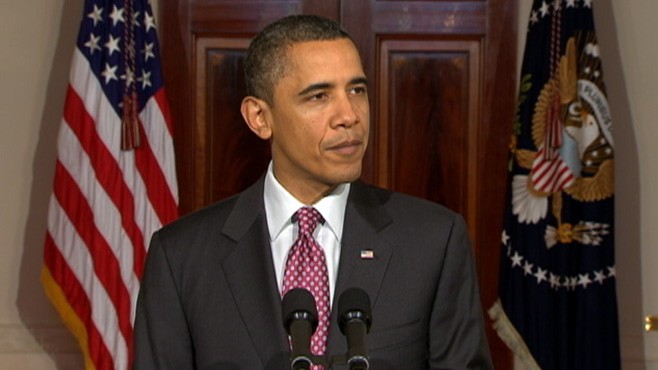 On the eve of President Barack Obama’s overview of revolution in the Middle East and Africa, Yemen’s Coordinating Council of the Youth Revolution of Change (CCYRC) delivered an unusually welcoming letter to his desk. While encouraging him to take a more proactive position on their side, CCYRC appealed to America’s democratic values in a savvy, upbeat tone. Despite a two-month silence dating to March 18th, Yemeni protesters realize they can’t afford to alienate such a powerful friend so deep in their revolution - even if that friend doesn’t necessarily exist yet.
Turning Obama to their side keeps their hopes alive. They don’t have much of a choice when facing down Riyadh, Moscow and Beijing by themselves.
We do not have to be as kind though. “Breaking news” of an agreement between President Ali Abdullah Saleh and the oppositional Joint Meeting Parties (JMP) predictably flamed out as a false alarm. Leaked hours before John Brennan, the White House’s counter-terrorism chief, issued a statement in favor of the Gulf Cooperation Council’s (GCC) proposal, the impossibility of a sudden agreement was readily apparent. Saleh’s ruling General People’s Congress (GPC) and the JMP have drifted further and further apart over the past weeks, leaving the GCC scrambling to keep up.
One cannot flip a switch and produce an agreement from thin air. Only artificial pressure could even produce this rumor.
However Brennan’s statements amount to something much worse than gossip. Hyperbole doesn’t appear to be at work when we compare the White House’s response a crime. This was political posturing at its worst: gains for the few at the masses’ expense. Already lining up Israel-Palestinian negotiations, economic packages for Egypt and Tunisia, and condemnation for Libya and Syria, Obama thought he could crown his speech with a breakthrough in Yemen. Instead he hit Saleh’s wall after GCC leadership left an uncertain Sana’a empty-handed, exposing Washington's own red hands.
Yesterday’s events demonstrate that the White House remains deaf to Yemen’s popular revolution, which largely opposes the GCC’s intervention and its U.S.-Saudi proposal. This proposal offers Saleh another 30 days to stall, immunity for his family’s crimes against the Yemeni people (enabled by U.S. training and equipment), a transitional council composed of a majority GPC, and a clause that pro-democracy protesters return home. Facing their own political suicide, JMP officials balked at the distorted proposal after Saleh warped it beyond sensibility.
Sure enough, GPC officials quickly emerged vowing that Saleh won’t step down until the “security situation” returns to normal. Again security comes before politics - the driver of insecurity. Sounds like U.S. policy. By sending a counter-terrorism official to do his work, Obama reinforced the impression that America only cares about terrorism in Yemen.
Revolution is still considered a distraction, not an opportunity, in the post-bin Laden world.
The administration's response to Yemen’s revolution equals the futility of its counter-terrorism strategy against al-Qaeda in the Arabian Peninsula (AQAP). Silent support of Saleh has fueled Yemen’s political and security vacuum, a death spiral that the GCC cannot pull out of. Neither the White House nor State Department even followed up on Brennan’s statement after the deal collapsed, and the flippant manner in which it was made intensified Washington’s insensitivity. This is fourth-generation warfare (4GW) at its worst.
Obama’s tone, and to what degree he believes his administration is succeeding, will yield the latest indication of his grip on reality. Remorse, or a lack thereof, is pivotal to impressions. Obama will surely preach U.S. values while arguing that the people themselves must decide their future. Although a sound policy in theory, it has yet to be applied in Yemen and elsewhere in the region. U.S. foreign policy remains consistently slow and contradictory.
In places like Yemen it is obstructive, counterproductive and immoral. People will die in part because of Obama’s decision to advocate a dead GCC proposal - Saleh appears ready to lash out at any moment.
Everything Obama says today must be carefully considered. His words will define his presidency and redefine the views of those who, for desperate reasons, still keep the faith in him. At some point this faith will run out.
May 18, 2011
Forging a New Future in Yemen
 Abdullatif Al-Zayani, Secretary-General of the Gulf Cooperation Council (GCC), received a nice welcome when he landed in Sana’a: your deal is dead. That was the message delivered by officials within Yemen’s oppositional Joint Meeting Parties (JMP), as pro-democracy protesters carried coffins labeled “GCC initiative” through the streets. GCC diplomats put an optimistic spin on similar language.
"The GCC ambassadors have had several rounds of talks with different factions during the last few days, including a meeting today in Sana'a," a GCC source explained as al-Zayani made his rounds on Saturday. "The visit of Al-Zayani to Sanaa, the first after the GCC consultative council summit last week, is part of an effort to revive the power-transfer deal."
Except the GCC’s proposal to relieve President Ali Abulldah Saleh from office should stay dead.
Nearly four months have elapsed since Tawakul Karman, Yemen’s leading female activist, planted the final seeds of revolution in mid-January. Two months have vanished since a pair of atrocities unfolded on March 8th and March 18th, one a mass gas attack and the other a rooftop sniping assault that left at least 45 protesters dead. On April 4th, two weeks after these incidents, The New York Times reported that the Obama administration had finally “shifted” against Saleh.
However the GCC entered Yemen’s revolution soon afterward to resolve its “political crisis,” interfering on insincere terms and permanently compromising any future agreement. By negotiating terms between Saleh’s ruling General People’s Congress (GPC), U.S. and Saudi officials, and the oppositional Joint Meeting Parties (JMP), the street coalitions were frozen out of negotiations due to their “disorganization.” So were the northern Houthis and secessionist Southern Movement, two of Saleh’s enemies that must be brought back into the political equation.
A biased proposal naturally tilted in Saleh’s favor, and Yemen's embattled president has predictably stalled for time while working to isolate the JMP. Under the GCC’s terms a power transfer would begin in one week, followed by Saleh’s resignation 30 days later, and culminate with an election 60 days afterward. The GCC’s initiative also stipulates immunity for Saleh and his family, particularly his son Ahmed and his nephews, Yahya and Ammar. As the commanders of the Republican Guard, Central Security and National Security, these U.S.-trained (and equipped) forces have led Saleh’s crackdown against pro-democracy protesters.
Perhaps worst of all, Saleh has steadfastly clung to his demand that protesters first return home, a stipulation added by U.S. and E.U. diplomats later in negotiations. Yemen’s popular opposition rejects all of the GCC’s Western-authored terms, knowing too well that Saleh routinely goes back on his word. Over 40 days have already elapsed since the GCC activated on Washington and Riyadh’s orders. During this time GPC figures have repeatedly signaled Saleh’s false intent to resign, while immunity encouraged his violent response to protesters.
They demand his immediate resignation and a transitional council purged of GPC officials.
Yet Western officials continue to support the GCC’s proposal as “the only way out” of Yemen’s "political crisis." In an appearance with European Union foreign policy chief Catherine Ashton, Secretary of State Hillary Clinton righteously declared, "President Assad talks about reform, but his heavy-handed brutal crackdown shows his true intentions... We will be taking additional steps in the days ahead." No such warnings have targeted Saleh in the past months, nor does Clinton address Yemen in her remarks.
Ashton only makes a single (and clueless) passing reference: “And we worry too about Yemen and call upon the president there to fulfill his obligations and to sign the agreement.”
After three rounds of negotiations, JMP representatives rejected Zayani’s proposal on Tuesday due to repeated changes in the document. “Every time Saleh is not happy, the GCC change a little in the proposal,” warned Mohammed Basendowah, the president of the opposition preparatory dialogue committee. Meanwhile a GCC official involved in the dialogue admitted, "Zayani is extremely disappointed with the negotiation tactics of Yemen's ruling party and opposition.”
Reports now indicate that Saleh and the opposition will sign today, following U.S. mediation. Although clearly designed to boost President Barack Obama before his Thursday speech on the Middle East, this “agreement” will trigger a whole new round of false alarms rather than address Yemen’s root problems.
The entirety of these developments vividly prove that U.S. policy requires a complete transformation, not overcommitment to a failed strategy. Far from a practical instrument, the GCC’s proposal has contributed to Yemen’s instability and obstructed America’s war against al-Qaeda in the Arabian Peninsula (AQAP). The Obama administration’s personal silence further contradicts the fundamentals of fourth-generation warfare (4GW), which advocate active engagement at the political and information levels. The White House has ignored Yemen’s revolution since Osama bin Laden’s death, only responding with an errant drone strike on AQAP cleric Anwar al-Awlaki.
The Wall Street Journal reported the following day that Saleh had begun feeding the Pentagon information again, to get on its good side.
While America has abandoned the information sphere at great cost, complicity in Saleh’s crimes is even worse. One cannot argue that America should stay out of Yemen when it sits waist deep in it; values have been compromised by protecting U.S. assets at Yemenis’ expense. That no Syrian sanctions are forthcoming is explained by the fact that Saleh’s son and nephews serve as the Pentagon’s military liaisons. The U.S. military is desperate to keep the lid on all of his crimes, as Saleh would turn on Washington if caught.
Nothing that he says can be trusted except his promises to resist to the end. That means Washington will sink with him unless it switches over to the revolution. Mohammed Basendowah, president of the opposition preparatory dialogue committee, cautioned, “We know Saleh and his tricks and the GCC nations are only starting to understand him.”
Now it’s time for the America to wake up. U.S. policy is currently backwards: either the Obama administration is willing to let Saleh ride the revolution out, or it’s excusing itself on a “pragmatic strategy” to ease him from power. U.S. officials may argue that abandoning Saleh could provoke a violent backlash. The flaw in this logic is that, by not abandoning Saleh, Washington has instead abandoned Yemen’s pro-democracy movement to that same backlash. Nor can Saleh be eased out; he never planned on leaving.
Saleh believes that he’s smarter than Obama and can outmaneuver him, prolonging the stalemate. Thus severing ties with him offers the best chance of countering AQAP’s advances.
Obama cannot sweep away years of bad policy and months of a futile response with one speech - unless he finally does right and cuts Saleh’s life-line. If the GCC is willing to grant all of the protesters’ terms then so be it, but Saleh’s intransigence and Saudi Arabia’s interference may be impossible to overcome. Yemen isn’t even a full member of the GCC. Its revolution must be laid onto the international table, not a regional bloc with little interest in supporting pro-democracy movements. The GCC’s proposal has been so mixed up that scrapping it entirely appears to be the only practical option.
The key factor will be replacing the GCC’s proposal with one built on the revolution’s foundation - on a legitimate document that fulfills the popular demands for freedom and equality. Negotiations are supposed to build confidence, and what little confidence originally existed in the GCC is long gone. That hasn’t stopped Washington and Riyadh from pushing the GCC’s initiative, but recent condemnation will isolate this position that much more.
If Obama continues to back the GCC or remains silent on Yemen’s revolution in his Middle East address, he will miss the very opportunity that his administration claims it is taking advantage of. Washington’s futile search for a “peaceful and orderly transition” won’t be found in the GCC’s proposal or any other dictated by Saleh. True peace and order will be achieved through the masses in the streets, who are still more organized than U.S. policy. Otherwise the new Yemen won’t look much different than the old.
“Yemenis are counting on the U.S. to take a more active position to this end,” the Coordinating Council of the Youth Revolution of Change (CCYRC) urged in a personal letter to The President. “Please, don’t let us down.”
May 16, 2011
Shallow Reset For U.S-Pakistani Relations
Maybe he’s happy with his consolation prize after all. Reportedly bruised in the ego after being passed by for Secretary of State, Senator John Kerry has since served as President Barack Obama’s fire extinguisher in Afghanistan and Pakistan. The opportunity, though fraught with peril, allows the chairman of the Senate Foreign Relations Committee to bask in the spotlight of an important geopolitical arena.
In Afghanistan, Kerry’s coziness with President Hamid Karzai ultimately superseded the latter’s frosty relationship with former envoy Richard Holbrooke. Meanwhile the administration and key Pakistani officials have showered Kerry with praise. Even before his tour of Pakistan’s flooded disaster zones in August 2010, Ambassador Hussain Haqqani warmly declared that, “Senator Kerry cares about Pakistan. A lot of Pakistanis recognize that.’’
Not enough, apparently. That the Osama bin Laden affair is currently fueled by a distrust in Islamabad doesn’t negate the reality that Pakistani public opinion remains decisively opposed to U.S. foreign policy: in Afghanistan, within their own country, and in India and Kashmir. Reversing this pattern was the Kerry-Lugar bill’s self-stated goal.
Now Kerry finds himself back in Islamabad to clean up the bloody, conspiratorial trail of Osama bin Laden, who was killed by SEALs 60 miles north in Abbottabad. As Obama’s carrot man he’s the logical choice for a cleaner. Pakistani officials like Kerry because he usually isn’t as hard as Secretary of State Hillary Clinton or the parade of U.S. military officials. That’s why he was sent to lay the wood down this time - he possessed one of the highest chances of being well received.
His own bill, a $7 billion aid package, is also on the line in Congress, forcing him to sell the consequences to both capitals.
The immediate pay-out sounds appealing at face value. Two hours with President Asif Ali Zardari, Prime Minister Yusuf Raza Gilani and Army Chief General Ashfaq Parvez Kayani yielded a “reset” in U.S.-Pakistani relations. A subsequent statement issued by Zardari and by US Embassy agreed that, “all tracks of US-Pakistan engagement need to be revisited with a view to creating a clear understanding on ways and means to carry forward their cooperation in a mutually beneficial manner.”
"It was agreed that the two sides would intensify their engagement through official channels and that negative media messages were misplaced and detrimental to the core national interests of both US and Pakistan.”
In pressing Islamabad to participate in future high-value raids, Kerry hopes to reassure a skeptical Congress of Pakistan’s allegiance. However these threats are nothing more a bluff, as Washington remains desperate for Islamabad’s cooperation in Afghanistan and Pakistan’s Federally Administered Tribal Areas (FATA). Moreover, those same Republicans calling out Pakistan favor sustained operations in Afghanistan, fully revealing their own weak position. The possibility that Kerry repaired any damage in Congress is unlikely; negative media in both countries will persist.
Kerry’s visit stands a better chance of repeating past trips. Sent to sell his bill among criticism that Pakistan was doing America’s heavy lifting for cheap (the economic cost is estimated above $100 billion), Kerry has since toured flood zones and attempted to extract CIA agent Raymond Davis in February 2011. Each time the Senator sparked a short-term boost in political relations, with minimal change in public opinion. Although declaring, “The road ahead will not be defined by words. It will be defined by actions,” Kerry fails to acknowledge that U.S. actions have already defined the past and future.
Bin Laden has proven a viable excuse to flip all of Washington’s problems in Afghanistan back on Islamabad. Yet this isn’t the message that Pakistanis, deeply distrustful of both governments, want to hear. Nor do the less public faces of Pakistan’s military and intelligence services.
America's poorly calculated invasion of Afghanistan spawned the initial TTP under Nek Muhammad Wazir, and now Pakistan must suffer the consequences long after bin Laden's demise.
Kerry isn’t a fixer - he patches up unresolved problems until the next time they overload. Tense relations have continued despite all of his visits, even after America spearheaded foreign relief efforts during an epic flood. Never have the region’s fundamentals actually changed. Drone strikes provide a regular possibility of disaster, a stubbornly militarized strategy persists in Afghanistan, U.S.-Indian relations dictate U.S.-Pakistani relations, and another controversy is always waiting around the corner.
Kerry should know the dirty details of Davis's case all too well. In the immediate aftermath of January 27th, when Davis shot and killed two Pakistanis in Lahore, Washington reacted as though its whole policy was about to crumble. After insisting that Davis held diplomatic immunity, U.S. officials lobbed threat after threat at Islamabad to no avail. Kerry was eventually deployed to quell an overwhelmingly negative response to U.S. pressure, viewed as arrogant and insensitive in the wake of Davis’s murders.
Although he didn’t have much luck - Davis’s immunity status was frozen in legal procedures - U.S. officials ultimately succeeded in their goal. Davis also posed the danger that they suspected. Deployed as part of an off-grid intelligence network within Pakistan, initial speculation after bin Laden’s death brought Davis into the mix. True or not, CIA officials then monitoring bin Laden’s compound knew they had to get Davis out at all costs, fearing a reprisal attack. U.S. officials worked around the clock to free him, maintaining their threatening posture in public while frantically maneuvering in private.
Eventually the process of diyat, or blood money, was raised and completed the day of Davis’s immunity hearing. Released under a storm of controversy, Davis had already been flown into Afghanistan by the time his victims’ relatives were paid off. Having disappeared from public view for the next two months, one of the fathers recently surfaced to say that U.S. officials were taking Davis regardless of whether he accepted diyat. After infamously refusing to speak on Davis’s release - except to say that Washington hadn’t offered any money - Clinton spoke the truth through technicalities.
Pakistani officials had stained their own hands with the blood money, and Geelani and Zardari overruled the army to release Davis. This news, released only days ago, had already added to the erosion of public confidence by the time Kerry returned yesterday. Days before his arrival, reports surfaced of U.S. teams tasked to Pakistani nuclear material.
The backdrop to U.S.-Pakistani relations as a whole remains client-based, unlike China's "all-weather relationship." This equation has merely been reinforced by bin Laden’s death and the numerous U.S. officials landing in Islamabad to reprimand its leadership. Beneath the surface lie all of the usual problems, and uncertainty over U.S. strategy in Afghanistan will further aggravate these tensions. A drone struck the day after Davis’s release and happened to mark Kerry’s latest visit, an event he felt compelled to apologize for. Always reaction, rarely proaction in Pakistan.
Soon another controversy will erupt after this new “reset,” and Kerry will find himself back on a plane to Islamabad.
In Afghanistan, Kerry’s coziness with President Hamid Karzai ultimately superseded the latter’s frosty relationship with former envoy Richard Holbrooke. Meanwhile the administration and key Pakistani officials have showered Kerry with praise. Even before his tour of Pakistan’s flooded disaster zones in August 2010, Ambassador Hussain Haqqani warmly declared that, “Senator Kerry cares about Pakistan. A lot of Pakistanis recognize that.’’
Not enough, apparently. That the Osama bin Laden affair is currently fueled by a distrust in Islamabad doesn’t negate the reality that Pakistani public opinion remains decisively opposed to U.S. foreign policy: in Afghanistan, within their own country, and in India and Kashmir. Reversing this pattern was the Kerry-Lugar bill’s self-stated goal.
Now Kerry finds himself back in Islamabad to clean up the bloody, conspiratorial trail of Osama bin Laden, who was killed by SEALs 60 miles north in Abbottabad. As Obama’s carrot man he’s the logical choice for a cleaner. Pakistani officials like Kerry because he usually isn’t as hard as Secretary of State Hillary Clinton or the parade of U.S. military officials. That’s why he was sent to lay the wood down this time - he possessed one of the highest chances of being well received.
His own bill, a $7 billion aid package, is also on the line in Congress, forcing him to sell the consequences to both capitals.
The immediate pay-out sounds appealing at face value. Two hours with President Asif Ali Zardari, Prime Minister Yusuf Raza Gilani and Army Chief General Ashfaq Parvez Kayani yielded a “reset” in U.S.-Pakistani relations. A subsequent statement issued by Zardari and by US Embassy agreed that, “all tracks of US-Pakistan engagement need to be revisited with a view to creating a clear understanding on ways and means to carry forward their cooperation in a mutually beneficial manner.”
"It was agreed that the two sides would intensify their engagement through official channels and that negative media messages were misplaced and detrimental to the core national interests of both US and Pakistan.”
In pressing Islamabad to participate in future high-value raids, Kerry hopes to reassure a skeptical Congress of Pakistan’s allegiance. However these threats are nothing more a bluff, as Washington remains desperate for Islamabad’s cooperation in Afghanistan and Pakistan’s Federally Administered Tribal Areas (FATA). Moreover, those same Republicans calling out Pakistan favor sustained operations in Afghanistan, fully revealing their own weak position. The possibility that Kerry repaired any damage in Congress is unlikely; negative media in both countries will persist.
Kerry’s visit stands a better chance of repeating past trips. Sent to sell his bill among criticism that Pakistan was doing America’s heavy lifting for cheap (the economic cost is estimated above $100 billion), Kerry has since toured flood zones and attempted to extract CIA agent Raymond Davis in February 2011. Each time the Senator sparked a short-term boost in political relations, with minimal change in public opinion. Although declaring, “The road ahead will not be defined by words. It will be defined by actions,” Kerry fails to acknowledge that U.S. actions have already defined the past and future.
Bin Laden has proven a viable excuse to flip all of Washington’s problems in Afghanistan back on Islamabad. Yet this isn’t the message that Pakistanis, deeply distrustful of both governments, want to hear. Nor do the less public faces of Pakistan’s military and intelligence services.
America's poorly calculated invasion of Afghanistan spawned the initial TTP under Nek Muhammad Wazir, and now Pakistan must suffer the consequences long after bin Laden's demise.
Kerry isn’t a fixer - he patches up unresolved problems until the next time they overload. Tense relations have continued despite all of his visits, even after America spearheaded foreign relief efforts during an epic flood. Never have the region’s fundamentals actually changed. Drone strikes provide a regular possibility of disaster, a stubbornly militarized strategy persists in Afghanistan, U.S.-Indian relations dictate U.S.-Pakistani relations, and another controversy is always waiting around the corner.
Kerry should know the dirty details of Davis's case all too well. In the immediate aftermath of January 27th, when Davis shot and killed two Pakistanis in Lahore, Washington reacted as though its whole policy was about to crumble. After insisting that Davis held diplomatic immunity, U.S. officials lobbed threat after threat at Islamabad to no avail. Kerry was eventually deployed to quell an overwhelmingly negative response to U.S. pressure, viewed as arrogant and insensitive in the wake of Davis’s murders.
Although he didn’t have much luck - Davis’s immunity status was frozen in legal procedures - U.S. officials ultimately succeeded in their goal. Davis also posed the danger that they suspected. Deployed as part of an off-grid intelligence network within Pakistan, initial speculation after bin Laden’s death brought Davis into the mix. True or not, CIA officials then monitoring bin Laden’s compound knew they had to get Davis out at all costs, fearing a reprisal attack. U.S. officials worked around the clock to free him, maintaining their threatening posture in public while frantically maneuvering in private.
Eventually the process of diyat, or blood money, was raised and completed the day of Davis’s immunity hearing. Released under a storm of controversy, Davis had already been flown into Afghanistan by the time his victims’ relatives were paid off. Having disappeared from public view for the next two months, one of the fathers recently surfaced to say that U.S. officials were taking Davis regardless of whether he accepted diyat. After infamously refusing to speak on Davis’s release - except to say that Washington hadn’t offered any money - Clinton spoke the truth through technicalities.
Pakistani officials had stained their own hands with the blood money, and Geelani and Zardari overruled the army to release Davis. This news, released only days ago, had already added to the erosion of public confidence by the time Kerry returned yesterday. Days before his arrival, reports surfaced of U.S. teams tasked to Pakistani nuclear material.
The backdrop to U.S.-Pakistani relations as a whole remains client-based, unlike China's "all-weather relationship." This equation has merely been reinforced by bin Laden’s death and the numerous U.S. officials landing in Islamabad to reprimand its leadership. Beneath the surface lie all of the usual problems, and uncertainty over U.S. strategy in Afghanistan will further aggravate these tensions. A drone struck the day after Davis’s release and happened to mark Kerry’s latest visit, an event he felt compelled to apologize for. Always reaction, rarely proaction in Pakistan.
Soon another controversy will erupt after this new “reset,” and Kerry will find himself back on a plane to Islamabad.
Taliban Commanders Plan Epic Surge
 Published in the latest edition of Newsweek:
Even before Osama bin Laden’s death, Mullah Abdul Qayyum Zakir was working like a man possessed. For weeks the Afghan Taliban’s military chief, a former Guantánamo inmate, had raced from meeting to meeting in and around his base of operations, the Pakistani city of Quetta. His aim was nothing less than to field the guerrillas’ entire fighting strength at once in a massive spring offensive code-named Operation Badar, in the hope of reversing U.S. forces’ recent battlefield successes in Afghanistan. “He is determined to activate every single Taliban for the first time in 10 years,” a senior Taliban intelligence officer tells NEWSWEEK. “He’s making it clear that no one will be allowed to sit around in Pakistan. Everyone has to get involved or they’re out.”
But the effort to revive the Taliban’s fighting spirit has become more urgent than ever. In the wake of the Americans’ late-night commando assault on the Qaeda leader’s hideout, veteran insurgents seem stunned and despondent—and uncharacteristically worried. “His death is one of the saddest events in my life,” says Zabihullah, a senior Taliban adviser. “It conveys a message to all Taliban leaders that no one is safe.” Although Al Qaeda may no longer be a major source of funds, supplies, tactical advice, and manpower, the death of the world’s most-wanted terrorist has dealt the insurgents a severe psychological blow. “It doesn’t have much overall impact on Taliban militancy,” says a Taliban logistics officer, “but it does put a cloud of uncertainty over most Taliban leaders’ heads.”
The threat looms especially large for Zakir. After all, on the Americans’ list of high-value targets, he presumably ranks second only to Mullah Mohammed Omar—the organization’s founder and spiritual leader—as the Taliban’s supreme military commander and head of its ruling council, the Quetta Shura. But no one thinks Zakir will run for cover. He’s famous among the Taliban for his almost foolhardy courage, and he seems painfully aware that this could be a make-or-break year in the Taliban’s long battle to reclaim its former supremacy in Afghanistan.
He and his men are operating with impunity in the high-desert landscape of southwestern Pakistan’s Baluchistan province and its hardscrabble capital city, Quetta. The Pakistani military has declared the province off-limits to U.S. Predator strikes, and the country’s Inter-Services Intelligence Directorate (ISI) seems to be giving the Taliban a free hand. “They are coming and going in groups without end,” says a senior Quetta politician, an ethnic Pashtun (like the overwhelming majority of the Taliban). “Whatever the Taliban is doing is supervised and monitored by the [Pakistani] intelligence agencies.” Old hands among the insurgents say it reminds them of 1980s Peshawar, where anti-Soviet mujahedin operated openly with the ISI’s blessing and backing.
Zakir is taking full advantage of his freedom. A tall, dark 38-year-old with intense black eyes and an air of authority, he crisscrosses the province nonstop, usually astride his Honda 125 motorcycle, trailed by a half dozen or so aides on their own motorcycles. Taliban sources close to him say he’s been holding eight to 10 meetings a day, from early morning until late at night, not only in Quetta’s teeming, impoverished ethnic-Pashtun neighborhoods, but also in small towns and villages all along the bumpy roads to the Afghan border. Sometimes he shows up unannounced, wearing a large black turban, long-tailed tunic, and baggy pants, with a scarf over his nose and mouth against the ubiquitous dust.
His drive, charisma, and raw nerve have made him a very dangerous man. The son of a poor farmer in Helmand province, he joined the Taliban soon after the group was formed in 1994, and by 2001 he had risen to become one of Mullah Omar’s top military commanders, heading an elite mobile reserve force that was on call to fight anywhere in the country. He was in the north that October, battling the Northern Alliance, when the U.S. bombing began. The airstrikes soon forced him to surrender, and although he convinced his captors that he was no more than a senior officer’s bodyguard, he was sent to the U.S. lockup at Bagram Air Base, and from there to Guantánamo in early 2006.
Nevertheless, he continued to insist that he was just a nobody who wanted to go back to his farm, and he was finally returned to Afghan custody. Upon his eventual release in May 2008, he headed straight for Quetta to rejoin the Taliban. Since then he has won respect and loyalty in the Taliban’s ranks. “He has had more direct dealings with commanders and fighters in the field than any other senior leader,” says a Taliban subcommander in Helmand. “Unlike some other senior commanders he pays attention and listens to the concerns of ordinary fighters and villagers.” But Zakir still hasn’t forgotten his years in U.S. detention. “I have a strong feeling of revenge in my heart,” the Helmand subcommander quotes him as saying in one meeting. “Until this fire of revenge is quenched, the jihad will continue.”
He became Mullah Omar’s second in command just over a year ago, after Pakistani security forces jailed the previous No. 2, Mullah Abdul Ghani Baradar. Taliban sources say Zakir is a tougher leader than his predecessor—more aggressive, more demanding, and hotter-tempered. Baradar may have had better credentials as Mullah Omar’s brother-in-law and longtime confidant, but he was a consensus seeker, in the mold of a traditional tribal chieftain. Zakir is a warrior above all, seemingly unconcerned about keeping his fellow commanders happy, according to Taliban sources who know him. He tells his fighters they have one task: to wage jihad until death.
He may be responsible for more allied deaths than any other Taliban leader. More than 40 percent of the roughly 2,500 U.S. and NATO combat deaths since 2001 have occurred in the provinces of Kandahar and Helmand, most of them in the three years he’s commanded the region. Zakir’s roadside-bomb teams have caused more than half of NATO’s total of more than 160 deaths this year. Still, his attacks have killed and maimed many more civilians. U.N. statistics say 2,777 died last year, nearly 75 percent at Taliban hands. And the Taliban’s own losses under Zakir have been drastic. By the U.S. military’s count, nearly 4,000 of his men have been killed or captured this year alone.
Zakir paid one of his surprise visits recently at a dirt-floored house in the crowded Quetta suburb of Pashtunabad. The senior intelligence officer was meeting with a dozen other commanders and intelligence agents when a pack of motorcycles roared up and Zakir walked in and quickly got down to business, asking what they needed to make their forces more lethal. More money for weapons, ammunition, and roadside bombs, they told him—and more suicide bombers. A major ambush, the kind that involves IEDs, RPGs, automatic weapons, and suicide bombers, costs some 200,000 Pakistani rupees, they said: the equivalent of $2,300. Zakir’s secretary took notes, wielding a big, ledgerlike agenda.
The military chief was ready for the group’s requests, promising to send cash, explosives experts, and suicide bombers. “We have plenty of melons [Taliban slang for IEDs] and fedayeen [suicide bombers] for this summer and fall,” he said, according to a young Taliban intelligence agent who was also present. “This will be the year of bombs and fedayeen.” In return for that help, Zakir tells his listeners, he expects total commitment from everyone. “His policy is that 100 percent of his mujahedin should be busy inside Afghanistan immediately,” the Helmand subcommander says. “In the past, maybe 80 percent of the commanders were sitting and resting in Pakistan.”
The senior intelligence officer says Zakir makes clear that he expects his men to head for Afghanistan immediately, and not to come back until the fighting season is over. Before rushing off to the next meeting, he tells them: “We may see you again in Quetta this winter—but not before.”
Thousands of Taliban slogans cover the walls in and around the dusty frontier town of Kuchlak, some 14 kilometers northwest of Quetta. “The Only Solution Is Jihad Against the Invaders,” says one. “Mullah Omar Is a Dagger Raised to Strike Each Occupier,” says another. A local government councilor says the area’s mosques and madrassas are packed with insurgents in need of temporary lodging as they head back to Afghanistan. Way stations have been set up all over the region in rented houses, he says, and swarms of Taliban pass through town on motorbikes every day. Most carry Pakistani national identity cards.
“They’re enjoying the hospitality of the ‘black legs’ [derogatory slang for the ISI],” he says. He worries that the local culture is being Talibanized. At least 20 local madrassa students have disappeared, most likely to join the fight in Afghanistan, he says, and Taliban backers are even trying to stop the traditional music and dancing at weddings. “ ‘How can you sing and dance when we’re dying?’ they tell us.”
Across the border in Afghanistan, the spring offensive has begun. Hundreds of Taliban have staged mass assaults in Nuristan province, and at least seven suicide bombers and dozens of gunmen launched a major attack in downtown Kandahar city on May 7, targeting as many as eight government compounds, including the governor’s house and office. The assault lasted more than 24 hours, and although it failed to capture any of its targets, it proved that Kandahar remains as insecure as ever despite the heavy presence of U.S. and Afghan forces. In April alone, more than 50 NATO troops were killed—more than in any other April since the war began.
And worse may be yet to come. For most returning Taliban, the first order of business will be the monthlong annual opium harvest (a major source of funding for the insurgents), which is just now beginning in the south. After the crop is in, the guerrillas will retrieve their hidden weapons and head for the battlefield. The senior intelligence officer says he’s heard that Mullah Omar considers this year an important test for Zakir. “Our emir is giving Zakir a chance to prove himself,” he says. “If he does well, he stays; if not, there are others who can take over.” Of course, no one has seen Omar since he fled into the mountains on the back of Baradar’s motorcycle nearly 10 years ago. And Zakir might do well to remember what happened to Osama bin Laden.
Sounds like an operation(s) in Quetta is a matter of when, not if. However Washington should carefully consider a similar raid on Mullah Omar, who opposed Osama bin Laden’s 9/11 plot and found him a burden afterward. His death will produce a wholly different reaction from bin Laden’s, both at the popular and political level. In the end Islamabad didn’t care about bin Laden. Killing Omar instead of negotiating with him will trigger, as Senator John Kerry has unintentionally warned, “a set of downside consequences that can be profound.”
May 15, 2011
The Revolution in Yemen Petition
Petition to remove Yemeni President Ali Abulldah Saleh. Every ounce of support is needed to capitulate his regime:
The Egyptian and the Tunisian revolutions have given an insight and a motivation for the young Yemeni people to find their way to overthrow the regime that managed to isolate its population from the rest of the world leaving the country behind with sever developmental challenges.
The Yemeni sluggish economy is still drowning in its debts under the justification of the war on terror. Huge loans were misused for the favor of a corrupt government ignoring the country's low level of human development.
For more than ninty days, a combination of young, old, educated and illiterate Yemenis from all over the country have been protesting to bring down the dictatorship ruled by President Saleh, the first and the only president of the Republic of Yemen. Saleh argues that the unified Republic is his own accomplishment and replacing him is certain risk to this unification.
Throughout his speeches, Saleh has been trying to increase the hatred among the Yemeni population to serve his own interest and to gain longer time to drain the determination of the protesters. He has manipulated few to demonstrate for him by paying them from unknown questionable sources.
Petition:
We the citizens of Yemen and the people of the whole world condemn the Yemeni President Ali Abdullah Saleh for the 33 years of a dictatorship and condemn his attempts to inflame animosity among the people of his country in order to escape the penalties of his vast crimes.
We appeal the Yemeni government to resign and to comply with the protesters’ demands immediately. Those demands are not limited in one party, class or sect. Protesters have been calling for the implementation of demands which are brought forward by big portion of the Yemeni population. Moreover, we urge the international community to take immediate actions to stop the human rights violations that protesters have been living throughout the past three months.
We call on the IGOs as well as the international media to give the region more attention for transparency
Latest Blackwater Bombshells Target Iran, Arab Spring
 They’ve scrubbed and scrubbed and scrubbed. Cleanliness had been pounded into their brains as ex-military - in their bunker or a sensitive area - and a persistent re-branding campaign displays marks of this repetition. Some stains can’t be washed away though, and labels such as Xe, US Training Center, Jellyfish and Reflex Responses remain mere formalities.
No matter how many times Blackwater sheds its skin, its ruler will always find Blackwater underneath.
On May 4th USTC Holdings made waves by announcing its new Independent Director: former U.S. Attorney General John Ashcroft. Selected to chair the company’s Subcommittee on Governance, Ashcroft has been tapped to, “focus on the company’s efforts to maximize governance, compliance and accountability, continuing to build and promote the highest degrees of ethics and professionalism within the private security industry.” The hiring provoked ridicule beyond liberal quarters, as the controversial Ashcroft appears a perfect fit for the Blackwater offshoot.
USTC Holdings, LLC, an investor consortium that acquired Xe Services in December 2010, now operates the U.S. Training Center, “a leading provider of training and security services focused on worldwide operations in support of the United States Government and other customers.”
Perhaps in the spirit of corporate competition, Keith Mahoney announced his new offspring the very next day: Jellyfish. As the former director of Total Intelligence Solutions, an early venture with Blackwater founder Erik Prince, Mahoney is now offering patches of Blackwater’s global network to the world’s largest corporations. Jellyfish’s press release headlined, "Operation Jellyfish Takes Intelligence Operatives to Frontlines of Fortune 500 Companies."
"We want to get away from image of guns and guards doing government contracts," says Jellyfish Intelligence president Michael Bagley. "We offer CEOs of Fortune 500 companies advice from the battlefield to the boardroom to make sense of the chaos in places like the Middle East."
After revamping their business model, Blackwater’s business sounds like it’s booming again.
However the more money its tentacles bring in, the more difficult avoiding the spotlight becomes. One must also change below the surface to have a real chance of convincing people, but Blackwater cannot run from what it is. Its members only want to get away from “the image of guns and guards doing government contracts” - not actually get away. Now Prince’s new bubble has been popped by The New York Times, which provides ample documentation of his fledgling army in the United Arab Emirates (UAE).
Nearly a year before the Arab Spring erupted, “a small team of Blackwater and American military veterans” found themselves debating strategy in the lobby of the Park Arjaan by Rotana Hotel. Led by Ricky Chambers, a former FBI agent and confidant of Prince, the team had been tasked to train a foreign battalion for the crown prince of Abu Dhabi, Sheik Mohamed bin Zayed al-Nahyan. The prince needed an off-grid emergency response team, a unit that could foil a terror attack, seize islands from Iran and quell domestic protests at the push of a button.
The other Prince was happy to oblige.
Despite the trouble Blackwater had caused in Iraq and later Afghanistan, Prince never could believe that the U.S. government “threw him under the bus,” as he told Vanity Fair last year. He felt underappreciated. So Prince decided to take every detail into his own hands, a dream that would plot the blueprint for a private army. This army, much like the UAE’s vision, could be summoned by any foreign government (“other customers”) in need of extra muscle, and included a logistic network of air and seacraft. Prince struggled to lift the entire operation off the ground, but he eventually found a willing test subject in al-Nahyan.
Abu Dhabi’s crown prince set Prince up at the aptly named Zayed Military City, a walled desert complex where U.S. and European trainers toiled to mold a functioning battalion. Chambers had previously run an Afghan training program for a Blackwater subsidiary called Paravant, and the new operation started bringing in theater veterans to train foreign ex-military. Colombians, other Latin Americans and South African were drilled by retired U.S. soldiers, British and Germany Special Forces, and the French Foreign Legion.
Adhering to Prince’s law, Muslims soldiers “could not be counted on to kill fellow Muslims.”
In all, Prince received an estimated $529 million from al-Nahyan, along with a substantial quantity of arms and military essentials. For now the battalion itself may be little more than a white elephant. The project already lagged behind schedule by November 2010, leading to a force reduction from 800 to 600, and some Western trainers have quit after realizing they had to fight as well. Although UAE officials have promised to fund a brigade of several thousand, they want to the test battalion prove itself in “a real world mission.”
So far no opportunities have surfaced, but Prince still believes he can secure contracts for additional battalions in order to fund a larger training complex in the UAE. Here he would train units for foreign governments, presumably to deploy against their own people. This must be part of USTC’s pledge to uphold “the highest degrees of ethics.” The New York Times reports that Prince, “knowing that his ventures are magnets for controversy,” has “masked his involvement” in the UAE by working under the code-name “Kingfish.”
Yet his attraction to guns, guards and government contracts is overpowering.
The damage of these leaks will range from moderate to severe, depending on how deep Blackwater sinks into the Arab Spring. The legality of Reflex Responses, formed by Prince in the UAE, remains ambiguous. However Washington will have to deal with the consequences of Prince’s exposure in more than one way, starting with Tehran. al-Nahyan is such a staunch opponent of the Iranian regime that the Obama administration appears to have tacitly approved the program.
“The gulf countries, and the U.A.E. in particular, don’t have a lot of military experience. It would make sense if they looked outside their borders for help,” said one Obama administration official with knowledge of the operation. “They might want to show that they are not to be messed with.”
The pairing of R2, as its members call it, and Jellyfish won’t sit lightly with Iran during the Arab Spring, as the latter was immediately singled out as a private spy agency. It’s hard to think otherwise. As Prince offers up hardened soldiers to the UAE, Mahoney and Bagley are working Wall Street with their image-laundering scheme, offering "over 200 intelligence assets" to prospective clients. These assets supposedly include, “people inside the Muslim Brotherhood in Egypt, clerical circles in Iran and tribal leaderships on the Pakistani side of the Afghan-Pakistan border region.”
In what could be the scariest part of this shadowy web, Jellyfish believes that, “corporate executives and government bureaucrats still needs someone to help them navigate the brave new world that is dawning after the revolutions in Tahrir Square and the turmoil in countries like Libya and Syria.”
What assets Jellyfish controls within the Egyptian Brotherhood or Iran’s religious circles remains unknown, but this is a disturbing revelation in its own right. Blackwater offers endless fodder for conspiracies, so is Prince offering insider information or could he actually be offering the prospect of influence? It seems impossible that Blackwater has positioned any decision-makers in foreign countries, and this bait is likely nothing more than a lure. Advising Fortune 500 companies during the Arab Spring is bad enough as it is.
Yet one certainty exists to fix onto: Prince will stop at nothing until his power is absolute.
Islam in the Midst of Yemen's Revolution
This video was sent to us by the Coordinating Council of the Youth Revolution of Change (CCYRC).
May 14, 2011
Ali Abdullah Saleh’s Vow: I’ll Be Back
As expected Abdul-Latif al-Zayani, Secretary-General of the Gulf Cooperation Council (GCC), arrived in Sana’a on Saturday to “continue consultations with all Yemeni parties.” Whether “all parties” includes the street coalitions protesting GCC interference remains to be seen, but the prospects don’t look good. “GCC chief again in Sana’a to defuse Yemen crisis,” Saba state media reported, conveniently leaving out the fact that President Ali Abdullah denied him two Saturdays ago.
al-Zayani, who had come to ink Saleh’s signature on the GCC’s power transfer, left the capital visibly annoyed. With Saleh still refusing to budge and the street coalitions continuing to demonstrate against the GCC, al-Zayani will go through the same motions before leaving empty-handed.
Soon the Obama administration will demonstrate whether it has finally realized the gravity of Yemen’s revolution. Statements won’t be forthcoming, given the White House’s disconnect, however the slightest sign of support for Saleh can be interpreted in the negative. This support can be measured in silence or another seal approval for the GCC’s decayed proposal. Yemen’s situation has gradated into enough black and white that the administration should already see clearly.
There is no gray - supporting Saleh and the streets equally is impossible.
Fresh off Friday’s condemnation of his only negotiating partner, the Joint Meeting Parties (JMP), Saleh launched another volley on Saturday during an interview with the Saudi daily Okaz. He’s been careful to keep one finger extended to the JMP, as the coalition of political parties has proven useful in stalling for time. Since the streets largely disassociate themselves from the coalition and oppose the GCC’s proposal, Saleh has also manipulated the JMP to foment distrust within the revolution.
“We emphasized repeatedly that we are ready to sign the agreement by the General People's Congress and its allies, and the JMP and its partners, as a political document between the parties and political organizations, not legal, and we will ratify it as President of the Republic, and after obtaining the necessary clarifications about the terms of the agreement so as not to turn into such an agreement itself to a deeper crisis, rather than a way to resolve the crisis.”
In blaming the JMP for all of Yemen’s violence (and labeling them bandits, saboteurs, drug dealers), Saleh has tried to peel the youth off of their own revolution. Such statements are highly offensive to the millions demanding the end of his rule in full consciousness. Although the pro-democracy movement remains connected to many figures within the JMP umbrella, most pro-democracy protesters are nearly as hostile to the JMP’s overall decision-making as Saleh’s.
“The JMP provoked this crisis,” Saleh told Okaz, “and took some young people a bridge to achieve their goals and ambitions in jumping on the power after that unable to do so through elections, as the youth who are currently in some arenas sit mostly young people of these parties, and the rest are hostage to these parties.”
This impression couldn’t be further from reality; the youth jumped on the revolution first, and had to pull the JMP and Yemen’s tribes into the fold over time. WikiLeaks have revealed plots by Hamid al-Ahmar, a leading Hashid tribesman, to stir up a revolution, however a young and impoverished Yemen was already ripe for an uprising. On the defensive throughout his interview, Saleh reinforces his delusions by claiming, “What is currently happening in Yemen is a part of the wave in the region within what so-called the creative anarchy or the new Middle East, and the opposition joint meeting parties (JMPs) imitate what occurred in Tunisia and Egypt.”
"We have dealt with this contrived crisis and its repercussions for over three months and a half with wisdom and patience,” Saleh declares, “and we have made efforts and still to spare the country from sliding into the abyss of discord and bloodshed.”
In the two weeks since Osama bin Laden’s death, U.S. officials have waxed poetically of how the Arab Spring has washed away al-Qaeda’s narrative. Yet the Obama administration continues to support a dictator who believes these revolutions are “creative anarchy,” two months after Saleh accused Obama himself of manufacturing unrest. He also ruled out “internationalization” of Yemen’s revolution, while simultaneously urging U.S. and E.U “witnesses” to “sit at the negotiating table to resolve the crisis.” These diplomats, along with Saudi officials, authored most of the GCC’s proposal and included Saleh’s immunity clause.
Advocating Yemenis’ right to protest has also fallen on deaf ears. Although U.S. statements encouraging the GCC’s proposal are careful to support freedom of speech and expression, these claims are largely hollow. In order to sweeten what is already a decadent offer, another clause was inserted to dispel protesters from the streets. Saleh spoke repeatedly about implementing the GCC’s proposal in full, saying, "We look at the Gulf initiative as an indivisible integrated system.”
Saleh added that the deal requires further negotiation, and that “there are some clauses in it that are obscure and ambiguous.” When asked to specify these items, Yemen’s embattled president responded, “For example with regard to the item on the end to political tension and security, what creates the atmosphere for a peaceful transition and smooth power, as well as end the sit-ins, marches and blockades of roads and storming government buildings, and end the insurgency that has occurred in some military units, and exit of some of the elements causing the crisis for a temporary period; until we airspace before the Government of National Reconciliation to accomplish its tasks within the time period specified.”
Basically, he’ll sign when the revolution goes home. With the White House still refusing to cut Saleh’s life-line, U.S. policy is sitting in the back seat of a drunk driver.
Beyond heaping blame on the JMP, refusing responsibility for Yemen’s crisis or violence, and denying the Arab Spring outright, Saleh didn’t mince words when outlining his future plans. He denounced the JMP for “aspiring to gain access to power through a coup on democracy” rather than “the ballot box,” a phrase used to reinforce his current term. Many protesters believe Saleh intends to remain in power until 2013 and don’t trust a snap election under his ruling party’s authority, as stipulated by the GCC’s proposal.
Many expect him to corrupt an election now or in the future.
It gets even worse too. Saleh has previously insinuated that, if forced from office, he will continue leading the General People’s Congress (GPC) as Yemen’s opposition. This runs contrary to the GCC’s proposal, which calls for his exile in exchange for immunity. With Washington and Riyadh still pushing the GCC’s power transfer, Saleh now tells Okaz that he plans to “bring down the government again” if forced out.
What a practical and pragmatic strategy to end Yemen’s instability. As the pro-democracy movement has tried to warn the world, Saleh is the country's real source of chaos.
Subscribe to:
Posts (Atom)